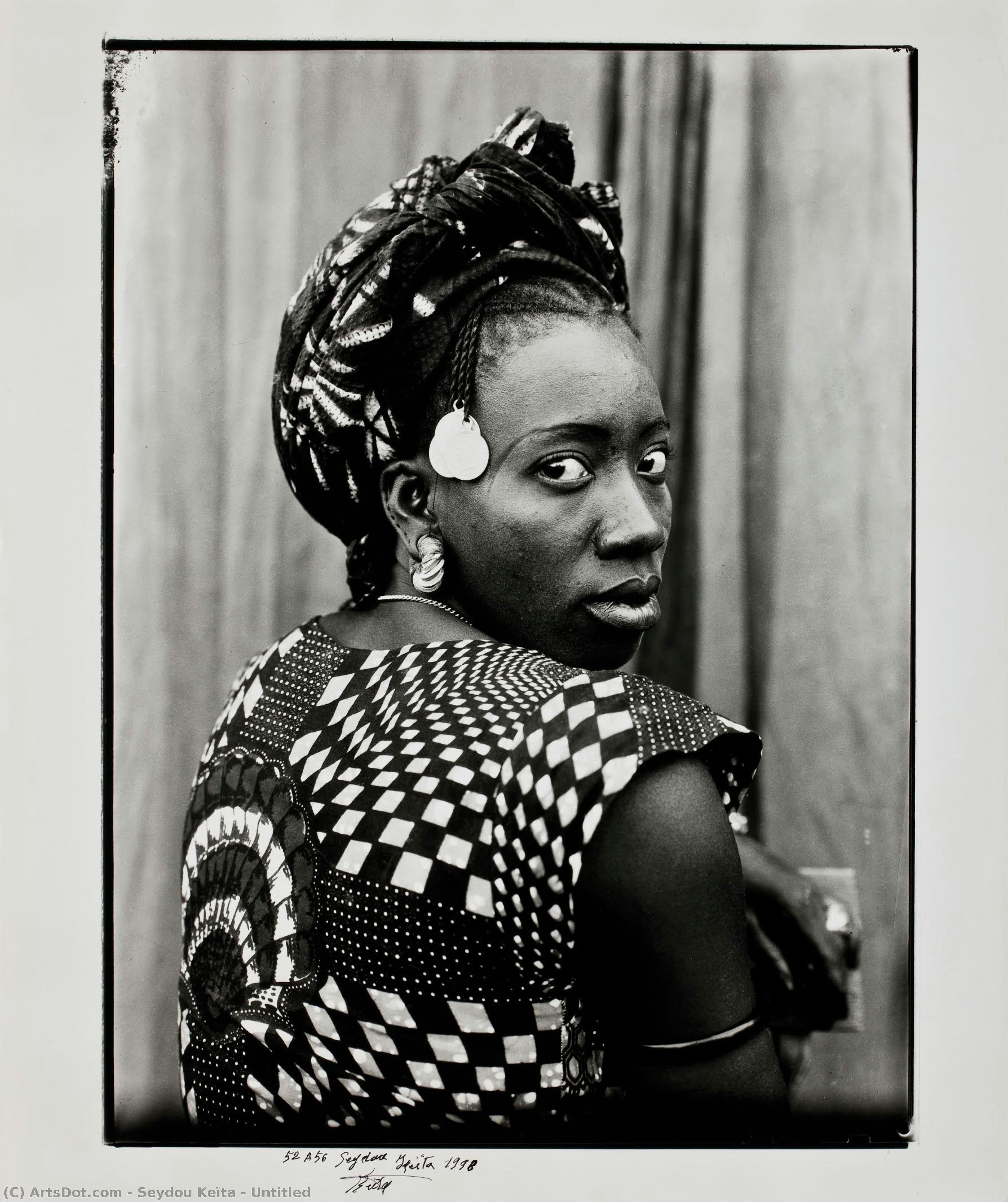
This photograph by Seydou Keïta exemplifies formal portraiture, reflecting the mid-20th century aesthetic. Featuring a woman against textured wall backdrop, it showcases meticulous detail and balanced composition—a testament to Keïta's pioneering role in documenting West African society.
A Window Into Mali’s Soul
In the quiet, textured stillness of Seydou Keïta’s “Untitled” (1958), one finds much more than a mere photographic record; one encounters a profound dialogue between identity and history. Captured in Bamako during the transformative era of Mali’s burgeoning independence from French rule, this masterpiece serves as an enduring emblem of West African artistic heritage. The photograph presents a subject of remarkable dignity, draped in richly patterned robes that speak to the vibrant textile traditions of the region. As the viewer's eye meets the direct, unwavering gaze of the woman, an immediate and intimate connection is forged—a moment of recognition that transcends time and geography. Keïta does not simply document a face; he captures a spirit, inviting us into a period of immense cultural dynamism and the reclamation of a national narrative.
The brilliance of this work lies in its masterful orchestration of light and composition. Utilizing the traditional silver gelatin printing process, Keïta achieved a velvety tonal range that imbues the black and white frame with an almost tactile depth. The subtle gradations of gray illuminate the contours of the subject's face, creating a soft luminosity that contrasts beautifully against the textured, patterned backdrop. There is a rhythmic harmony at play here, where the vertical lines of the background wall guide the eye toward the central figure, while the intricate geometric patterns of the fabric provide a complex visual counterpoint to the organic grace of the woman’s posture. This careful balance ensures that every element—from the delicate shadows in the folds of her dress to the sharp clarity of her expression—contributes to a unified, breathtaking whole.
A Legacy of Craft and Identity
Keïta’s approach to photography was deeply informed by his background as a carpenter, a trade that instilled in him a profound respect for structure, precision, and material. This meticulous attention to detail is evident in the way he utilizes a large-format camera to capture exceptional clarity, turning a studio portrait into a monumental study of form. The photograph functions as a sophisticated layer of visual storytelling; the choice of attire and the deliberate setting are not merely decorative but symbolic of a society navigating the complexities of postcolonial identity. Through his lens, the textures of Mali—the rough grain of a wall, the woven complexity of cloth, and the braided patterns of hair—become a language of resilience and pride.
For the discerning collector or interior designer, “Untitled” offers an unparalleled opportunity to introduce a piece of profound historical weight and aesthetic elegance into a space. Its timeless monochrome palette allows it to integrate seamlessly into diverse decor styles, from minimalist modern galleries to richly layered, classical interiors. As a high-quality reproduction, this artwork brings the soulful essence of mid-20th-century Bamako into the contemporary home, serving as both a sophisticated focal point and a poignant conversation starter. To possess this image is to hold a fragment of a pivotal moment in human history, preserved through the masterful eye of a pioneer who redefined the art of the portrait.