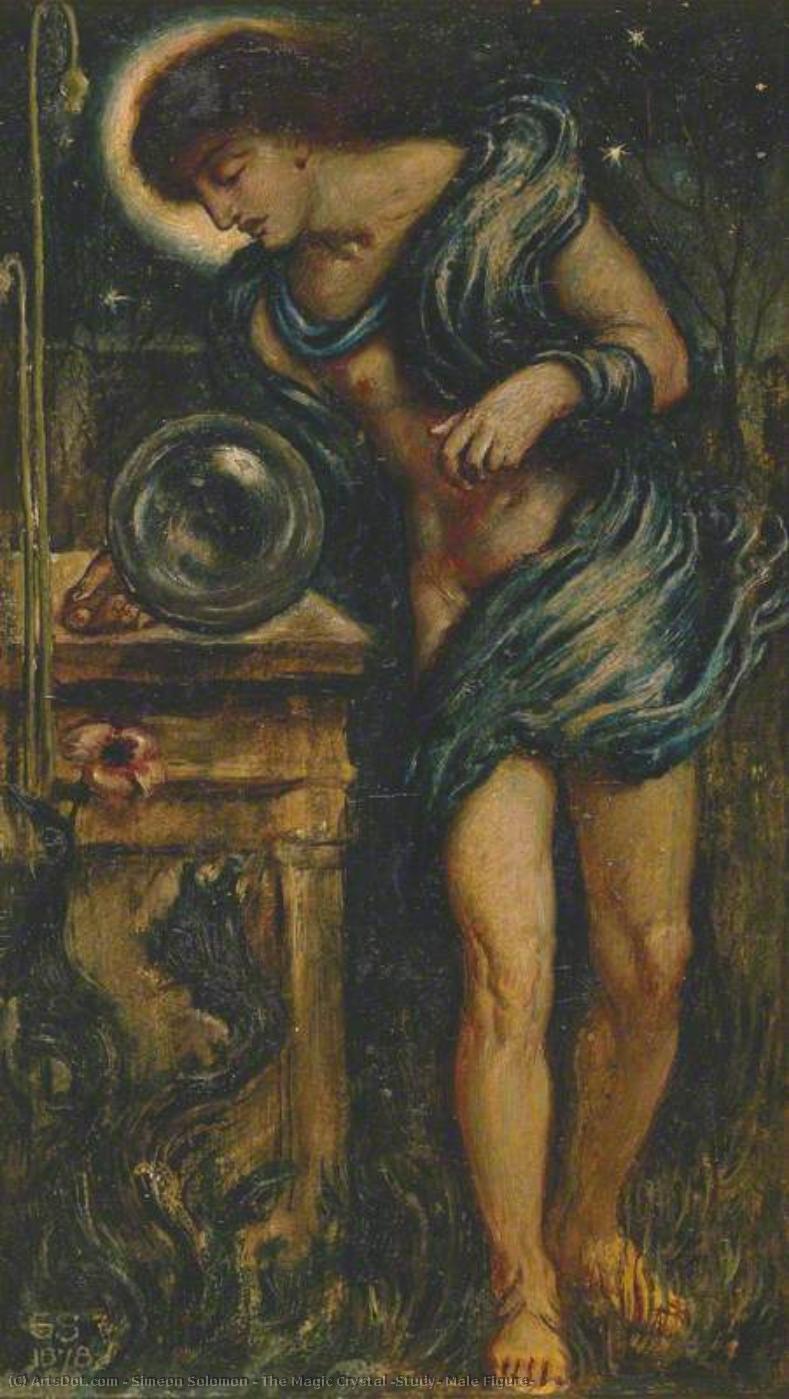
The Magic Crystal (Study: Male Figure) – A Victorian Echo of Baroque Drama
Simeon Solomon’s “The Magic Crystal” stands as a haunting testament to the Pre-Raphaelite movement's fascination with biblical narratives and psychological exploration, achieved through masterful oil painting technique and imbued with profound symbolic resonance. Completed in 1878, this artwork transcends mere visual representation; it delves into themes of suffering, contemplation, and spiritual yearning—a characteristic preoccupation of Victorian artists grappling with anxieties surrounding faith and morality.
- Subject Matter: The piece depicts a nude male figure – ostensibly an angel or saint – positioned against a dark, textured surface reminiscent of weathered stone or ancient wood. Beside him rests a small bowl and a crimson object—likely representing blood—underscoring the imagery’s solemnity and hinting at sacrifice. Above all, however, is a subtle depiction of a starry night sky, adding an element of ethereal beauty to the scene’s melancholic core.
- Style: Solomon's work firmly anchors itself within Baroque painting conventions. The dramatic chiaroscuro—the stark contrast between light and shadow—dominates the composition, channeling the theatrical grandeur favored by artists like Caravaggio. This stylistic choice isn’t merely decorative; it serves to heighten emotional intensity and draw the viewer’s gaze directly to the central figure’s torso, emphasizing his vulnerability and inner turmoil.
- Technique: Solomon employed impasto—thickly applied paint—to create a tactile surface that captures the texture of the stone-like background and contributes significantly to the artwork's overall mood. The artist meticulously layered pigments, achieving remarkable depth and volume through painstaking brushwork. This technique lends itself beautifully to capturing the subtle nuances of emotion and conveying a sense of palpable stillness.
- Historical Context: Created during Victorian England—a period marked by religious revivalism and societal anxieties regarding sexuality—the painting reflects broader cultural concerns about morality and spiritual redemption. Solomon’s exploration of biblical themes aligns with the Pre-Raphaelites' desire to recapture the expressive fervor of Renaissance art, rejecting academic conventions in favor of emotionally charged imagery.
- Symbolism: The bowl symbolizes sorrow or offering – perhaps representing a plea for divine compassion—while the crimson hue evokes pain and loss. Furthermore, the starry sky serves as a visual metaphor for transcendence and spiritual aspiration, mirroring the Pre-Raphaelites’ belief in the power of imagination to illuminate the mysteries of faith.
Provenance: The artwork originates from Manchester Art Gallery, where it was acquired in 1933 from Guy John Fenton Knowles. Its inclusion in this prestigious institution underscores its artistic merit and enduring appeal.
Size: 32 x 18 cm
Artist: Simeon Solomon (1840–1905)
### Additional Research Links:
### Recommended Resources: