A Divine Encounter in Miniature
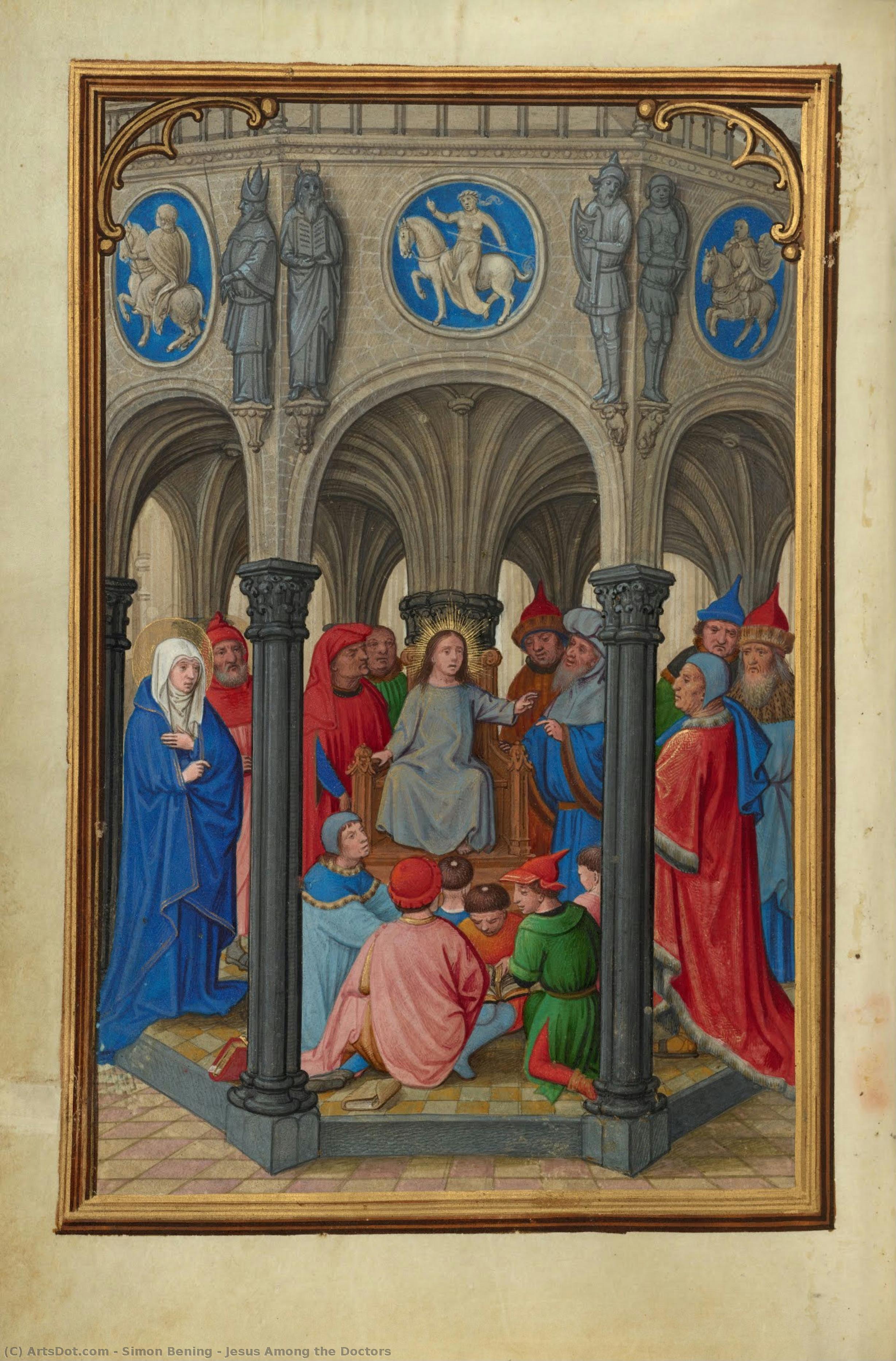
In the quiet intimacy of Simon Bening’s "Jesus Among the Doctors," we are invited into a sacred moment that transcends the boundaries of time and scale. Created around 1530, this exquisite masterpiece serves as more than a mere illustration of biblical scripture; it is a profound window into the Renaissance soul. The scene captures the pivotal episode from the Gospel of Luke, where a twelve-year-old Jesus, having been found in the Temple in Jerusalem, engages in spirited theological discourse with the most learned scholars of his era. Bening does not simply depict a historical event; he orchestrates a visual symphony of intellectual fervor and spiritual awakening. As the eye wanders through the courtyard setting, one feels the palpable tension between the youthful innocence of Christ and the gravity of the elders' wisdom, a juxtaposition that embodies the humanist ideals of the sixteenth century.
The emotional resonance of the work lies in its ability to make the viewer a silent participant in this holy debate. There is a sense of breathless reverence as we observe the figures gathered around the young Savior. Bening’s composition draws us into the heart of the crowd, where the subtle gestures of the doctors—leaning in with curiosity, furrowing brows in contemplation—create a narrative depth that feels remarkably alive. For the collector or the lover of fine art, this piece offers a rare opportunity to experience the "alchemy of light" that Bening mastered so uniquely. The painting is not merely seen; it is felt, evoking a sense of wonder and a deep connection to the enduring mysteries of faith and human potential.
The Mastery of Tempera and Gold
To behold this work is to witness the pinnacle of Flemish miniature painting technique. Bening, a titan of the Netherlandish tradition, utilized tempera—pigments meticulously bound with egg yolk—to achieve a luminosity that remains breathtaking centuries later. This medium allowed for an unparalleled precision, enabling the artist to layer translucent glazes that catch the light, creating a sense of internal radiance within the figures and the architectural surroundings. The brilliance of the colors is further elevated by the lavish application of gold leaf, which lends an ethereal, heavenly glow to the composition, reminiscent of the most precious Byzantine mosaics.
Every millimeter of this diminutive treasure is imbued with intentionality. The artist’s command over detail is nothing short of miraculous; even within such a small scale, one can discern the intricate textures of fabric, the weathered skin of the scholars, and the atmospheric depth of the courtyard. For interior designers seeking to introduce a sense of historical grandeur and sophisticated texture into a space, a high-quality reproduction of this work provides an exquisite focal point. The interplay between the matte richness of the tempera and the shimmering highlights of the gold leaf creates a dynamic visual experience that commands attention, offering a touch of Renaissance elegance to any curated collection.
A Legacy of Humanism and Light
Beyond its technical brilliance, "Jesus Among the Doctors" stands as a testament to the Ghent-Bruges school of illumination. Bening was a master of creating illusionistic borders and frames that functioned as devotional panels, blurring the line between the artwork and the physical world. This specific piece reflects the broader Renaissance movement toward humanism—the belief that through education, contemplation, and the pursuit of knowledge, the human spirit can reach toward the divine. The presence of the learned doctors, surrounded by the symbols of their scholarly pursuits, celebrates the intellect, while the central figure of Jesus reminds us of the spiritual source from which all wisdom flows.
Owning or displaying a reproduction of such a significant work allows one to bring a piece of art history into the modern home. It is an invitation to slow down, to contemplate the nuances of light and shadow, and to find inspiration in the intersection of faith and reason. Whether placed in a private study, a grand library, or a contemporary living space, Bening’s masterpiece continues to serve its original purpose: to illuminate the mind and stir the soul, acting as a timeless beacon of beauty and intellectual grace.