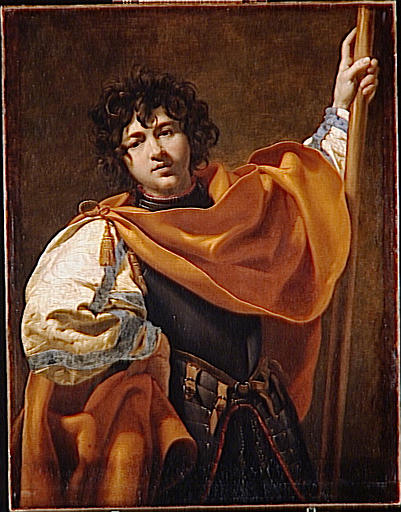
A Baroque Vision of Devotion
In the grand tapestry of the seventeenth century, few artists captured the spiritual fervor and theatrical splendor of the French Baroque as masterfully as Simon Vouet. His work Saint Guillaume d'Aquitaine, executed around 1627, serves as a profound window into an era defined by intense emotion and divine reverence. This masterpiece is far more than a mere religious portrait; it is a carefully orchestrated drama of light and shadow that invites the viewer into a moment of quiet, yet powerful, sanctity. As one contemplates the saint’s solemn gaze, there is an immediate sense of being transported to the courtly yet pious atmosphere of Louis XIII’s reign, where art served as both a decorative triumph and a vessel for deep theological reflection.
The composition is anchored by a masterful use of chiaroscuro, a technique that Vouet refined through his exposure to the Italian masters. By directing an unseen light source from the left, the artist sculpts the figure of Saint Guillaume with breathtaking precision. This dramatic illumination catches the contours of his face and the heavy folds of his drapery, while simultaneously casting deep, velvety shadows that lend the work a three-dimensional presence. The saint is positioned in a graceful three-quarter pose, leaning against a vertical staff or column that provides a structural rhythm to the canvas. This interplay between light and dark does not merely create depth; it heightens the emotional stakes of the portrait, imbuing the saint’s expression with a palpable sense of piety and introspective grace.
Color, Texture, and Timeless Elegance
Beyond the structural brilliance of the lighting, the color palette of Saint Guillaume d'Aquitaine is a study in warmth and richness. Vouet employs a sophisticated arrangement of burnt oranges, deep reds, and earthy browns that evoke a sense of ancient tradition and sacred warmth. These opulent tones are strategically contrasted against the somber blacks and muted greys of the background and clothing, ensuring that the viewer's eye remains fixed upon the luminous features of the subject. The texture of the oil paint itself, applied with meticulous layering, suggests a tactile quality that brings the saint’s garments to life, making the artwork feel remarkably present and alive.
For the discerning collector or interior designer, this piece offers an unparalleled opportunity to introduce a sense of historical weight and classical sophistication into a space. The symbolic elements—such as the staff, which may represent a journey of pilgrimage or spiritual authority—add layers of intellectual depth that reward prolonged observation. Whether placed in a curated gallery setting or used as a focal point in a luxurious study, a high-quality reproduction of this work brings with it the prestige of the French Baroque. It is an investment in atmosphere, offering a timeless elegance that speaks to the enduring power of faith, artistry, and the human spirit.