The Mythic Embrace: An Exploration of The Rape of Europa
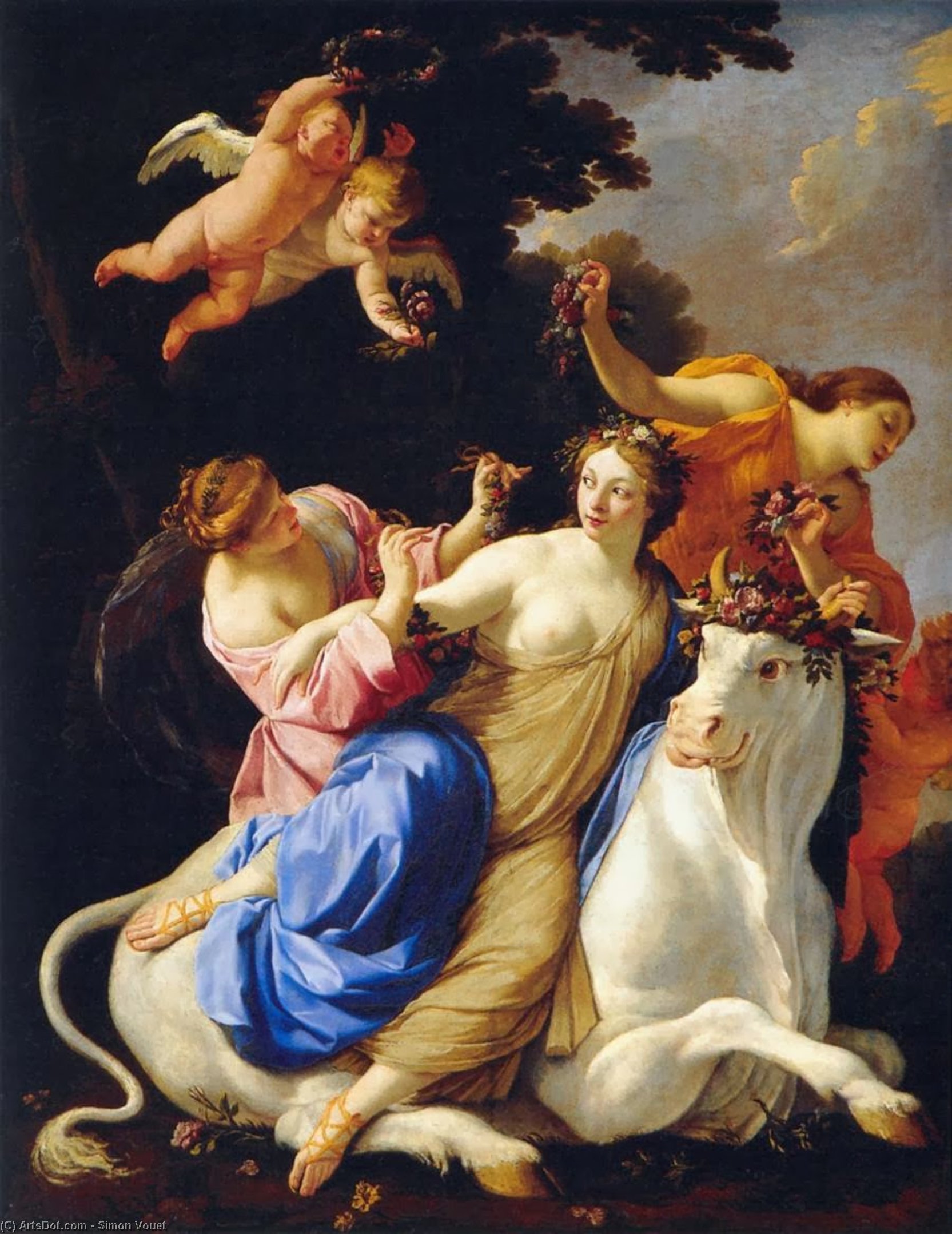
To gaze upon Simon Vouet's depiction of The Rape of Europa is to step directly into the charged, dramatic heart of the Baroque era. This canvas is not merely a retelling of classical mythology; it is a vibrant confluence of eroticism, divine power, and artistic mastery. The scene captures that breathless moment when myth transcends mere narrative and becomes palpable drama. At its core lies the potent symbolism of transformation—the gentle goddess Europa ensnared by the irresistible force embodied by Zeus in his guise as a magnificent bull. Vouet masterfully orchestrates this encounter, drawing the viewer into the tension between divine will and human vulnerability.
Baroque Drama and Technical Brilliance
Painted around 1640, this work stands as a testament to Simon Vouet’s pivotal role in ushering French painting from the refined echoes of Mannerism into the sweeping emotionality of the Baroque. Observe the handling of light against the deep blue expanse of the sky; it is not just background color but an active participant in the drama, lending depth and an almost celestial quality to the composition. Vouet’s technique allows the musculature of the bull to feel both monumental and yielding, while the drapery surrounding Europa seems caught mid-swirl by an unseen current of passion. The inclusion of secondary figures and the delicate placement of three distinct birds—one crowning the scene above the bull, another near the upper right, and a third anchoring the lower right—adds layers of narrative complexity, suggesting witnesses to this momentous, sacred transgression.
Symbolism and Emotional Resonance
The symbolism woven throughout The Rape of Europa is rich for contemplation. The bull itself represents raw, untamed divine power, while the grapes held by Europa suggest themes of bounty, pleasure, and perhaps even the intoxicating nature of desire. Emotionally, the painting vibrates with a controlled intensity. It speaks to the sublime—that feeling of awe mixed with terror before overwhelming beauty or force. For the collector or designer, this piece offers more than mere decoration; it provides an immediate focal point charged with historical weight and dramatic energy, capable of elevating any space into one of profound artistic contemplation.
A Legacy for Modern Spaces
Owning a reproduction of this masterpiece is to invite a segment of French Baroque history into your home or gallery. The scale, measuring 179 x 142 cm, ensures that the drama unfolds at an impressive visual level, commanding attention while maintaining Vouet's signature grace. Whether placed above a grand mantelpiece or serving as the centerpiece in a richly decorated salon, this artwork promises to engage viewers with its narrative depth and technical brilliance. It is a piece that whispers tales of gods, myth, and the enduring power of artistic vision.