The Genesis of a Vision: Simone Martini and the Altar of St Louis of Toulouse
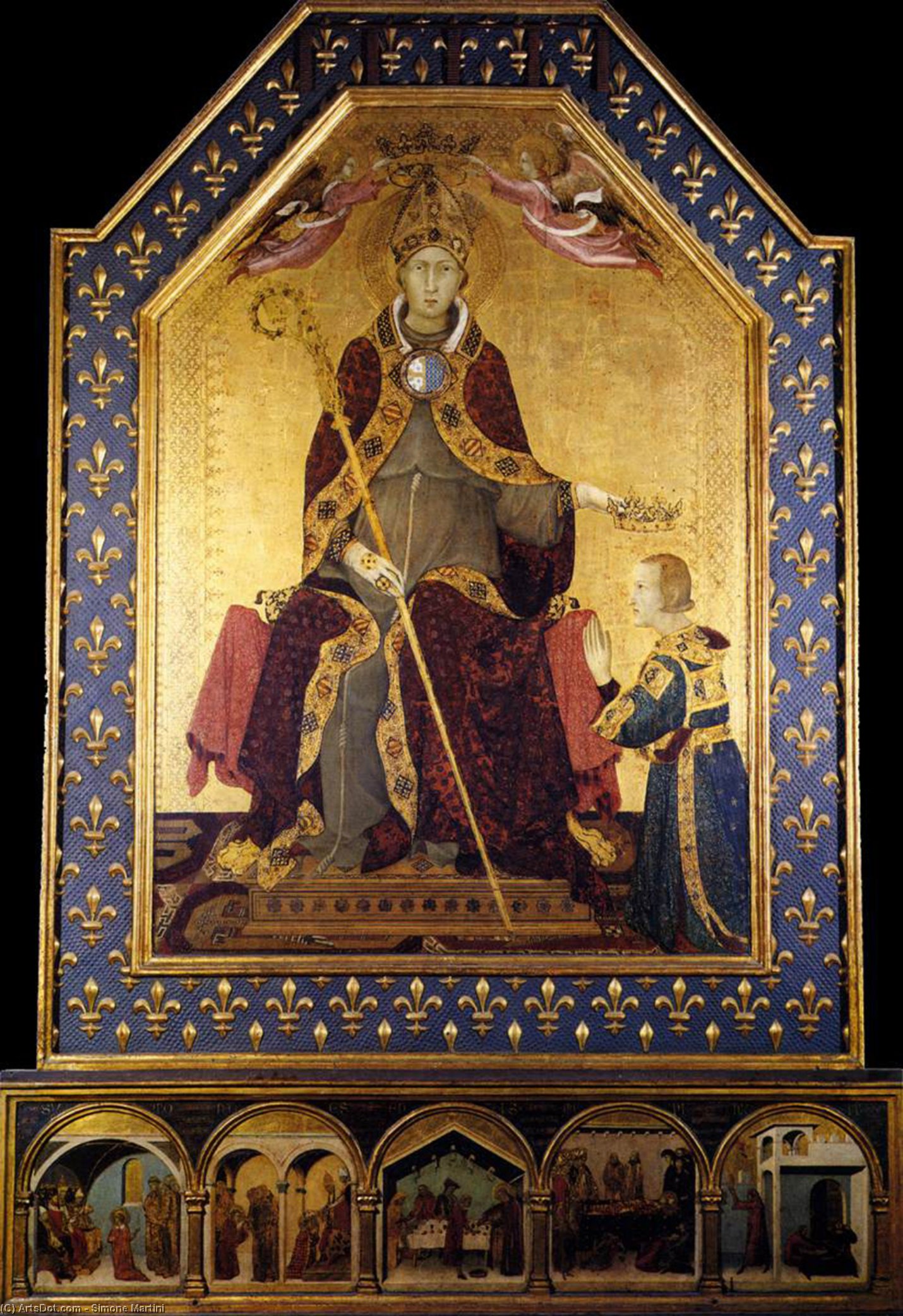
Within the hushed halls of the Museo Nazionale di Capodimonte in Naples resides a painting that transcends mere representation; it is an immersion into the heart of 14th-century piety, artistry, and courtly elegance. The Altar of St Louis of Toulouse, created by the Sienese master Simone Martini in 1317, stands as a testament to his unparalleled skill and a pivotal work in the evolution of European art. More than just a devotional image, it’s a meticulously crafted tableau of power, faith, and familial succession—a visual narrative that speaks volumes about its patrons and the artistic currents of its time.
Martini's genius lay not simply in technical proficiency but in his ability to synthesize disparate influences. The painting is a breathtaking fusion of Byzantine grandeur – evident in the rich colors, opulent drapery, and stylized figures – with the burgeoning Gothic aesthetic, characterized by elongated forms, intricate detail, and a heightened sense of emotional expression. This harmonious blend, coupled with Martini’s signature use of tempera paint—renowned for its luminosity and ability to capture subtle nuances of color—creates an image that is both deeply spiritual and exquisitely beautiful. The composition itself is carefully orchestrated: the Virgin Mary, radiating serenity, occupies the central space, while a complex interplay of figures – including two attendants on the left, one on the right, and three birds soaring above – draws the eye through a meticulously designed scene.
A Royal Commission: Patronage and Power in Toulouse
The Altar was commissioned by Robert of Anjou, King of Naples and Sicily, a man deeply invested in solidifying his claim to the throne and establishing a lineage steeped in divine sanction. The painting isn’t merely a depiction of St Louis; it's a carefully constructed propaganda piece, designed to legitimize Robert’s rule through association with a revered saint. St Louis, a Franciscan monk who had renounced his princely title to embrace a life of piety, became a potent symbol of humility, virtue, and divine favor—qualities that Robert desperately sought to embody. The scene depicts the crowning of St Louis by his brother, Robert the Wise, illustrating not just a religious narrative but also a dynastic claim: the transfer of power from one generation to the next, blessed by God’s grace.
The details within the painting are laden with symbolic meaning. The silver miter worn by St Louis signifies his ecclesiastical status as Bishop of Toulouse, while his simple Franciscan habit underscores his commitment to poverty and spiritual devotion. The elaborate clothing of Robert, adorned with heraldic emblems—the fleur-de-lis, a symbol of French royalty—emphasizes his rightful claim to the throne. The presence of the birds, often associated with the Holy Spirit, further reinforces the divine sanction of the royal succession.
Technique and Legacy: A Masterclass in Tempera
Martini’s masterful use of tempera paint is a defining characteristic of the Altar. This medium allowed him to achieve an astonishing level of detail and luminosity, capturing the textures of fabrics, the sheen of gold leaf, and the subtle gradations of color with remarkable precision. The painting's vibrant hues—particularly the rich blues and golds—were achieved through careful layering and blending of pigments, a testament to Martini’s technical skill and his deep understanding of color theory. The intricate patterns woven into the drapery, the delicate rendering of facial features, and the overall sense of depth and perspective all contribute to the painting's remarkable visual impact.
Beyond its artistic merits, the Altar of St Louis of Toulouse holds significant historical importance as a prime example of International Gothic art. It represents a crucial bridge between the more austere styles of the late Middle Ages and the emerging Renaissance, foreshadowing the stylistic innovations that would characterize the period to come. Today, reproductions of this masterpiece offer a unique opportunity to experience the beauty and sophistication of Martini’s vision—a timeless testament to the power of art to inspire, uplift, and connect us to the past.