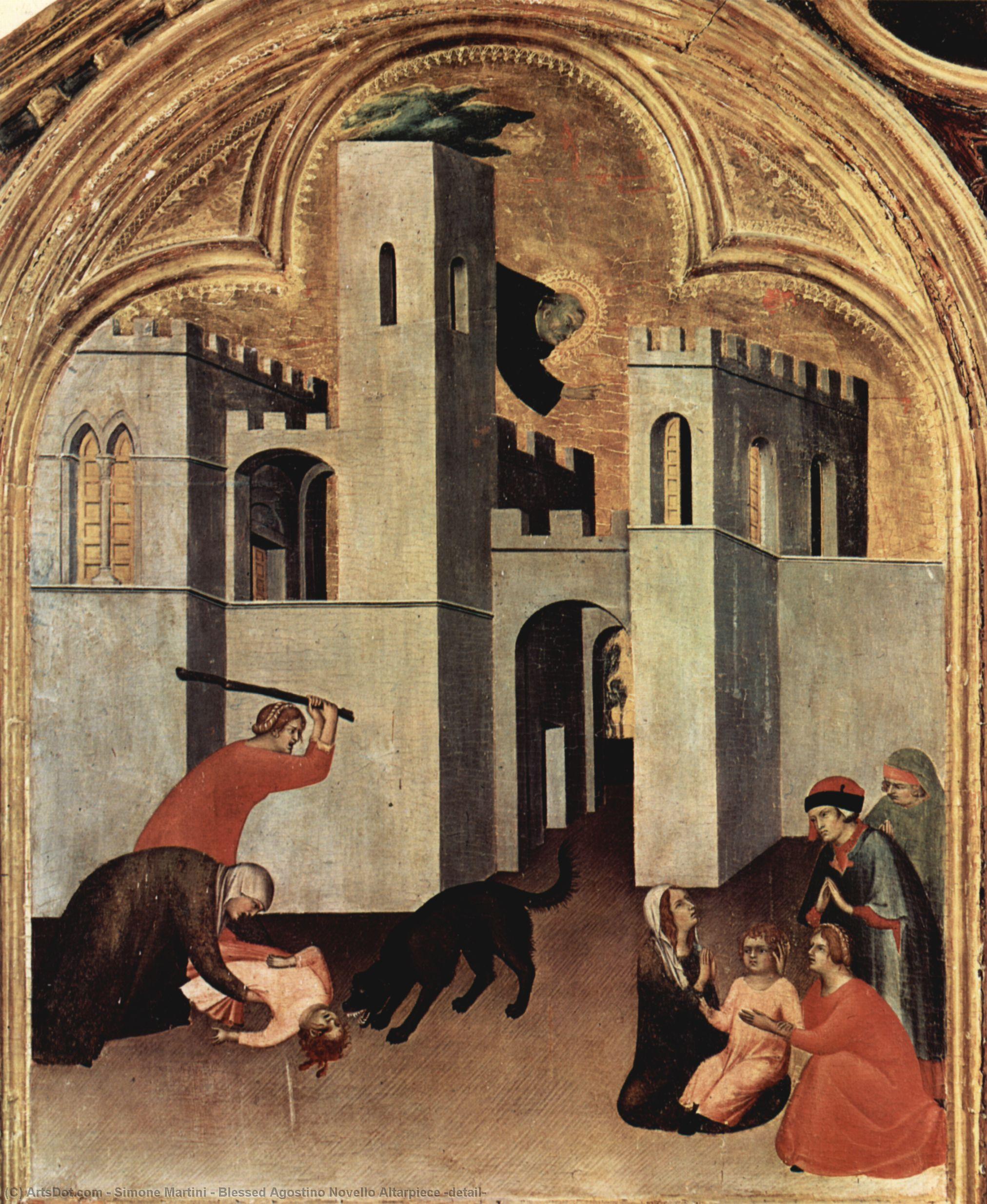
Discover Simone Martini's 1324 Blessed Agostino Novello Altarpiece detail, a stunning early Renaissance religious artwork featuring rich symbolism, balanced composition, and intricate storytelling. Perfect for art collectors.
Discover Simone Martini, the Sienese master of elegance and grace! His International Gothic paintings—like 'Maestà'—blend religious themes with courtly refinement & exquisite detail.
Explore Sienese art's golden age at the Pinacoteca Nazionale! Discover masterpieces by Duccio & Simone Martini within historic palaces – a journey through faith, beauty, and regional artistry.
Subject and Narrative Depth
This exquisite altarpiece captures a profound religious scene imbued with moral symbolism and spiritual reflection. Set within a meticulously detailed architectural framework, the composition depicts a moment of divine judgment or moral choice, featuring figures engaged in acts of mercy, prayer, and supplication. The celestial figure above, possibly an angel or divine messenger, oversees the scene, emphasizing the divine oversight and moral significance. Symbolic elements such as the black dog, representing temptation or evil, and the gestures of humility and penitence, invite viewers to contemplate themes of virtue, sin, and redemption. This narrative-driven artwork offers a window into medieval spiritual life, inspiring reflection on divine justice and human virtue.
Artistic Style and Technique
Created in 1324, this work exemplifies early Renaissance religious art with its balanced yet dynamic composition. The artist employs tempera or early oil paints on wood, achieving fine detail and subtle shading through meticulous brushwork. The use of geometric architectural forms—arches, towers, and rectangles—provides a stable framework that guides the viewer’s eye toward the central figures. Organic curves of the human figures contrast with the rigid architecture, adding a sense of life and movement. The subdued yet rich color palette, dominated by earthy ochres, browns, and muted reds, enhances the contemplative mood, while the precise lines and textures evoke a tactile sense of stone, plaster, and fabric.
Historical Context and Artistic Significance
Produced during the early 14th century, this altarpiece reflects the transition from medieval to early Renaissance artistic ideals. It embodies the spiritual and moral concerns of its time, emphasizing clarity, symbolism, and narrative clarity. The work is characteristic of the Sienese school, influenced by the Gothic style but beginning to explore more naturalistic forms and emotional expression. Its detailed storytelling and symbolic richness make it a valuable example of the period’s devotion to religious themes, serving both as a devotional object and a didactic tool for moral instruction.
Symbolism and Emotional Impact
Every element in this piece is carefully chosen to evoke emotional and spiritual reflection. The celestial figure above signifies divine oversight, while the figures below embody human virtues and vices. The act of prayer, mercy, and penitence depicted invites viewers to connect personally with the moral message. The somber color palette and detailed textures evoke a contemplative mood, encouraging viewers to ponder their own moral choices and spiritual journey. This artwork’s emotional depth and symbolic complexity make it a compelling centerpiece for any collection or interior space seeking to inspire reflection and reverence.
Perfect for Collection and Interior Design
This high-quality reproduction offers art lovers, collectors, and interior designers an opportunity to bring a piece of early Renaissance spirituality into their space. Its timeless subject matter and masterful execution make it an ideal focal point in a gallery, study, or sophisticated living area. Whether displayed as a standalone masterpiece or part of a curated collection, this altarpiece adds historical depth, artistic beauty, and moral resonance to any environment, inspiring contemplation and admiration for centuries to come.