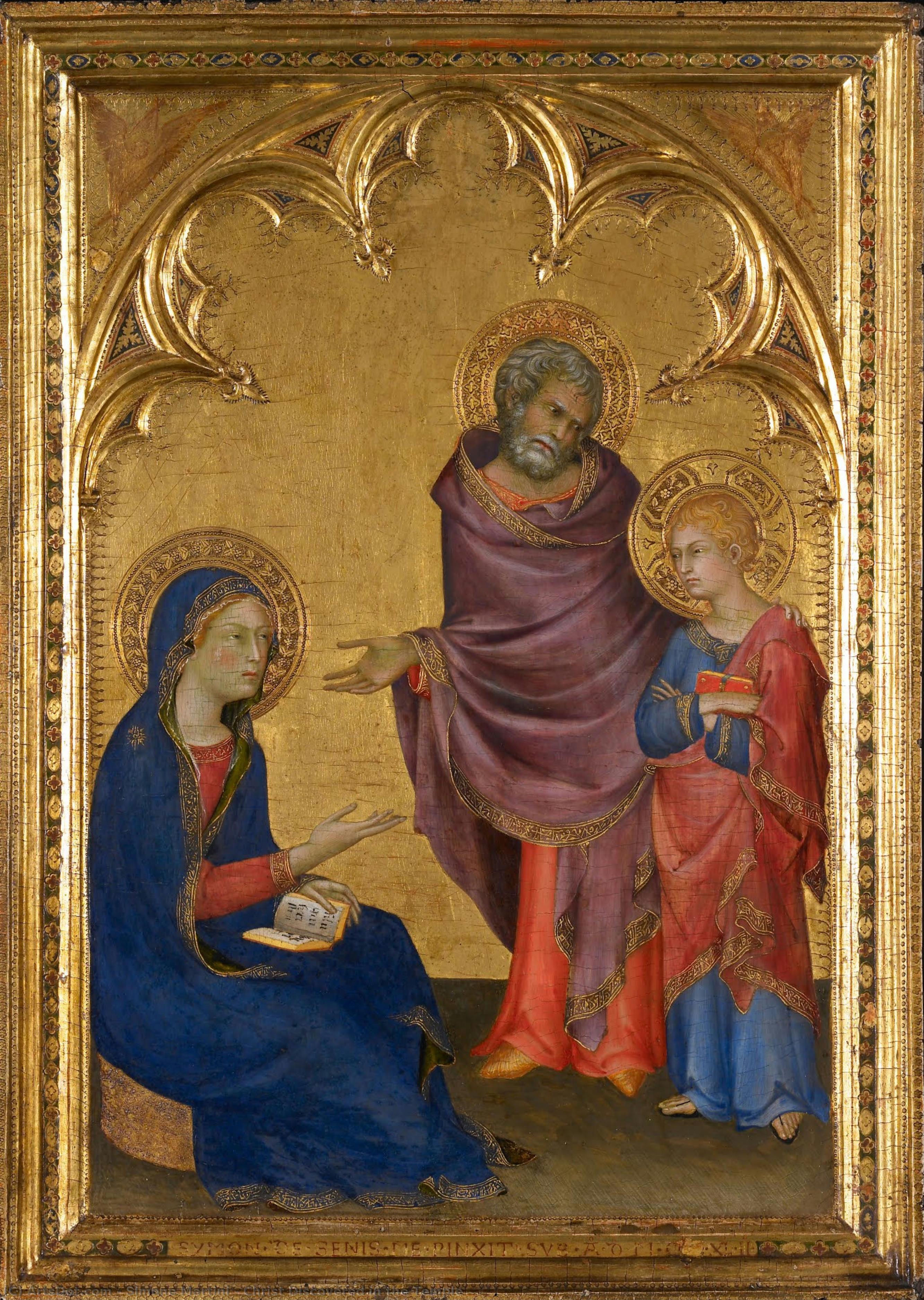
A Moment of Divine Discovery: Unveiling Simone Martini’s Masterpiece
Simone Martini's *Christ Discovered in the Temple* (1342) is a breathtaking example of 14th-century artistry, currently captivating viewers at the Walker Art Gallery in Liverpool. Measuring an impressive 351 x 495 cm, this tempera on panel painting isn’t merely a depiction of a biblical scene; it's a window into the evolving artistic landscape of medieval Europe and a testament to Martini’s exceptional skill.
The Narrative Unfolds: A Scene from the Gospels
The artwork portrays the poignant moment when the young Jesus, twelve years old, is found in the Temple in Jerusalem, engaging in theological debate with scholars. Having worriedly searched for him, Mary and Joseph confront their son. The inscription on the book held by a distressed Mary – “Son, why have you dealt with us like this?” (Luke 2:48) – encapsulates the emotional core of the scene: a mother’s concern mingled with awe at her son's precocious wisdom. Martini subtly captures this complex interplay of emotions through gesture and expression. The artist even signed and dated the work along the bottom edge, affirming his authorship and marking a significant moment in his career.
A Fusion of Styles: Sienese Tradition Meets French Elegance
Born in Siena, Italy, Martini was working within the orbit of the Papal court in Avignon, France when he created this masterpiece. This unique position resulted in a fascinating stylistic blend. While rooted in the elegant and refined traditions of Sienese painting – characterized by flowing lines, delicate features, and rich color palettes – *Christ Discovered in the Temple* also reflects the aristocratic sensibilities prevalent in French art of the period. The composition echoes the grace found in illuminated manuscripts and carved ivories, showcasing a courtly refinement rarely seen in earlier Italian works.
Technique & Materials: A Glimpse into Medieval Craftsmanship
Martini employed tempera on panel, a technique demanding meticulous precision. Layers of pigment were applied to the prepared wood surface, creating luminous colors and intricate details. The extensive use of gold leaf – not only in the background but also subtly highlighting elements within the scene – elevates the work’s spiritual significance and adds an opulent visual richness. This lavish application of gold was typical of the International Gothic style, emphasizing the divine nature of the subject matter.
Symbolism & Iconography: Layers of Meaning
Beyond its narrative content, the painting is rich in symbolism. The halos surrounding Jesus, Mary, and Joseph signify their holiness. The architectural setting, though stylized, suggests the grandeur and importance of the Temple as a center of religious learning. The arrangement of figures – forming a stable triangular composition – reinforces the sense of order and divine harmony. Even the clothing styles reflect contemporary fashion, grounding the biblical story within its historical context.
Historical Context & Patronage: A Reflection of Papal Power
Created during a period when the papacy was based in Avignon rather than Rome, *Christ Discovered in the Temple* likely benefited from significant patronage. It’s speculated that the commission came from a high-ranking figure within the papal court – perhaps even Pope Benedict XII himself. This suggests the painting served not only as an object of religious devotion but also as a symbol of papal authority and artistic sophistication.
Emotional Resonance & Lasting Legacy
*Christ Discovered in the Temple* evokes a sense of quiet contemplation and spiritual wonder. The delicate beauty of the figures, combined with the richness of the materials and the compelling narrative, creates an emotionally resonant experience for the viewer. Martini’s work profoundly influenced subsequent generations of artists, solidifying his place as a pivotal figure in the development of International Gothic painting.
It remains a powerful testament to the enduring power of faith and the transformative potential of art.
Further Exploration
- Related Works: Explore Simone Martini’s *Saviour Blessing (detail)* at the Palace of Popes in Avignon, France, for a further example of his refined style.
- Complementary Artists: Discover the works of Elisabetta Sirani, whose paintings are also housed at the Walker Art Gallery, offering a contrasting perspective on artistic expression.
- Museums to Visit: The Museum Notre-Dame-des-Doms in Avignon provides further insight into the art and culture of 14th-century France.