A Moment of Devotion Captured in Siena’s Finest Art
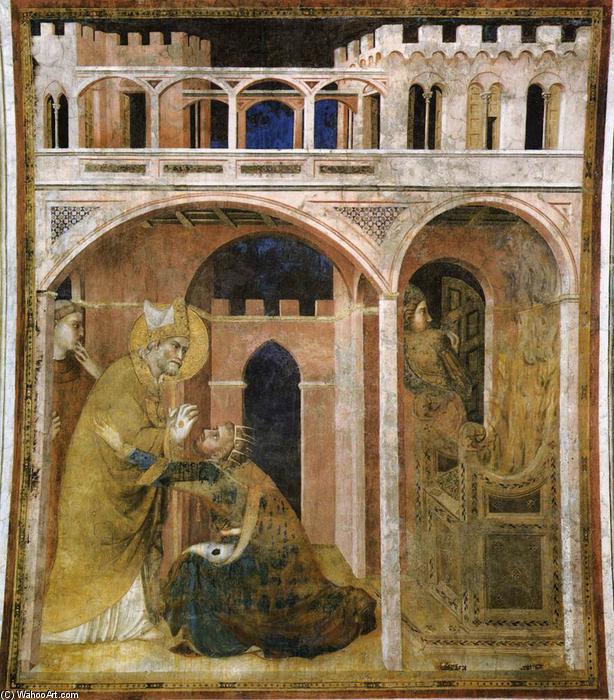
Simone Martini's “Miracle of Fire,” painted circa 1312, stands as a testament to the artistic brilliance of Sienese Gothic art—a style characterized by its meticulous detail and profound spiritual contemplation. This monumental panel, measuring 296 x 230 cm, resides within the Basilica di San Francesco in Assisi, Italy, serving not merely as decoration but as an integral part of a larger cycle depicting scenes from the Life of Saint Francis.
- Subject Matter: The painting depicts a poignant tableau—a man kneeling before a deceased or unconscious figure. This dramatic gesture underscores themes of compassion and unwavering faith, central to Franciscan theology.
- Style & Technique: Martini’s masterful execution exemplifies the Gothic style's hallmark features: elongated figures rendered with graceful curves and delicate lines. The artist employs tempera paint on wood panel, a technique renowned for its luminosity and ability to achieve subtle tonal gradations—essential for conveying the solemn mood of the scene.
- Historical Context: Siena during Martini’s lifetime was a vibrant hub of artistic patronage, fueled by papal influence and burgeoning mercantile wealth. The Basilica di San Francesco commissioned this cycle as an expression of devotion to Saint Francis, embodying the Franciscan ideals of humility, poverty, and unwavering faith in God’s providence.
Symbolism: Beyond its immediate depiction, “Miracle of Fire” is laden with symbolic significance. The kneeling posture represents penitence and supplication, while the man's hands cradling the deceased figure symbolize care and protection—a visual embodiment of divine mercy. The castle-like structure in the background serves as a reminder of earthly authority juxtaposed against spiritual transcendence.
Emotional Impact: Martini’s artwork transcends mere representation; it evokes profound emotion. The subdued palette—dominated by blues, reds, and golds—creates an atmosphere of solemn reverence. The artist's meticulous attention to detail captures not only the physical likenesses of the figures but also their inner states of mind—inspiring viewers with a sense of empathy and prompting reflection on themes of mortality and divine grace.