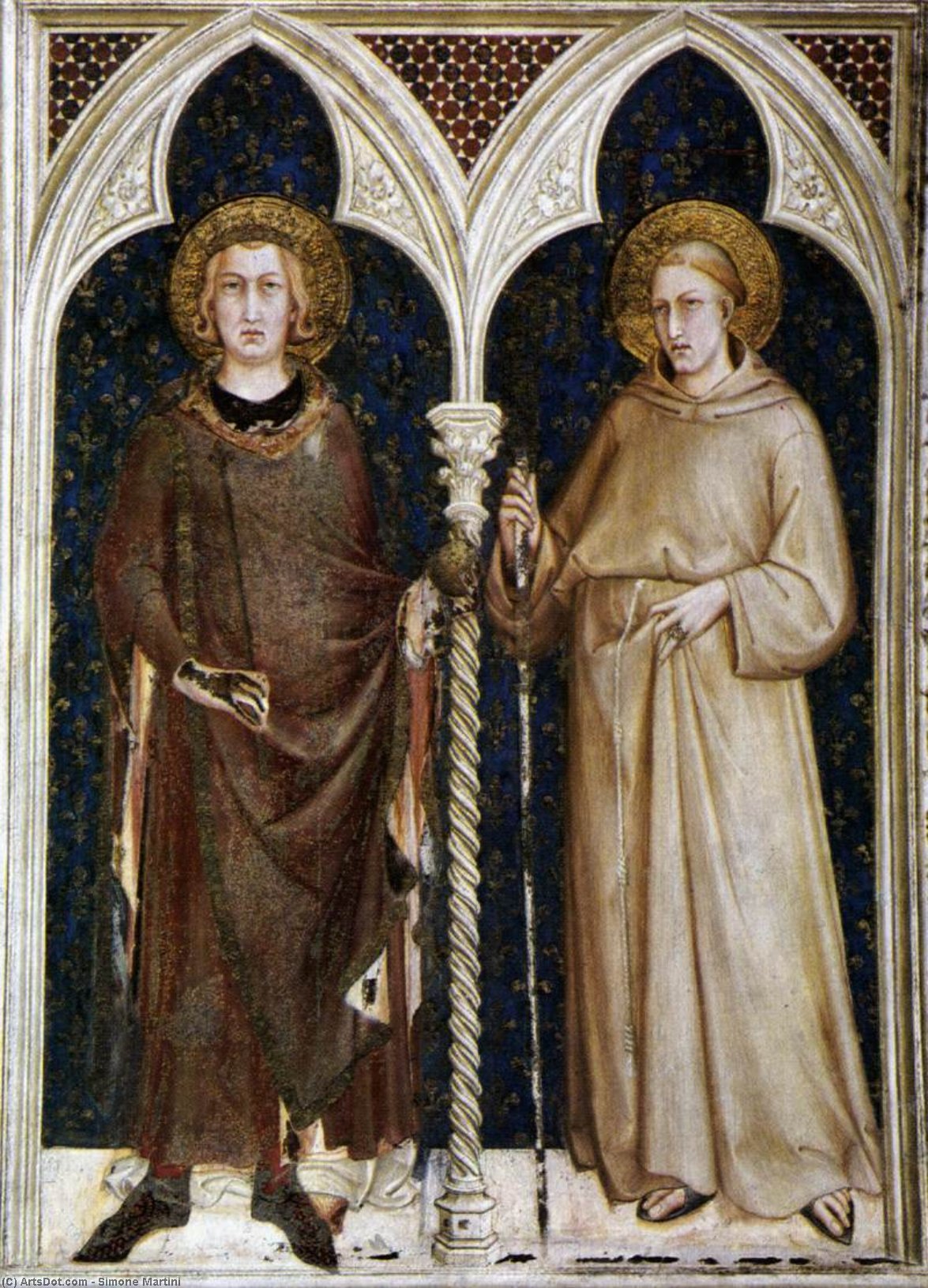
Simone Martini’s Saint Louis of Toulouse: A Testament to Angevin Succession and Franciscan Piety
The altarpiece “Saint Louis of Toulouse Crowning His Brother Robert of Anjou,” attributed to Simone Martini, stands as a breathtaking achievement of Sienese Gothic art—a visual chronicle of papal legitimacy and the profound influence of religious devotion. Painted between 1312 and 1315 for Robert of Anjou’s chapel in Naples, this monumental fresco embodies not merely artistic skill but also the complex political and spiritual currents shaping Europe at the dawn of the Renaissance. Its enduring appeal lies in Martini's masterful manipulation of color and line, creating an image that transcends its time to resonate with viewers today.
- Subject Matter: The scene depicts Saint Louis IX of Toulouse crowning his brother Robert of Anjou, symbolizing the continuation of Angevin royal lineage—a crucial assertion of papal authority amidst turbulent political disputes following the death of Frederick II. This narrative underscores the importance of familial piety and divine sanction in legitimizing rulers.
- Style: Martini’s style is characterized by an exquisite elegance and grace that distinguishes him from his contemporaries like Giotto, reflecting Siena's flourishing artistic culture. He adheres to the conventions of Gothic art—particularly its emphasis on planar surfaces and stylized drapery—yet imbues it with a luminous quality achieved through innovative glazing techniques.
- Technique: Martini employed tempera paint on gesso panels, utilizing meticulous layering and blending to achieve remarkable tonal gradations and textural nuances. The fresco’s vibrant colors – predominantly gold leaf, crimson, azure, and ochre – are applied with painstaking precision, demonstrating the artist's unparalleled mastery of pigment manipulation.
Historical Context: Robert of Anjou commissioned Martini to commemorate Saint Louis IX’s canonization in 1317—a pivotal moment affirming papal piety and bolstering royal prestige. The altarpiece served as a powerful visual propaganda tool, reinforcing the sanctity of the Angevin dynasty and asserting its claim to the throne against rival claimants. Furthermore, it reflects the broader artistic exchange between Siena and Naples during Martini’s exile, showcasing influences from Florentine proto-Renaissance aesthetics.
Symbolism: The composition is laden with symbolic significance. The golden background represents divine illumination—the glory of God—underscoring the sanctity of the coronation ritual. Saint Louis IX's serene gaze embodies humility and piety, while Robert’s posture conveys regal dignity. The inclusion of a dove symbolizes peace and divine grace, reinforcing the overarching theme of spiritual triumph over earthly ambition. Martini’s careful attention to detail—from the intricate folds of the robes to the expressive faces of the figures—elevates the artwork beyond mere representation into a profound meditation on faith and royal legitimacy.
Emotional Impact: “Saint Louis of Toulouse Crowning His Brother Robert of Anjou” evokes a sense of solemn grandeur and spiritual contemplation. Martini’s masterful use of color and light creates an atmosphere of reverence, inviting viewers to contemplate the enduring power of religious devotion and the importance of upholding moral virtue. Its luminous beauty continues to inspire admiration and serves as a testament to Simone Martini's unparalleled artistic genius—a beacon of Sienese Gothic art that transcends time and speaks directly to the human spirit.