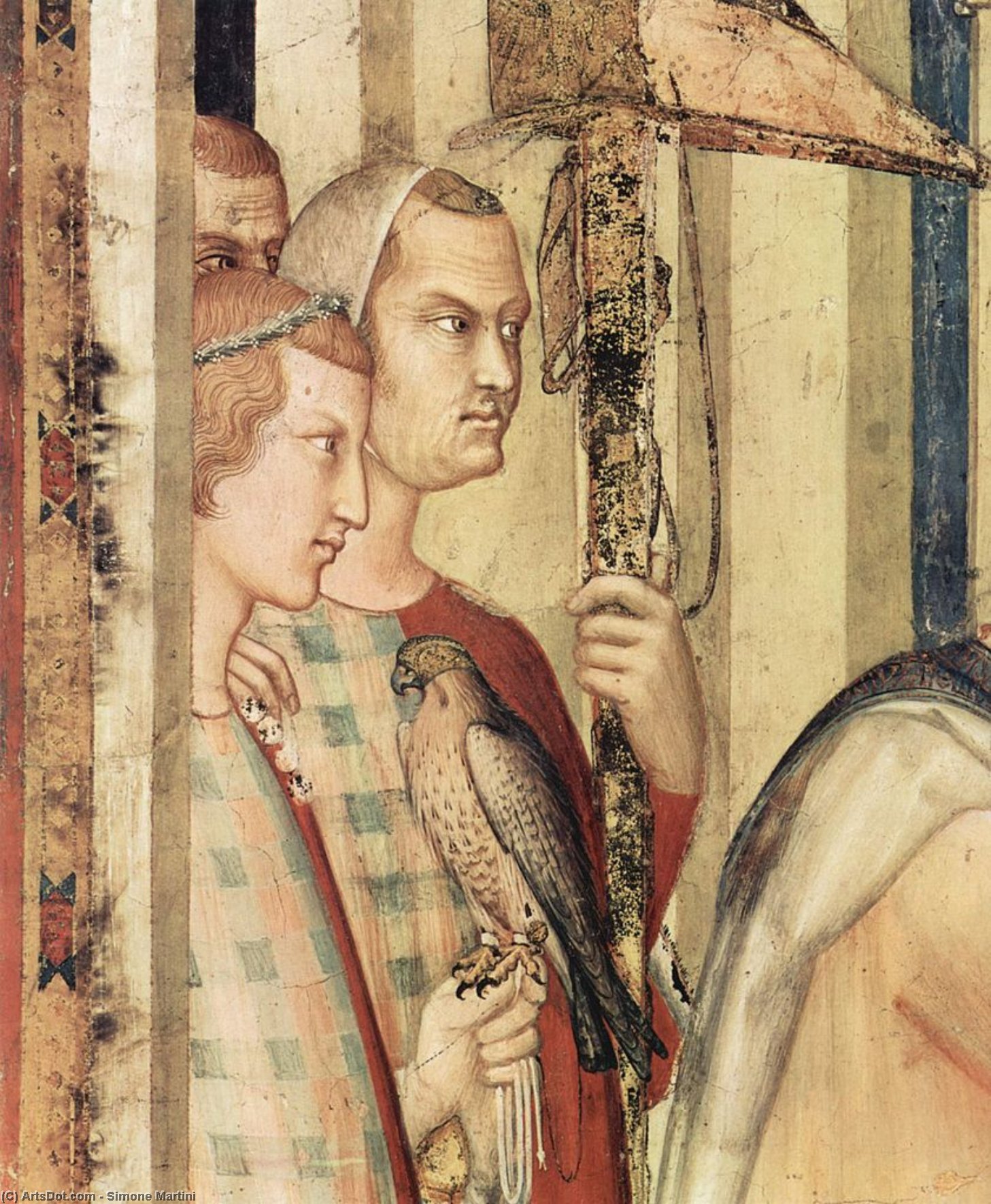
A Moment of Papal Grace: Exploring Simone Martini’s “St. Martin is Knighted”
The fresco depicting St. Martin is Knighted, attributed to Simone Martini and completed in 1312, transcends mere visual representation; it embodies the spirit of Siena during its golden age – a confluence of piety, artistic innovation, and refined patronage. Executed in tempera on plaster, Martini’s masterpiece isn't simply a depiction of biblical narrative but a carefully crafted testament to papal authority and Christian virtue. The scene captures the pivotal moment when St. Martin, revered Saint known for his compassion and generosity, was formally knighted by Pope Urban IV – an honor bestowed upon him for his selfless act of distributing his cloak to a beggar in winter.
- Subject Matter: The fresco portrays St. Martin accepting the accolade from Pope Urban IV, symbolizing divine grace and spiritual elevation.
- Style: Martini’s style is quintessential Gothic Elegance, characterized by elongated figures, delicate drapery folds, and a luminous palette that prioritizes subtle tonal variations over bold color contrasts. This aesthetic aligns perfectly with the prevailing artistic sensibilities of Siena at the time.
The meticulous technique employed by Martini speaks volumes about his mastery. Tempera paint—pigments bound in egg yolk—allowed for unparalleled luminosity and detail, a significant advancement compared to earlier fresco methods. Observe how Martini skillfully renders the textures of clothing and skin with astonishing precision, conveying both physicality and spiritual solemnity. The artist’s attention to line – particularly the flowing contours of drapery – contributes immensely to the overall sense of movement and grace within the composition. Furthermore, Martini's collaboration with Lippo Memmi exemplifies the collaborative spirit that fueled artistic creativity in Siena during this period.
Historical Context: Siena Under Urban IV
The fresco’s creation coincided with Pope Urban IV’s reign (1308-1314), a time marked by significant religious fervor and political ambition. Urban IV sought to solidify papal prestige through grand architectural projects and, crucially, by bolstering the Church's moral authority. The knighted St. Martin served as an ideal emblem for this endeavor – representing humility, piety, and unwavering devotion to God’s will. Siena itself was experiencing a period of economic prosperity fueled by wool trade, which enabled wealthy patrons like Pope Urban IV to commission ambitious artworks that reflected their faith and status.
- Symbolism: The bird imagery – notably the one held aloft by the man in the foreground – carries symbolic weight. Birds are frequently associated with divine messengership and spiritual aspiration, reinforcing the narrative’s central theme of holiness.
- Emotional Impact: Martini's masterful depiction evokes a profound sense of reverence and contemplation. The serene expressions of the figures convey an unwavering belief in faith and compassion—qualities that resonated deeply within Siena’s artistic and spiritual culture.
Finally, consider how this stunning reproduction can enrich your interior space. Its vibrant colors and exquisite detail capture the essence of Martini's genius, transporting viewers back to a time when art served as a conduit for faith and beauty. “St. Martin is Knighted” remains an enduring testament to Siena’s artistic legacy and a captivating glimpse into the spiritual convictions that shaped its cultural identity—a piece destined to inspire admiration for generations to come.