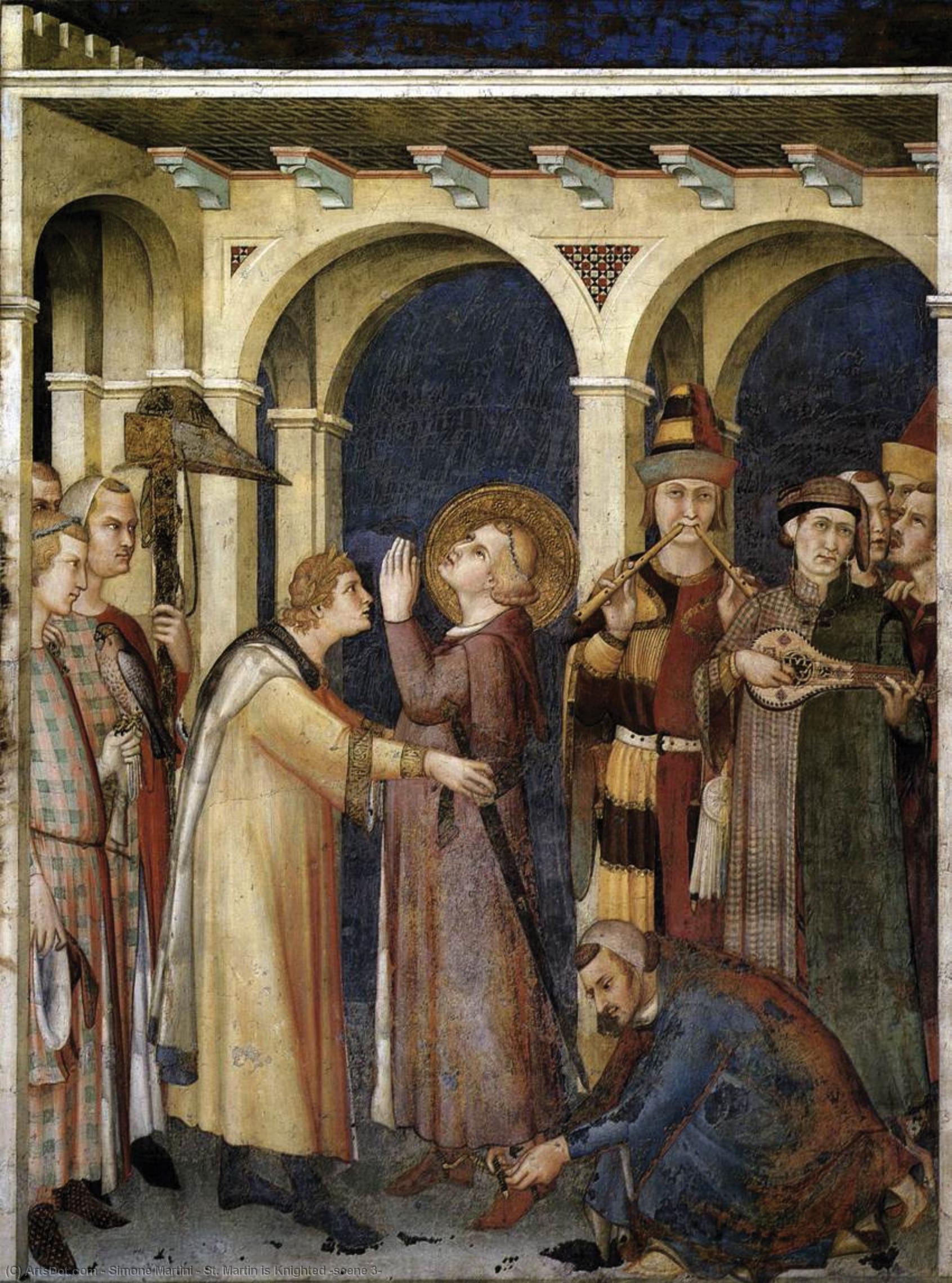
A Moment of Humble Petition: Exploring Simone Martini’s “St. Martin is Knighted”
The painting "St. Martin is Knighted," created by Simone Martini around 1312, transcends mere visual representation; it embodies a profound meditation on faith, humility, and divine grace—themes central to the artistic sensibilities of Siena during its golden age. Executed in tempera paint on panel, this masterpiece exemplifies Martini’s signature style – characterized by meticulous detail, luminous color palettes, and an unparalleled mastery of line that imbues every element with palpable elegance. The scene depicts St. Martin, a Roman soldier who famously abandoned his armor to clothe a beggar in winter clothing, receiving the accolade—the ceremonial crowning—from Bishop Fulco degli Albizzi, symbolizing forgiveness and divine benediction.
- Subject Matter: The artwork portrays a pivotal biblical narrative – Saint Martin’s act of compassion and subsequent recognition by ecclesiastical authority. This story speaks to the importance of charity and spiritual righteousness within Christian theology.
- Style: Martini's style aligns perfectly with International Gothic art, a movement that prioritized refined ornamentation and idealized beauty alongside religious piety. The figures are rendered with graceful poses and delicately sculpted drapery, reflecting the influence of Florentine artists like Giotto di Bondone who championed naturalism within a spiritual framework.
- Technique: Martini’s meticulous application of tempera paint—a medium known for its brilliance and durability—allowed him to achieve astonishing levels of realism and luminosity. The artist skillfully blended colors, creating subtle gradations that convey depth and atmosphere, particularly noticeable in the depiction of St. Martin's robes and Bishop Albizzi’s halo.
The historical context surrounding “St. Martin is Knighted” illuminates Siena’s position as a bastion of artistic innovation during the early fourteenth century. Siena was experiencing considerable economic prosperity thanks to its wool trade, fueling patronage from wealthy families like the Albizzi clan—Bishop Fulco being one of their prominent members. Martini's work reflects this cultural dynamism, demonstrating the desire for art to elevate moral values and commemorate significant religious events. The inclusion of several onlookers – including a kneeling woman and a seated figure holding a book – underscores the importance of communal piety and reinforces the narrative’s spiritual core.
Symbolism: Beyond its biblical story, “St. Martin is Knighted” resonates with deeper symbolic meanings. The accolade itself represents divine acknowledgment of St. Martin's virtuous deed—a tangible manifestation of God’s grace bestowed upon those who demonstrate compassion and humility. The bishop’s halo signifies his spiritual authority and holiness, highlighting the sanctity of the occasion. Furthermore, the woman kneeling symbolizes penitence and supplication, mirroring St. Martin’s own posture as he seeks forgiveness from Bishop Albizzi.
Emotional Impact: Martini's masterful depiction evokes a powerful sense of reverence and contemplation. The luminous colors and exquisitely rendered drapery inspire awe, transporting viewers into the sacred space of the cathedral where the ceremony unfolds. The scene communicates not only piety but also an underlying feeling of vulnerability—St. Martin’s kneeling posture conveys his earnest desire for divine mercy, fostering empathy within the observer. “St. Martin is Knighted” remains a testament to Martini's artistic genius and its enduring ability to captivate audiences centuries later. It serves as a poignant reminder that true beauty resides not merely in visual splendor but also in conveying profound spiritual truths.