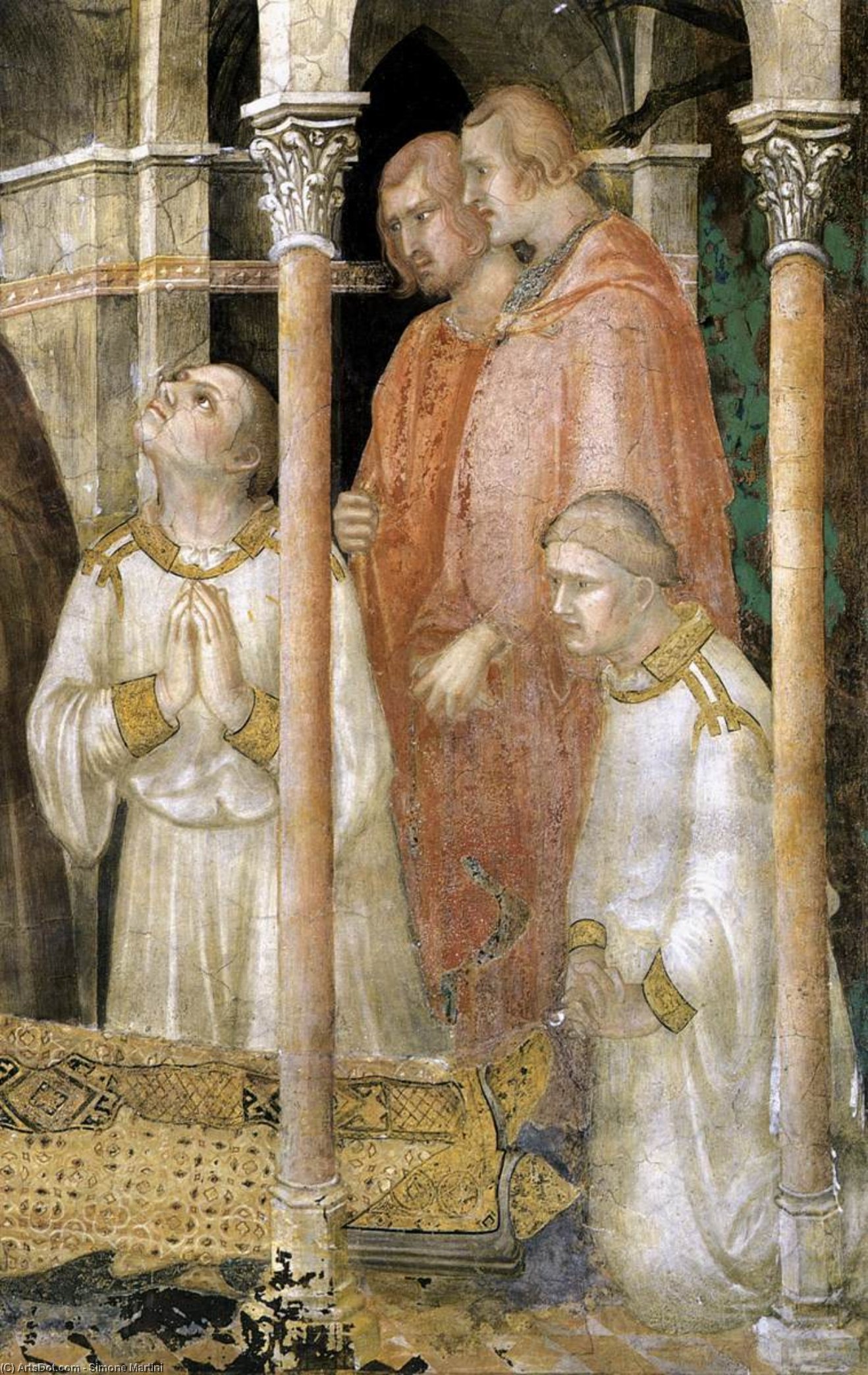
Exquisite detail from Simone Martini’s ‘Death of St. Martin’ (1312) fresco! Early Renaissance art, rich symbolism & muted earth tones. A stunning piece for art collectors.
Discover Simone Martini, the Sienese master of elegance and grace! His International Gothic paintings—like 'Maestà'—blend religious themes with courtly refinement & exquisite detail.
A Glimpse into Divine Transition: Simone Martini’s ‘The Death of St. Martin (detail)’
This exquisite detail originates from Simone Martini's monumental fresco cycle depicting the life of Saint Martin of Tours, originally adorning the San Martino Chapel within the Lower Basilica of Saint Francis in Assisi, Italy – a site steeped in religious history and artistic significance. Painted in 1312, this fragment offers a captivating window into the world of early Renaissance art, showcasing Martini’s mastery and innovative style.
Subject & Narrative
The scene captures a poignant moment surrounding the death of St. Martin, a revered figure known for his compassion and dedication to Christianity. We see three figures kneeling in reverence, their postures conveying deep sorrow and devotion, while a standing figure – likely a clergyman or high-ranking member of the church – presides over the solemn occasion. The composition focuses on the transition between life and death, emphasizing the spiritual importance of this moment for both the saint and his followers. It’s part of a larger narrative cycle illustrating key events in St. Martin's life, commissioned by Cardinal Gentile Portino da Montefiore.
Style & Technique: A Bridge Between Traditions
Simone Martini stands as a pivotal figure bridging the gap between the Byzantine and Gothic artistic traditions, ultimately influencing the development of the International Gothic style. This detail exemplifies his unique approach. While retaining elements of stylized representation – particularly in the drapery and facial features – there’s a growing sense of naturalism compared to earlier Italo-Byzantine works. The technique employed is *fresco secco*, meaning pigments were applied to dry plaster, resulting in a matte finish and allowing for intricate detail. Notice the delicate lines defining the architecture and clothing folds, as well as the subtle modeling that gives form to the figures.
Historical Context & Artistic Innovation
The early 14th century was a period of significant artistic change in Italy. Martini’s work reflects this transition, moving away from the more rigid forms of Byzantine art towards a greater emphasis on elegance, narrative clarity, and emotional expression. He was likely influenced by both Duccio di Buoninsegna and Giotto, yet he developed his own distinctive style characterized by refined grace and decorative detail. Commissioning such an elaborate fresco cycle for the Basilica of Saint Francis underscores the growing patronage of art within the Church and its use as a powerful tool for religious instruction and devotion.
Symbolism & Emotional Resonance
Every element within this composition carries symbolic weight. The kneeling figures represent humility, prayer, and acceptance of God’s will. The robes worn by the central figure denote status and piety. The architectural setting – with its arched forms – evokes a sense of sacred space and divine presence. The overall emotional impact is one of solemnity, reverence, and quiet contemplation. Martini masterfully conveys the gravity of the moment while simultaneously imbuing it with a sense of spiritual hope.
Color Palette & Composition
The color palette is dominated by muted earth tones – ochre, beige, and cream – which create a sense of warmth and intimacy. Accents of red and gold are strategically used to draw the eye and highlight key elements, such as the robes and architectural details. The vertical orientation of the composition emphasizes the height of the figures and the grandeur of the setting, reinforcing the spiritual significance of the scene. The careful arrangement of forms and colors contributes to a harmonious and visually compelling image.
For Collectors & Designers
This detail from ‘The Death of St. Martin’ is not merely a historical artifact; it's a testament to human artistry and spiritual devotion. Its refined aesthetic and rich symbolism make it an ideal addition to any art collection. For interior designers, this piece offers a touch of timeless elegance and sophistication, capable of transforming any space into a haven of beauty and contemplation. A high-quality reproduction will bring the grace and serenity of Martini’s masterpiece into your home or project.