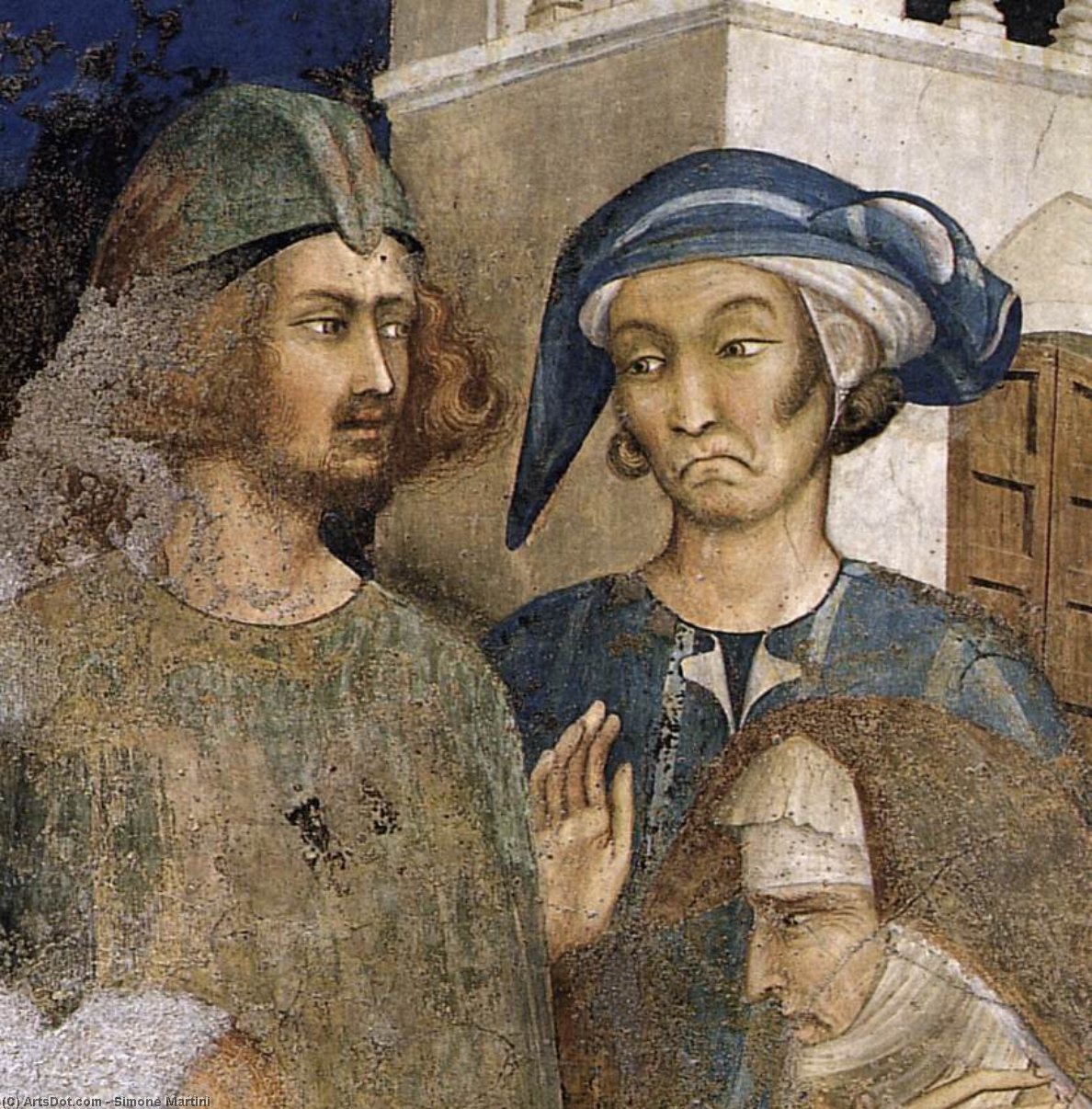
Discover the exquisite detail of Simone Martini's 'The Miracle of the Resurrected Child' (1312). A Renaissance fresco showcasing masterful artistry and symbolic depth.
Discover Simone Martini, the Sienese master of elegance and grace! His International Gothic paintings—like 'Maestà'—blend religious themes with courtly refinement & exquisite detail.
A Glimpse into Divine Compassion: Simone Martini’s ‘The Miracle of the Resurrected Child’
Simone Martini's detail from ‘The Miracle of the Resurrected Child,’ painted in 1312, offers a poignant window into the artistic and spiritual sensibilities of early Renaissance Italy. This fragment, originally part of a larger fresco cycle adorning the Basilica di San Francesco d'Assisi, isn’t merely a depiction of a miraculous event; it is a carefully constructed narrative imbued with both delicate beauty and profound emotional resonance. The scene captures a pivotal moment – the resurrection of a child brought forth by the intercession of Saint Martin of Tours. Two figures dominate the composition: Saint Martin himself, distinguished by his simple yet dignified attire and a blue hat that draws the eye, and another man, perhaps the grieving father, whose gaze is fixed upon the unfolding miracle. The setting, suggested by architectural elements like doorways and building facades, evokes a sense of both earthly reality and sacred space, grounding the supernatural event within a recognizable world.
The Sienese School and the Dawn of International Gothic
To understand this detail fully, one must consider its place within the broader context of Sienese painting. Martini emerged from a tradition deeply rooted in Byzantine influence, yet he skillfully synthesized these elements with emerging Italian styles. He is often credited as a key figure in the transition towards what would become known as International Gothic – a style characterized by elegance, refined detail, and an emphasis on graceful lines. Unlike the more monumental and austere approach favored by Florentine artists like Giotto, Martini’s work possesses a lyrical quality, a sense of courtly refinement that appealed to sophisticated audiences. The delicate modeling of faces, the flowing drapery, and the use of muted yet harmonious colors all contribute to this distinctive aesthetic. While debate continues regarding his early training – some scholars believe he studied under Duccio di Buoninsegna, while others suggest an apprenticeship with Giotto – Martini undeniably forged a unique artistic path that set him apart from his contemporaries.
Symbolism and Narrative Detail
The power of ‘The Miracle of the Resurrected Child’ lies not only in its aesthetic qualities but also in its rich symbolic language. The very act of resurrection, central to Christian belief, speaks to themes of hope, faith, and divine intervention. The expressions on the faces of the figures are particularly telling – a mixture of awe, gratitude, and perhaps even disbelief. Martini masterfully captures these subtle emotions, drawing the viewer into the emotional core of the scene. Furthermore, the inclusion of architectural details isn’t merely decorative; it serves to locate the miracle within a specific time and place, enhancing its narrative impact. The building in the background is thought to represent Siena itself, subtly connecting the divine event to the civic identity of the city. This blending of sacred and secular elements was characteristic of Sienese art, reflecting the close relationship between religious devotion and communal life.
A Legacy of Grace and Devotion
The enduring appeal of Simone Martini’s work lies in its ability to evoke a sense of both spiritual reverence and human empathy. ‘The Miracle of the Resurrected Child,’ even as a detail, encapsulates this quality perfectly. It is a testament to the artist's skill in capturing not just physical likeness but also the inner lives of his subjects. For those seeking to bring a touch of Renaissance grace into their homes or collections, a reproduction of this masterpiece offers more than just aesthetic beauty; it provides a connection to a pivotal moment in art history and a powerful expression of faith and compassion. The subtle color palette and delicate details lend themselves beautifully to various interior styles, adding a layer of historical depth and artistic sophistication to any space.