A Moment Frozen in Time: The Soul of the English Countryside
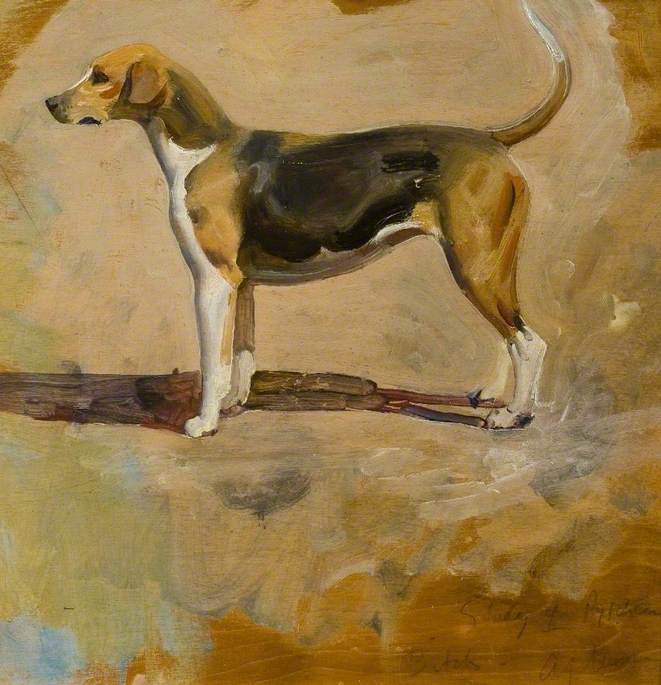
In the quietude of Sir Alfred James Munnings’s 'Study of a Foxhound, Pytchley,' one does not merely encounter a painting of an animal, but rather a window into a vanishing era of British heritage. Born in 1878 amidst the serene landscapes of Suffolk, Munnings acted as a vital chronicler of a disappearing England—a realm defined by the rhythmic traditions of hunting, the elegance of equine grace, and the palpable beauty of rural existence. This particular study captures more than just a canine subject; it encapsulates the very essence of the English countryside, offering a sense of nostalgic tranquility that resonates deeply with those who cherish the timeless connection between nature and tradition.
The composition centers on a foxhound standing in a posture of attentive repose, its front paws outstretched as if caught in a fleeting moment of stillness before the chase begins. The dog’s gaze, turned slightly to the side, radiates an unmistakable intelligence and alertness, pulling the viewer into its focused world. To enrich this sense of companionship and life, Munnings subtly integrates two additional hounds within the scene—one smaller figure to the right and another receding into the soft background. These figures are not mere decorative elements; they serve as silent companions that reinforce themes of camaraderie and the shared spirit of the hunt, creating a narrative of communal life within the pastoral landscape.
Mastery of Light and Impressionistic Texture
Technically, this work is a triumph of the Impressionistic style, showcasing Munnings’s ability to prioritize atmosphere and feeling over rigid, meticulous detail. The artist employs a masterful use of light, allowing it to dance across the white and brown patches of the hound's coat, giving the subject a palpable sense of three-dimensionality. His brushwork is characteristically loose and energetic, utilizing thick impasto to create a surface texture that invites the eye to wander through the layers of paint. This tactile quality does more than represent fur or earth; it breathes life into the canvas, capturing the fleeting play of light that defines a single, precious moment in time.
For the discerning collector or interior designer, this piece offers an unparalleled emotional depth. The soft, blended tones of the background allow the central subject to emerge with clarity while maintaining a dreamlike, atmospheric quality. Whether placed in a grand library, a traditional study, or a contemporary space seeking a touch of classical warmth, 'Study of a Foxhound, Pytchley' serves as a sophisticated focal point. It is an invitation to slow down, to reflect on the beauty of the natural world, and to possess a fragment of the romanticized English pastoral tradition that continues to inspire awe across generations.