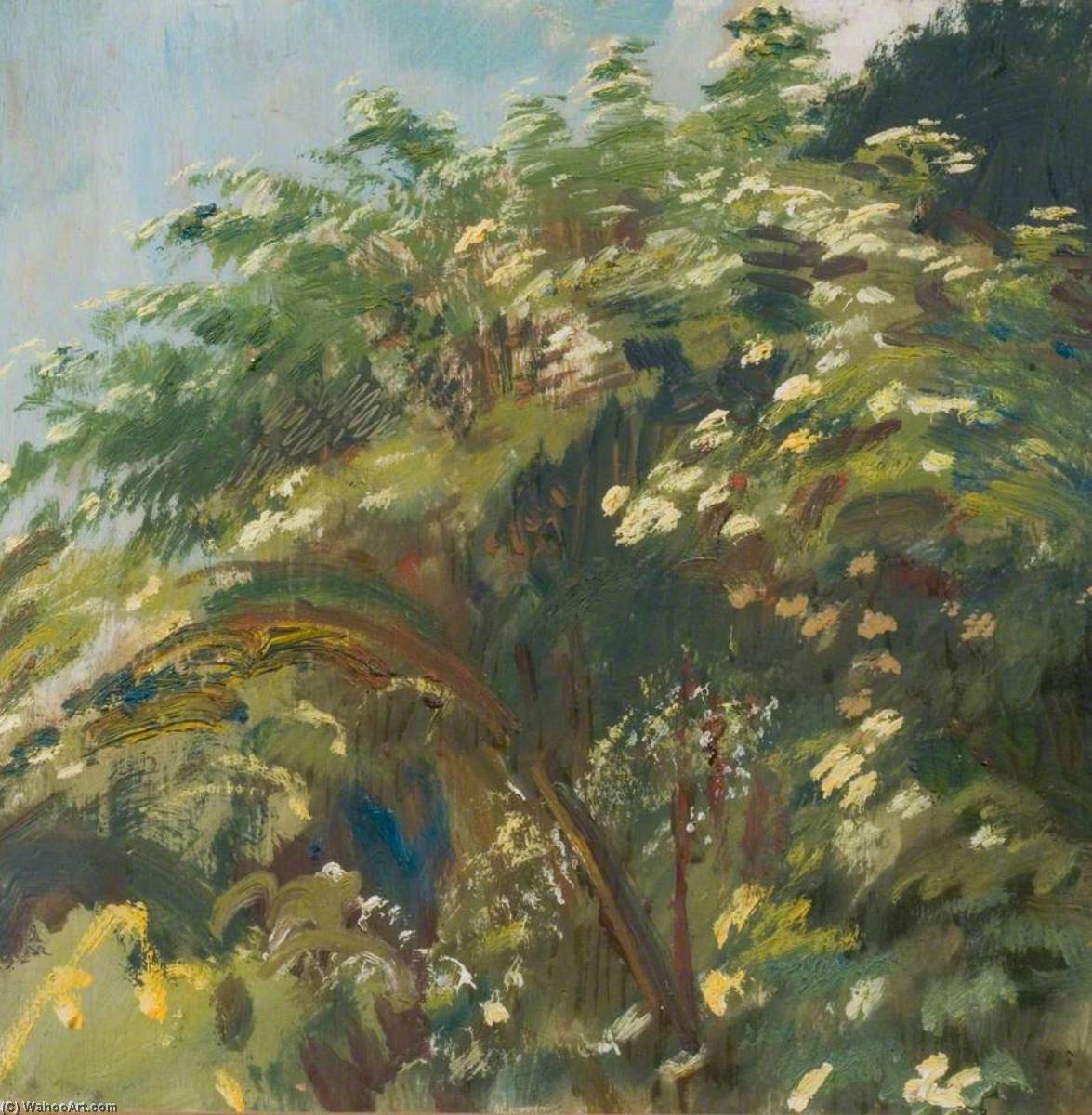
A Celebration of Rural Tranquility: Exploring Munnings’s “Study of Elder Blossom” - This Impressionist landscape captures the serene beauty of spring with loose brushstrokes and vibrant colors, reflecting Victorian hunting traditions.
Sir Alfred James Munnings (1878-1959): Discover England's foremost horse painter! Explore vibrant Impressionistic scenes of hunting, racing & rural life. A passionate defender of traditional art.
Explore Sir Alfred Munnings' life & art at his former home in Colchester! Discover British sporting paintings, his studio reconstruction & historic gardens – open Wed-Sun until Oct 26th.
A Celebration of Rural Tranquility: Exploring Munnings’s “Study of Elder Blossom”
Sir Alfred James Munnings, born in Mendham Township, Suffolk, England, in 1878, stands as a titan amongst British Impressionists. His unwavering devotion to capturing the essence of equine grace and the serene beauty of the English countryside cemented his legacy as one of the most influential artists of his era. “Study of Elder Blossom,” painted circa 1923, exemplifies Munnings’s signature style—a masterful blend of observation and emotive expression that transports viewers directly into a moment of idyllic rural life.
The Painter's Vision: Impressionistic Technique
Munnings eschewed the academic conventions prevalent in his time, prioritizing directness and spontaneity. He employed loose brushstrokes and vibrant color palettes characteristic of Impressionism, mirroring the fleeting effects of light and atmosphere. Unlike meticulously rendered portraits or landscapes, “Study of Elder Blossom” prioritizes capturing a feeling—the palpable stillness of spring, the gentle warmth of sunlight filtering through blossoming branches. The artist’s technique is deliberately imprecise, allowing for an intuitive portrayal of nature's subtleties rather than striving for photographic accuracy. This approach aligns perfectly with Munnings’s belief that art should convey emotion and experience as much as it depicts visual reality.
A Landscape Steeped in Tradition: Contextual Significance
The painting’s setting—a solitary elm tree laden with elder blossoms—holds profound symbolic resonance within British folklore and rural culture. Elder trees are revered for their longevity, resilience, and association with healing and protection. Munnings skillfully portrays this venerable specimen against a backdrop of lush greenery, reflecting the enduring connection between humanity and the natural world. The scene harkens back to Victorian hunting traditions, where elm trees served as markers along hunting trails—a visual reminder of Britain’s aristocratic past and its deep appreciation for equestrian pursuits.
Color Palette & Emotional Resonance
Munnings' masterful use of color contributes significantly to the artwork’s emotional impact. Dominant hues of pale yellows and greens evoke the freshness of springtime, while subtle shades of white illuminate the delicate blossoms themselves. The artist avoids harsh contrasts, favoring instead a harmonious blend that fosters a sense of calm contemplation. Viewing “Study of Elder Blossom” is akin to stepping into a sunlit meadow—a moment of respite from urban bustle and an invitation to appreciate the simple pleasures of rural existence. It’s a testament to Munnings' ability to transform observation into profound artistic expression, capturing not just what he saw but how it felt.
Where To Find This Artwork
You can admire this stunning piece of art at The Munnings Art Museum in Dedham, Massachusetts. Alternatively, explore high-quality reproductions available at Art UK Shop: https://shop.artuk.org/study-of-elder-blossom-3832.html