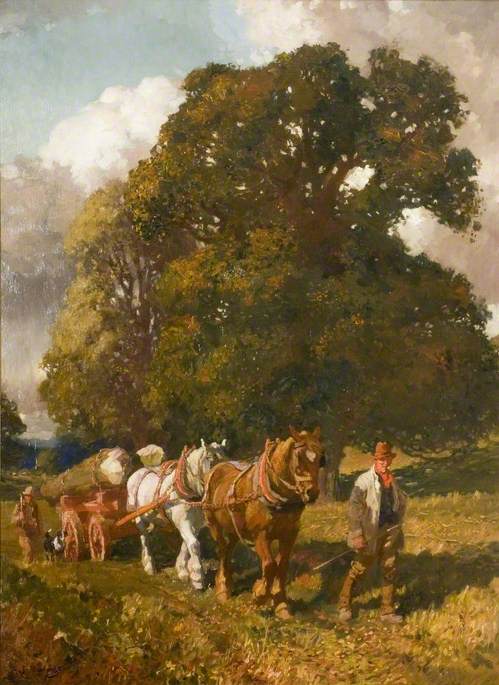
A Vision of Rural England: Exploring “The Timber Gill” by Alfred James Munnings
Alfred James Munnings (1878–1959) stands as one of Britain’s most celebrated equine painters, a figure whose canvases capture not merely horses in motion but the very soul of the English countryside. “The Timber Gill,” completed in 1902, exemplifies his distinctive style—a masterful blend of Impressionism and plein air painting that prioritizes immediacy and atmospheric observation.
Subject Matter and Composition
The painting depicts a tranquil scene: a man skillfully guiding two horses hauling a wagon through a grassy meadow. Scattered figures populate the periphery, adding depth to the composition and hinting at a community rooted in tradition. Notably prominent is a dog nestled amongst the horses, symbolizing companionship and loyalty—elements characteristic of Munnings’s recurring motifs.
Munnings' Artistic Technique
Munnings employed a technique honed through years of experience working outdoors. He utilized loose brushstrokes and vibrant color palettes to convey the fleeting effects of light and weather on the landscape. The artist meticulously blended pigments directly onto the canvas, achieving remarkable luminosity and capturing the subtle nuances of tonal variation—a hallmark of Impressionistic practice.
Historical Context: Hunting Traditions in Edwardian Britain
"The Timber Gill" speaks to a pivotal moment in British history – the Edwardian era (1901–1910). Munnings’s subject matter reflects the enduring fascination with hunting and rural pursuits that defined this period. The wagon symbolizes the practical needs of farming communities, while the horses represent status and prestige within the aristocratic social hierarchy.
Symbolism and Emotional Resonance
Beyond its depiction of a specific scene, “The Timber Gill” resonates with deeper symbolic meanings. Munnings’s portrayal conveys a profound appreciation for the beauty of nature and the rhythms of rural life—values that were increasingly challenged by industrialization. The painting evokes feelings of serenity, nostalgia, and connection to the land—themes that continue to captivate viewers today.
Conclusion: An Icon of British Impressionism
"The Timber Gill" remains an enduring testament to Munnings’s artistic genius and his ability to distill the essence of a bygone era. Its luminous colors, expressive brushstrokes, and evocative composition solidify its place as one of the most iconic images of British Impressionism—a timeless masterpiece that continues to inspire admiration for its beauty and insight.