A Window into Genoese Aristocracy: Examining Van Dyck’s ‘Genoese Noblewoman’
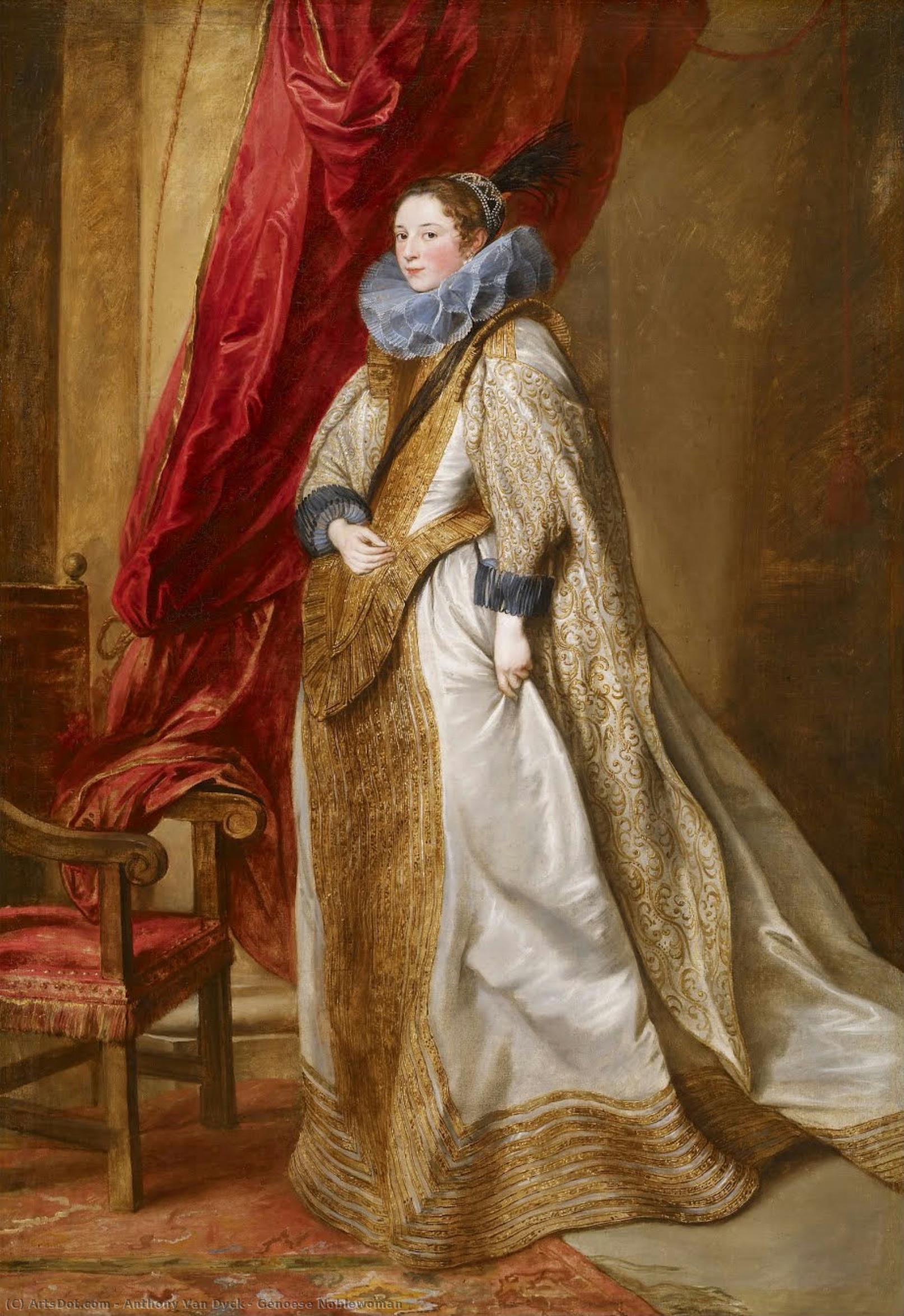
Sir Anthony van Dyck's “Genoese Noblewoman,” painted in 1625, stands as a testament to the flourishing Flemish artistic community within Genoa during Rubens’s tenure. More than just a portrait, it embodies the grandeur and sophistication of Genoese noble families—families deeply invested in showcasing their status through opulent art commissions.
The painting depicts a young woman dressed in a pristine white gown adorned with a striking blue sash, immediately establishing her position as a widow – a subtle detail indicative of societal norms at the time. Her attire speaks volumes about wealth and refinement, while the meticulously crafted lace collar and cuffs underscore the meticulous attention to detail characteristic of Baroque artistry.
Stylistic Brilliance: Rubensian Influence & Flemish Elegance
Van Dyck’s artistic journey was profoundly shaped by Peter Paul Rubens, whose dynamic compositions and masterful use of color served as an undeniable inspiration. Unlike Rubens' bold brushstrokes and dramatic lighting, Van Dyck favored a more restrained palette and subtle gradations of tone—a technique that lends the portrait an air of serene dignity.
However, Van Dyck didn’t simply mimic Rubens; he skillfully adapted his mentor’s style to create something uniquely his own. The loose architectural background – featuring two chairs and a couch – contributes to the painting's sense of space and depth, mirroring Rubens’ penchant for expansive canvases.
Symbolism & Emotional Resonance
Beyond its formal beauty, “Genoese Noblewoman” resonates with deeper symbolic meanings. The sash across her torso symbolizes mourning—a poignant reminder of loss and societal expectations surrounding widows. Simultaneously, the woman's posture exudes confidence and composure, reflecting the ideal of aristocratic femininity during the Baroque period.
The artist’s masterful rendering of light captures the soft glow illuminating the woman’s face, conveying an emotional intimacy that transcends mere visual representation. It invites contemplation on themes of grace, dignity, and remembrance—elements that continue to captivate viewers centuries later.
Technical Mastery & Reproduction Potential
Van Dyck's meticulous brushwork ensures exceptional detail in the portrait’s textures – from the delicate lace of her collar to the subtle folds of her gown. This level of precision is faithfully reproduced by ArtsDot.com, allowing collectors and interior designers alike to experience the beauty and artistry of this iconic Baroque masterpiece firsthand.
A high-quality reproduction captures not only the visual splendor but also the emotional depth of Van Dyck’s original vision—a timeless testament to Flemish artistic excellence.