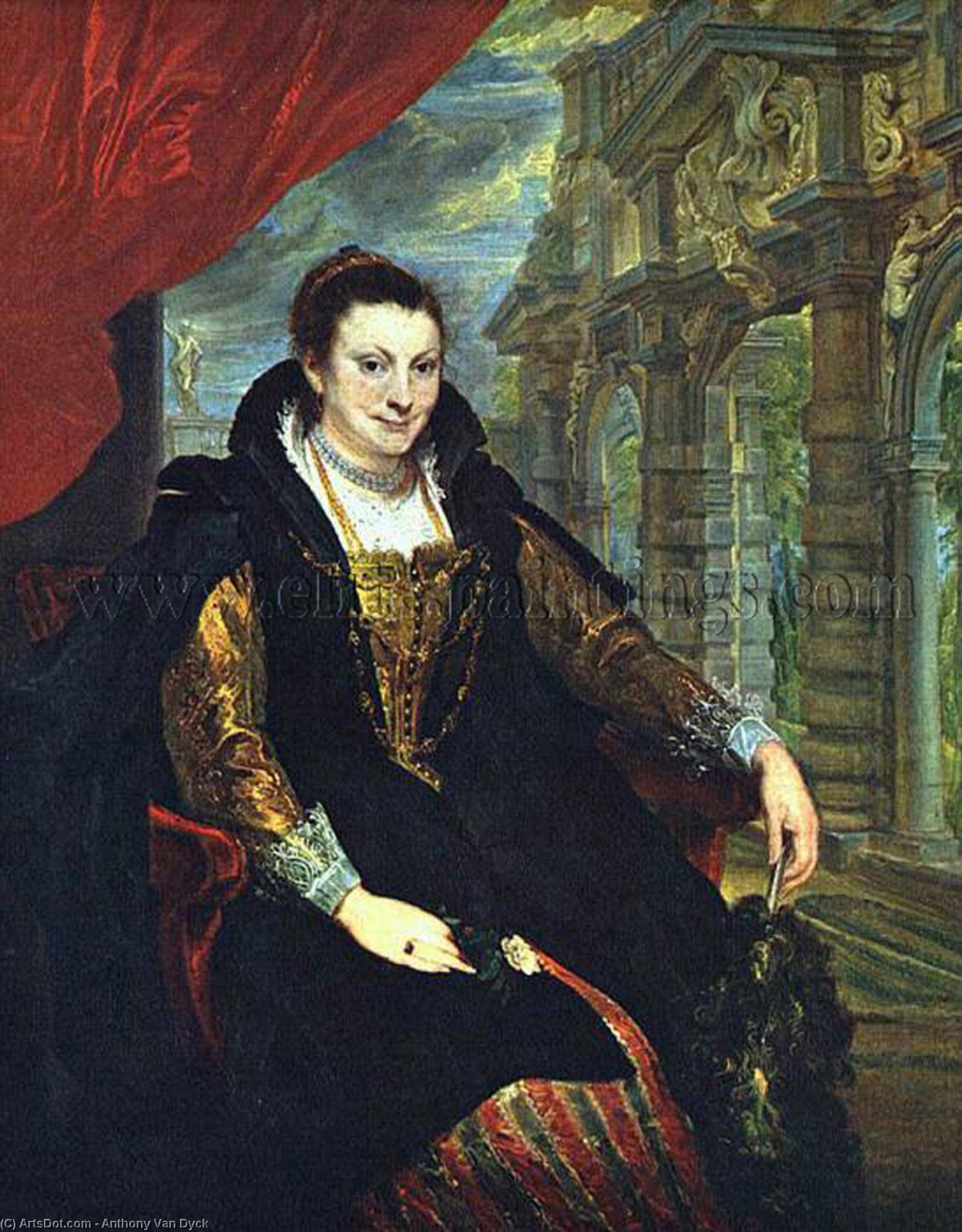
A Portrait of Grace: Isabella Brandt by Anthony Van Dyck
The National Gallery of Art in Washington stands as a testament to artistic excellence, housing one of the most celebrated portraits of the Baroque era – “Isabella Brandt” by Sir Anthony van Dyck. Painted in 1621, this artwork transcends mere representation; it embodies the spirit of its time and continues to resonate with viewers centuries later. Van Dyck’s masterful depiction captures not just a likeness but an essence of aristocratic femininity, skillfully blending formal elegance with subtle psychological depth.
The Canvas of Baroque Refinement
Executed in oil on canvas, “Isabella Brandt” exemplifies the stylistic hallmarks of the Baroque period. Characteristic of this era was a dramatic use of chiaroscuro – the interplay between light and shadow – expertly employed by Van Dyck to sculpt Isabella’s figure against a richly textured background. The artist's meticulous attention to detail is evident in every brushstroke, from the delicate folds of Isabella’s gown to the shimmering gold trim adorning her collar. This painstaking technique speaks volumes about the artistic standards of the time and underscores Van Dyck’s dedication to achieving unparalleled realism.
A Composition Steeped in Symbolism
Beyond its technical prowess, “Isabella Brandt” is laden with symbolic significance. The seated posture conveys composure and dignity, reflecting the societal expectations placed upon noblewomen during Isabella's lifetime. The architectural backdrop – two Corinthian columns – symbolizes stability and grandeur, mirroring the power and prestige of the Brandt family. Furthermore, the crimson curtain serves as a focal point, injecting warmth and vibrancy into the scene and subtly hinting at passion and vitality beneath the surface of aristocratic restraint. These elements contribute to a narrative that speaks to themes of status, beauty, and inner strength.
Influence and Legacy
Anthony van Dyck’s influence extended far beyond his own lifetime, establishing him as a pivotal figure in portraiture history. His innovative approach to lighting and composition profoundly impacted subsequent artists, shaping the visual language of European painting for decades to come. The National Gallery's acquisition of “Isabella Brandt” underscores its enduring importance within the canon of Baroque art—a masterpiece that continues to inspire admiration and scholarly study. Its timeless elegance makes it a captivating subject for interior designers seeking to infuse their spaces with sophistication and grace.
- Explore high-quality reproductions at ArtsDot.com.
- Discover more about Anthony Van Dyck’s life and artistic journey: Explore More
- Learn about the National Gallery of Art's collection and its role in preserving art history:Visit The Gallery