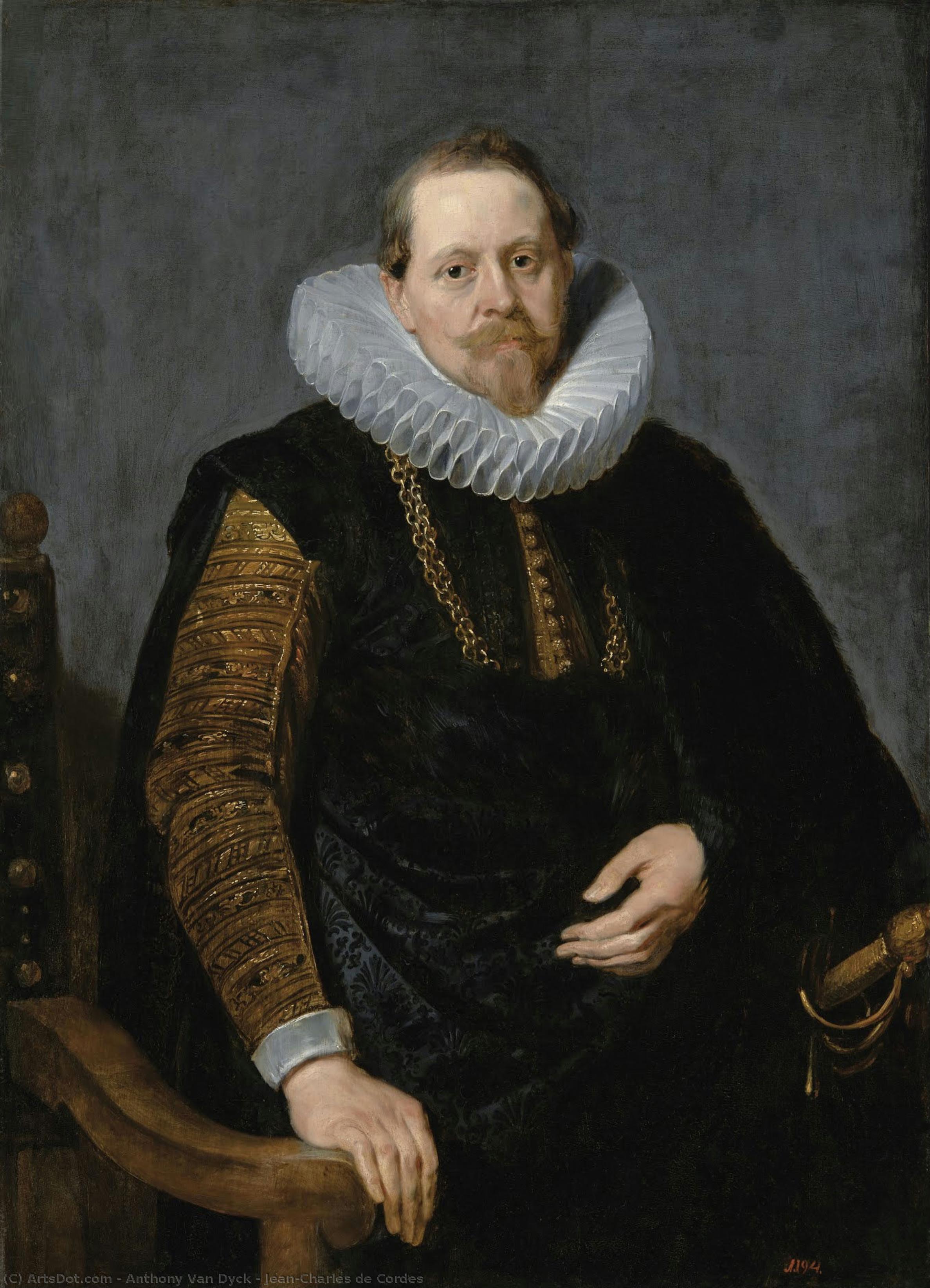
A Vision of Baroque Splendor
In the heart of the early seventeenth century, Antwerp stood as a luminous beacon of artistic innovation, a city where the shadows of the Flemish masters danced with the light of a new era. It is within this vibrant atmosphere that we encounter Jean-Charles de Cordes, a portrait that serves as more than mere likeness; it is a window into the soul of nobility. Created around 1622, this masterpiece captures Jean-Charles and his wife, Jacqueline van Caestre, in a moment of profound dignity. The painting does not simply present two figures; it orchestrates a silent dialogue of status, marital harmony, and intellectual poise. As the viewer’s eye wanders across the canvas, one is immediately struck by the commanding presence of De Cordes, whose outward gaze suggests a man of deep confidence and worldly engagement, anchored by the graceful, supportive presence of his wife.
The composition itself is a masterclass in classical balance. Utilizing a subtle pyramidal structure, the artist anchors the subjects centrally, creating a sense of permanence and stability that reflects the enduring legacy of the Cordes lineage. The interplay of figures—with the wife positioned slightly to the left—creates a rhythmic movement that guides the eye through the opulent textures of the scene. This arrangement does more than organize space; it symbolizes the social and domestic equilibrium prized by the aristocracy of the time, offering a sense of peace and structured elegance that remains deeply captivating to the modern observer.
The Mastery of Light and Texture
To behold this work is to witness the profound influence of Peter Paul Rubens. Whether the hand belongs to Rubens himself or his brilliant protégé, Sir Anthony van Dyck, the painting breathes with the unmistakable energy of the Baroque style. The technique is defined by a dramatic use of chiaroscuro—the breathtaking tension between deep, velvety shadows and piercing highlights. This light does not merely illuminate; it sculpts. It catches the crisp edge of a ruffled collar, the subtle sheen of polished metal, and the heavy, luxurious folds of velvet drapery, lending a three-dimensional vitality to the canvas.
Every brushstroke serves a purpose in the pursuit of tactile realism. The artist’s ability to render the varied textures of the era—the softness of lace, the weight of fine cloth, and the warmth of human skin—creates an immersive sensory experience. For the collector or interior designer, this level of detail offers an unparalleled depth. A high-quality reproduction of such a piece brings with it a sense of tactile luxury, allowing the play of light within a room to interact with the painted shadows, creating an atmosphere of sophisticated drama and timelessness.
A Legacy for the Modern Collector
Beyond its technical brilliance, this portrait carries a heavy weight of historical significance. It captures Antwerp at a pivotal moment, a cosmopolitan crossroads where political upheaval met unparalleled artistic patronage. The painting is a testament to a period when art was used to define identity and cement social standing. For those seeking to adorn a space with works of substance, this piece offers an emotional resonance that transcends centuries. It evokes a sense of nostalgia for an age of grandeur, yet its sophisticated palette and balanced composition make it remarkably compatible with contemporary high-end interiors.
Integrating such a masterpiece into a curated collection or a refined living space provides more than just decoration; it provides a conversation piece that speaks of heritage, intellect, and the enduring power of beauty. Whether placed in a formal study or as a focal point in a grand hall, the portrait of Jean-Charles de Cordes continues to radiate the prestige and the luminous spirit of the Flemish Golden Age.