The Allure of Baroque Elegance in Margareta Snyders
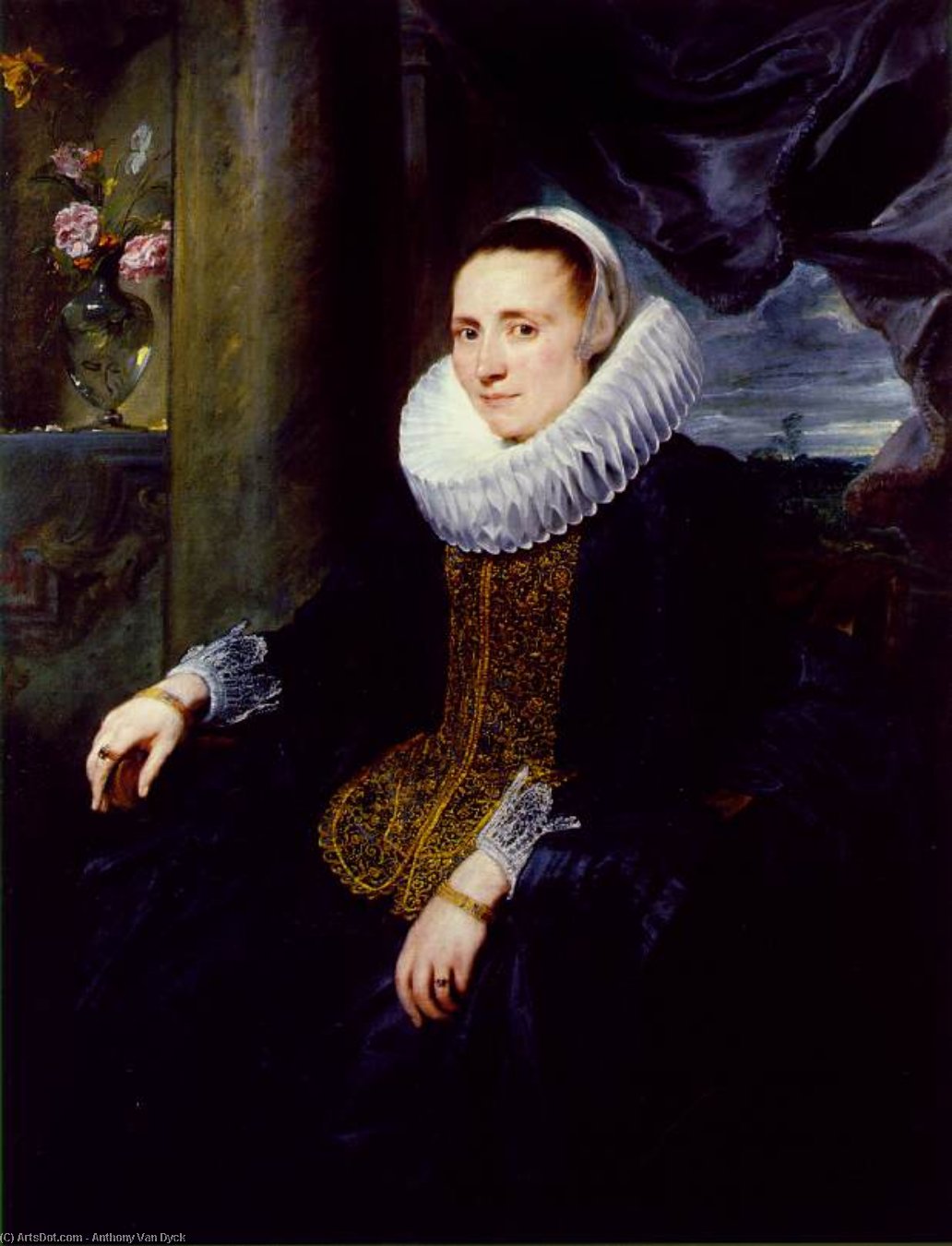
To gaze upon Anthony Van Dyck's portrait of Margareta Snyders is to step directly into the opulent, emotionally charged world of the early seventeenth century. This painting, executed around 1620, transcends a mere likeness; it is a carefully constructed tableau vivant, capturing not just a woman, but an entire atmosphere of refined grace characteristic of the Baroque period. Van Dyck, the master portraitist whose career blossomed under the shadow and influence of Peter Paul Rubens, imbued this canvas with a palpable sense of drama. The subject, Margareta, is presented with an air of quiet contemplation, her gaze directed just beyond the viewer, suggesting a moment caught between thought and action—a universal human experience rendered in exquisite oil paint.
Mastery of Light and Shadow: Technical Brilliance
Technically speaking, the painting is a profound demonstration of Van Dyck's command over light. He employs techniques reminiscent of chiaroscuro, allowing deep shadows to cradle the luminous planes of skin and fabric. This dramatic interplay between illumination and obscurity does more than simply model form; it heightens the emotional resonance of the portrait. Observe the delicate rendering of her ruffled collar—an intricate lacework against the deeper tones of her gown. These details are not incidental; they speak to the period's obsession with texture and elaborate ornamentation. The inclusion of surrounding elements, such as the vase centrally placed on the wall and the potted plant anchoring the upper left corner, serve to build a believable, domestic stage upon which the subject is presented.
Symbolism in Still Life and Attire
The composition itself whispers narratives. The presence of multiple vases suggests themes of beauty, transience, and perhaps even domestic abundance—common symbolic motifs in Baroque portraiture. Her attire, with its rich folds and intricate detailing, speaks volumes about her social standing; it is a visual testament to the elevated status afforded to women of means during that era. Van Dyck masterfully balances the formality implied by such elaborate dress with the softness of her expression. This juxtaposition—the rigidity of fashion against the fluidity of emotion—is what gives the portrait its enduring psychological depth.
A Timeless Echo for Modern Spaces
For the collector or designer seeking to infuse a space with historical gravitas and unparalleled artistry, this reproduction offers an immediate connection to the golden age of European painting. The 130 x 99 cm scale allows it to function as a commanding focal point in a grand hall or a richly decorated drawing-room. Owning a piece echoing Van Dyck’s touch means acquiring more than decoration; it is acquiring a narrative—a conversation starter steeped in the drama, elegance, and profound humanism of the Baroque era. It invites viewers to pause, to observe the subtle interplay between light, fabric, and unspoken thought.