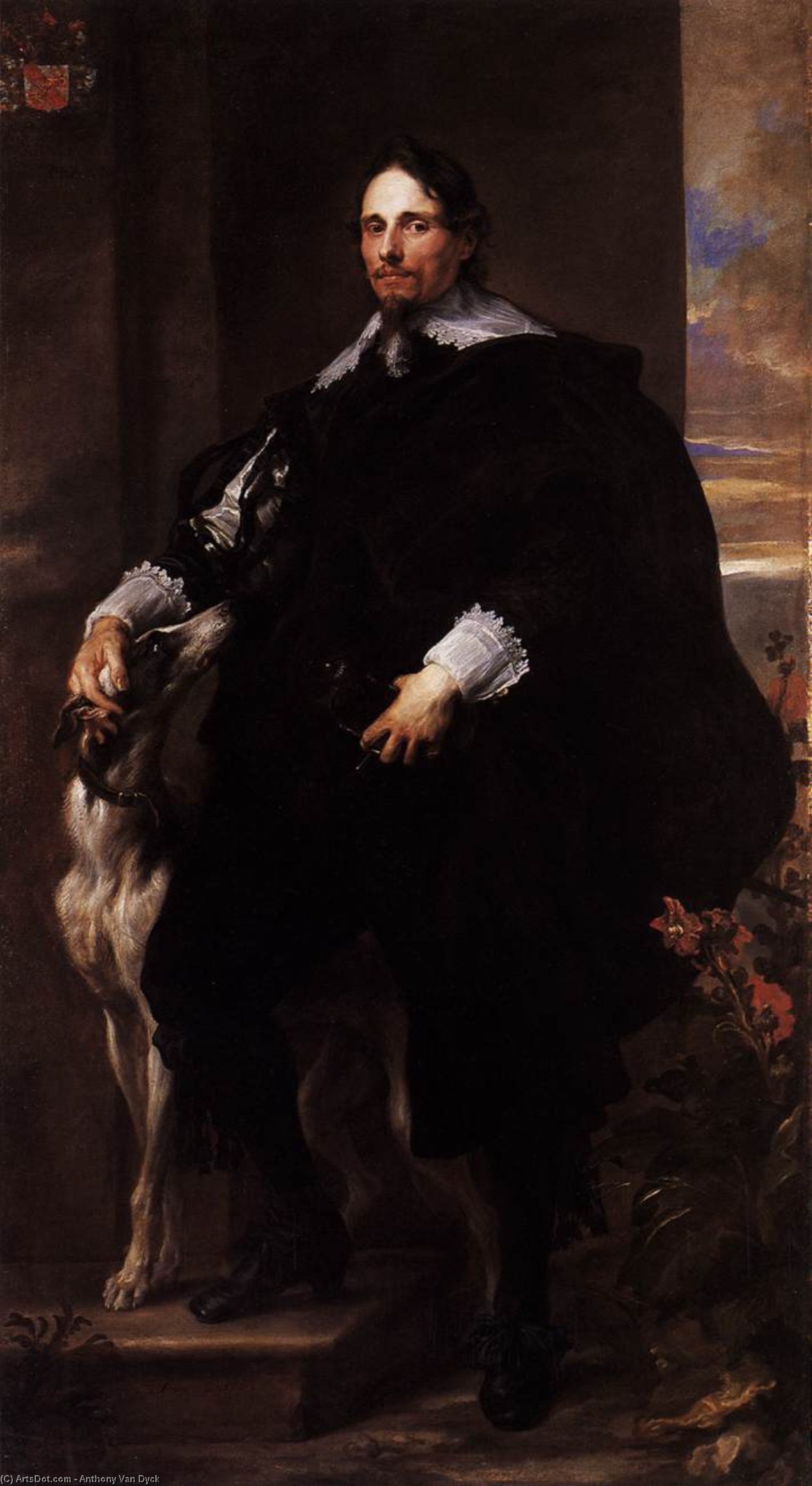
A Portrait of Nobility Illuminated: Anthony van Dyck’s Philippe Le Roy
Anthony van Dyck's “Philippe Le Roy,” completed around 1630/40, stands as a quintessential exemplar of Baroque portraiture—a genre defined by theatrical grandeur and meticulous detail. Executed in oil paint on canvas, this artwork transcends mere representation; it embodies the spirit of its era and speaks to enduring themes of status, loyalty, and artistic mastery.
- Subject Matter: The portrait depicts Philippe Le Roy, a prominent figure of his time, accompanied by his faithful dog. This pairing underscores the importance of companionship and heralds noble lineage—a common motif in aristocratic portraits during the Dutch Golden Age.
- Style & Technique: Van Dyck’s style aligns perfectly with the prevailing aesthetic sensibilities of the period, prioritizing elegance and refined composition. His masterful technique utilizes chiaroscuro – dramatic lighting – to sculpt the sitter's form and imbue the canvas with palpable depth. Layers of glazing contribute to luminous colors and subtle tonal gradations, showcasing the artist’s meticulous attention to texture and surface finish.
- Historical Context: Created during Van Dyck’s prolific period in Italy and later serving as court painter for James I of England, “Philippe Le Roy” reflects the artistic fervor of its time—a reaction against Mannerism and a fervent embrace of naturalism. The artwork captures the opulent atmosphere of European courts and celebrates the achievements of influential individuals.
- Composition & Detail: The portrait’s triangular composition draws the eye upwards towards the sitter's face, emphasizing his dignified presence. Intricate details—the lace collar and cuffs, the powdered wig, and the dog’s fur—are rendered with astonishing realism, demonstrating Van Dyck’s unparalleled skill in capturing human likeness and conveying emotion through subtle expressions.
- Symbolism & Emotional Impact: Beyond its formal beauty, “Philippe Le Roy” carries symbolic weight. The dog symbolizes loyalty and steadfast devotion – virtues highly valued within aristocratic circles. More broadly, the artwork evokes a sense of serenity and contemplation, inviting viewers to appreciate the artistry of Van Dyck and contemplate the ideals of nobility and virtue.
As a testament to Van Dyck’s genius, “Philippe Le Roy” continues to captivate audiences today. Its luminous colors, masterful lighting, and exquisitely rendered textures offer an unparalleled glimpse into the artistic achievements of the Baroque era—a timeless masterpiece destined for admiration across generations.