A Vision of Baroque Grandeur
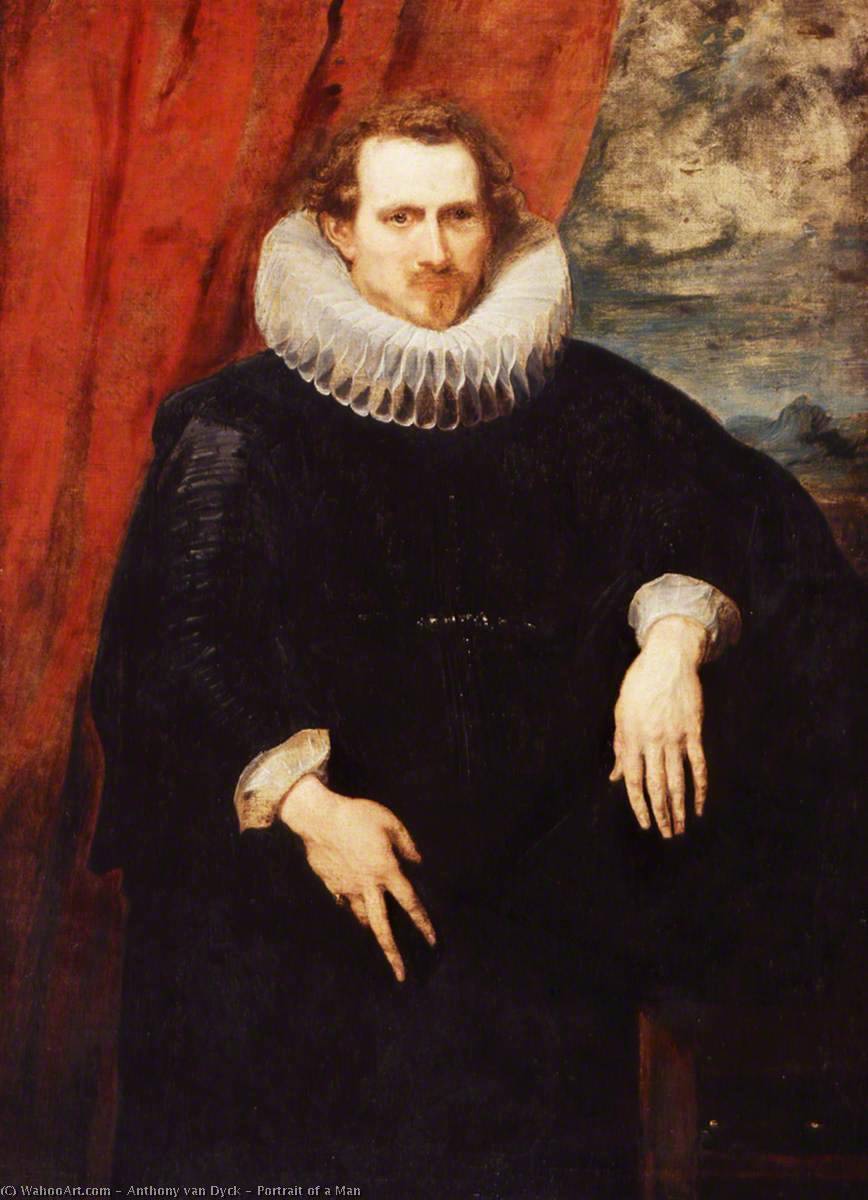
In the quiet presence of Sir Anthony van Dyck’s “Portrait of a Man,” one does not merely observe a face, but encounters an era of profound elegance and social theater. Painted around 1630, this masterpiece serves as a breathtaking window into the seventeenth century, capturing a moment where identity and status were inextricably woven together through art. The subject, a gentleman of unmistakable distinction, is presented with a poised intensity that commands the viewer's attention. Draped in a sumptuous scarlet cape that bleeds into the rich textures of the background, he wears a meticulously rendered ruffled collar that frames his countenance like a halo of fine lace. This is not just a likeness; it is an intentional construction of nobility, designed to evoke the very essence of the aristocratic spirit.
The painting’s power lies in its masterful use of chiaroscuro, a technique van Dyck refined under the influence of his mentor, Peter Paul Rubens. By orchestrating a dramatic interplay between deep, velvety shadows and soft, directional light, the artist sculpts the sitter's features with remarkable three-dimensionality. The light catches the subtle textures of the skin and the intricate folds of the fabric, creating a tactile experience that feels almost tangible to the observer. This mastery of light does more than define form; it imbues the subject with a psychological depth, suggesting a man of thought, authority, and quiet introspection.
Symbolism and the Art of Presence
Every element within this composition is a deliberate symbol of prestige. The deep crimson curtain that hangs behind the gentleman is far more than a decorative backdrop; in the visual language of the Baroque period, such drapery served as a theatrical device to signify high rank and sovereign power. It creates a sense of enclosure, focusing all emotional energy upon the subject while suggesting the opulent interiors of an English or Flemish estate. The bold use of red—a color historically associated with wealth, passion, and the clergy—further reinforces the sitter's elevated social standing.
For the discerning collector or interior designer, this artwork offers a profound emotional resonance. It possesses a timeless quality that transcends its historical origins, bringing a sense of "sprezzatura"—that effortless, studied nonchalance—into a modern living space. Whether placed in a grand library or a sophisticated study, the portrait acts as an anchor of dignity. The painting does not merely decorate a wall; it transforms a room, inviting conversation and providing a focal point of historical gravity and aesthetic splendor.
A Legacy for the Modern Collector
To possess a reproduction of this caliber is to hold a piece of the Flemish Baroque legacy. Van Dyck’s ability to blend the monumental scale of Rubens with a more intimate, refined sensitivity makes this work uniquely captivating for contemporary tastes. It captures the tension between the public persona of power and the private reality of the human soul. For those seeking to infuse their surroundings with the warmth of history and the brilliance of classical technique, this portrait stands as an enduring testament to the beauty of the human spirit captured in oil.