Sir Anthony van Dyck (1599-1641): Master Flemish Baroque painter renowned for elegant portraits of European aristocracy & Charles I's court. Influential in English art, known for religious scenes & innovative style.
Step into the Renaissance heart of Florence at the Uffizi Gallery! Explore masterpieces by Botticelli, Leonardo da Vinci & Michelangelo – an unforgettable art experience.
A Regal Vision Captured in Bronze and Crimson
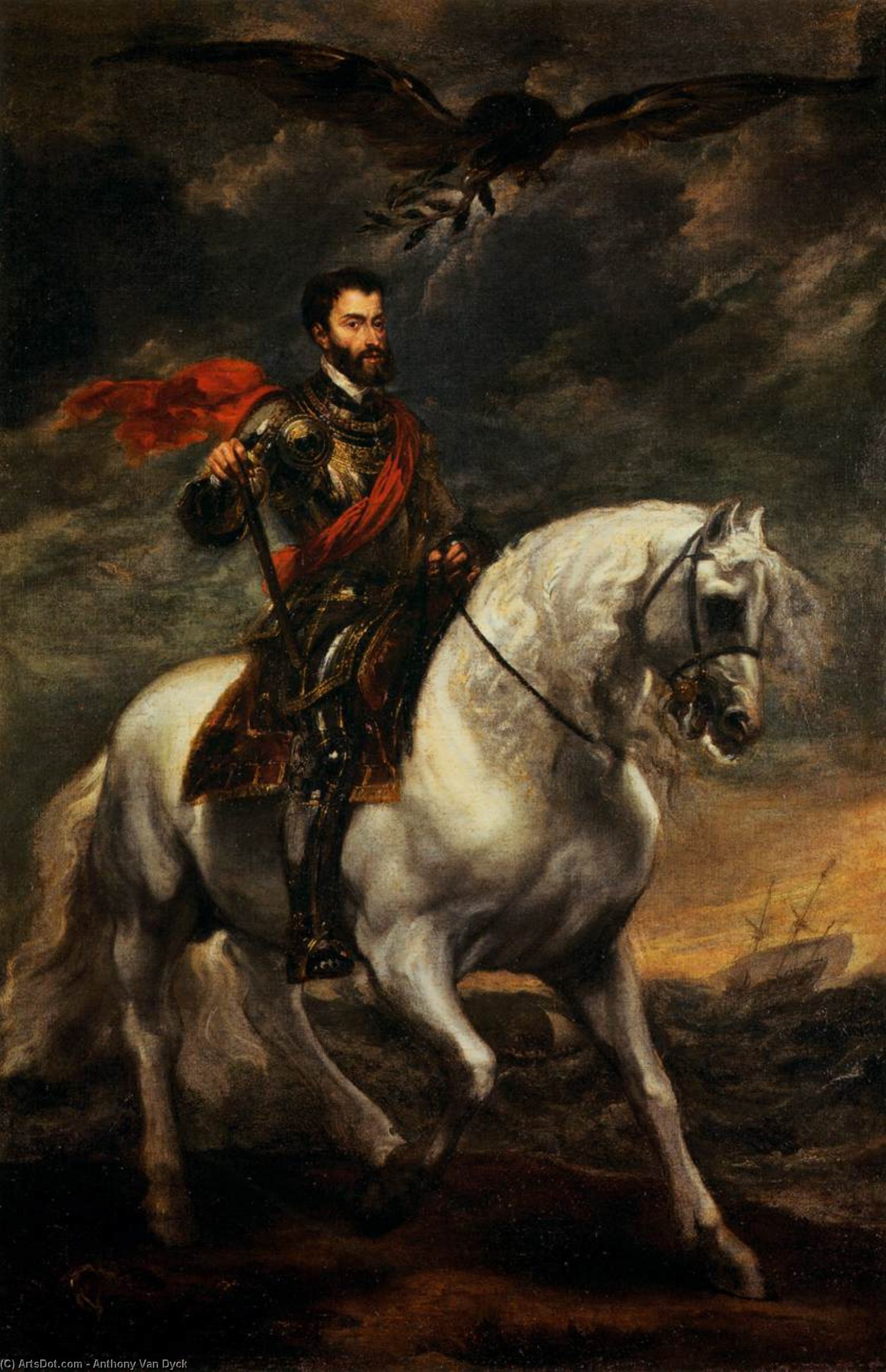
Sir Anthony van Dyck’s “Portrait of Charles V on Horseback” stands as a testament to the Baroque mastery of capturing power, nobility, and grandeur. Painted in 1620, this monumental canvas transcends mere representation; it embodies an idealized vision of imperial authority against the backdrop of European history. Executed with meticulous detail and bathed in rich hues—primarily crimson reds—the artwork immediately commands attention, transporting viewers back to a pivotal moment in the reign of Holy Roman Emperor Charles V.
The Artist’s Influence: Rubens and Beyond
Van Dyck's artistic journey began under the tutelage of Peter Paul Rubens, arguably his most formative mentor. Rubens instilled in him a profound understanding of dynamic composition and expressive color palettes—techniques that would become hallmarks of Van Dyck’s distinctive style. However, unlike Rubens, who embraced theatrical grandeur, Van Dyck cultivated an elegance and refinement that prioritized subtlety and psychological insight. This duality is palpable in “Portrait of Charles V,” where the emperor's posture exudes confidence without ostentation, reflecting a carefully considered aesthetic sensibility.
A Symbol of Imperial Might
The horse itself serves as more than just a vehicle for movement; it’s a potent symbol of royal power and dominion. Its muscular physique conveys strength and stability—qualities essential to leadership—while the black tail and bridle accentuate its regal bearing. The artist skillfully renders the horse's musculature with painstaking accuracy, capturing every ripple of muscle beneath the skin, demonstrating Van Dyck’s commitment to realism alongside idealized representation. Furthermore, the two birds soaring in the sky above symbolize freedom and aspiration, subtly elevating the portrait beyond a simple depiction of an individual ruler.
Technique and Color Palette: Baroque Brilliance
Van Dyck employed oil paint on canvas—a technique favored during the Baroque period—allowing for layering and blending that achieved unparalleled luminosity and depth. The crimson reds dominate the color scheme, conveying warmth, passion, and imperial splendor. These hues are expertly modulated to create dramatic chiaroscuro effects—the interplay of light and shadow—enhancing the portrait’s sculptural quality and emphasizing Charles V's regal presence. Van Dyck’s meticulous brushwork contributes to a surface texture that is both smooth and subtly textured, capturing the nuances of light and color with remarkable precision.
Historical Context: Mühlberg and Beyond
“Portrait of Charles V on Horseback” commemorates Charles V’s decisive victory at Mühlberg in 1547 against Protestant forces during the Schmalkaldic War—a triumph that solidified his position as Holy Roman Emperor and reaffirmed Catholic dominance in Europe. The painting reflects the prevailing artistic conventions of its time, aligning with the Baroque fascination for portraying monarchs as heroic figures embodying moral virtue and divine authority. It stands alongside other portraits commissioned by European royalty to project an image of strength and stability during a period of religious upheaval and political maneuvering—a timeless masterpiece that continues to inspire admiration for its artistry and historical significance.