A Vision of Divine Serenity
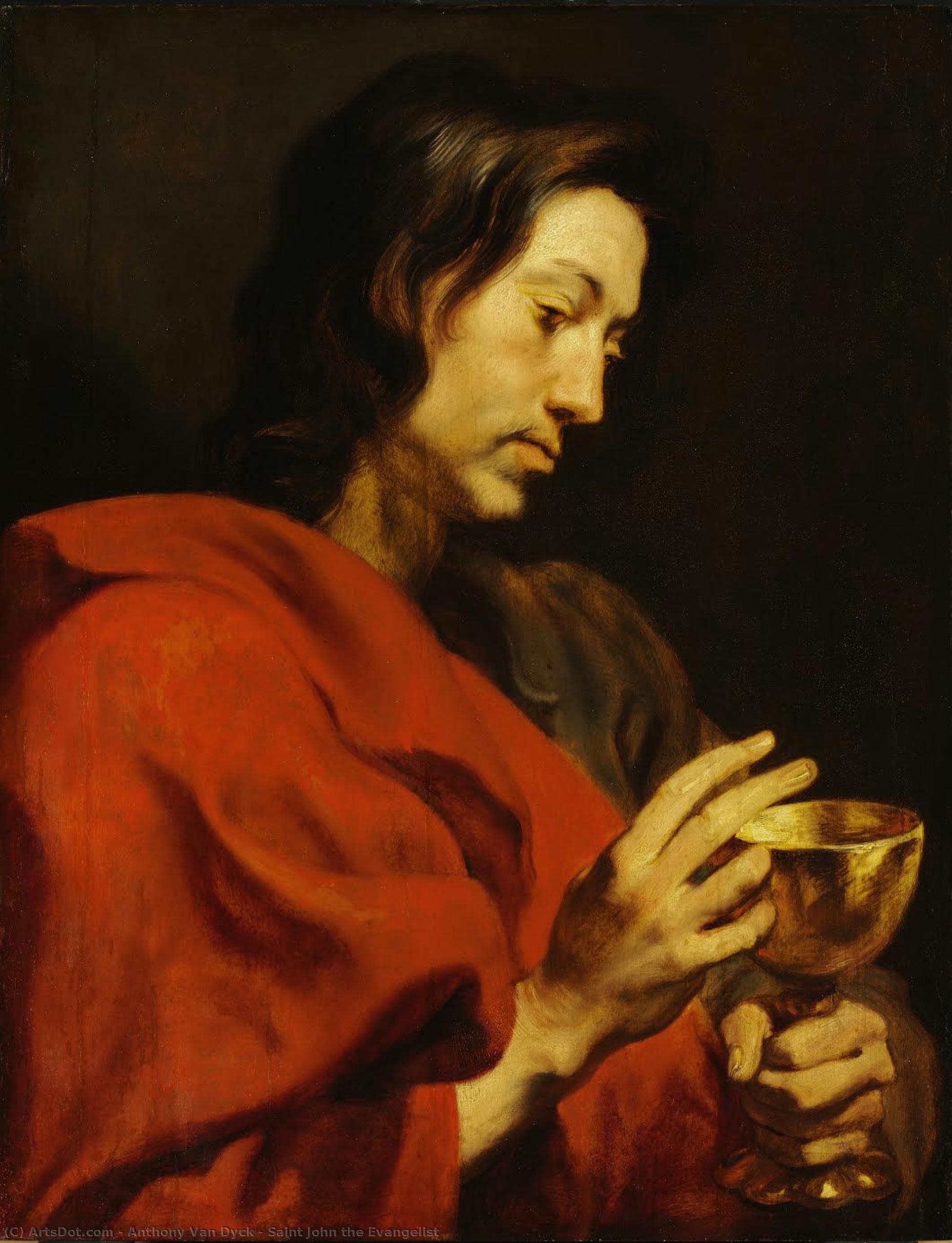
In the quiet depths of Sir Anthony van Dyck’s "Saint John the Evangelist," painted around 1620, one finds more than just a religious icon; one encounters a profound moment of spiritual introspection. This masterpiece serves as a breathtaking window into the Baroque era, capturing the Apostle not through grand, theatrical gestures, but through a subtle, psychological intimacy that draws the viewer into his very thoughts. The subject is depicted with long, flowing hair and draped in a vibrant red robe—a color that pulses with life against the somber, shadowy background. As he holds a cup, his gaze meets ours with an expression of contemplative stillness, inviting anyone who stands before the canvas to pause and reflect on the weight of faith and the beauty of silence.
The emotional resonance of this work lies in its ability to balance the monumental with the personal. While the figure of Saint John carries the gravity of a biblical pillar, Van Dyck imbable him with a human vulnerability. For collectors and lovers of fine art, this painting offers a rare sense of peace, making it an ideal centerpiece for spaces designed for contemplation, such as a private library or a sophisticated study. It is a piece that does not merely decorate a wall; it commands the atmosphere of a room, infusing it with a sense of historical prestige and timeless grace.
The Mastery of Light and Texture
To examine this work is to witness the technical brilliance of a student who surpassed his master. Having refined his craft under the legendary Peter Paul Rubens, Van Dyck inherited a profound understanding of color and light, yet he infused it with a unique, refined elegance. In "Saint John the Evangelist," we see the masterful application of the glazing technique—the layering of thin, translucent pigments to create a luminous, skin-like glow that seems to radiate from within the canvas. This method allows the rich reds of the Saint's drapery to possess a tactile, velvety quality, inviting the eye to wander over the intricate folds and shadows.
The artist’s use of chiaroscuro—the dramatic interplay between light and dark—is nothing short of virtuosic. By plunging the background into deep, mysterious tones, Van Dyck ensures that every highlight on the Saint's face and every glint on the cup becomes a focal point of intense clarity. This technique creates a three-dimensional depth that is particularly striking in high-quality reproductions, where the interplay of light can be appreciated anew. For interior designers, the painting’s sophisticated palette of deep crimson and midnight shadows provides a luxurious anchor for classical or contemporary decor, adding a layer of textural richness to any curated collection.
A Legacy of Baroque Elegance
The historical significance of this portrait is inextricably linked to the golden age of Flemish art. Created during a period when Van Dyck was establishing himself as a premier portraitist in Europe, the painting reflects the transition from the robust, muscular energy of Rubens to a more polished, aristocratic aesthetic. This specific work captures the artist at a pivotal moment, where his ability to render both the physical likeness and the inner soul of his subjects began to define the visual language of European royalty.
Owning a reproduction of such a masterpiece is an opportunity to bring a piece of art history into the modern home. It represents a connection to the courts of Europe and the spiritual fervor of the 17th century. Whether you are an avid collector seeking to deepen your gallery or a designer looking to evoke a sense of old-world grandeur, "Saint John the Evangelist" stands as a testament to the enduring power of the human spirit and the eternal beauty of the Baroque tradition.