Introduction
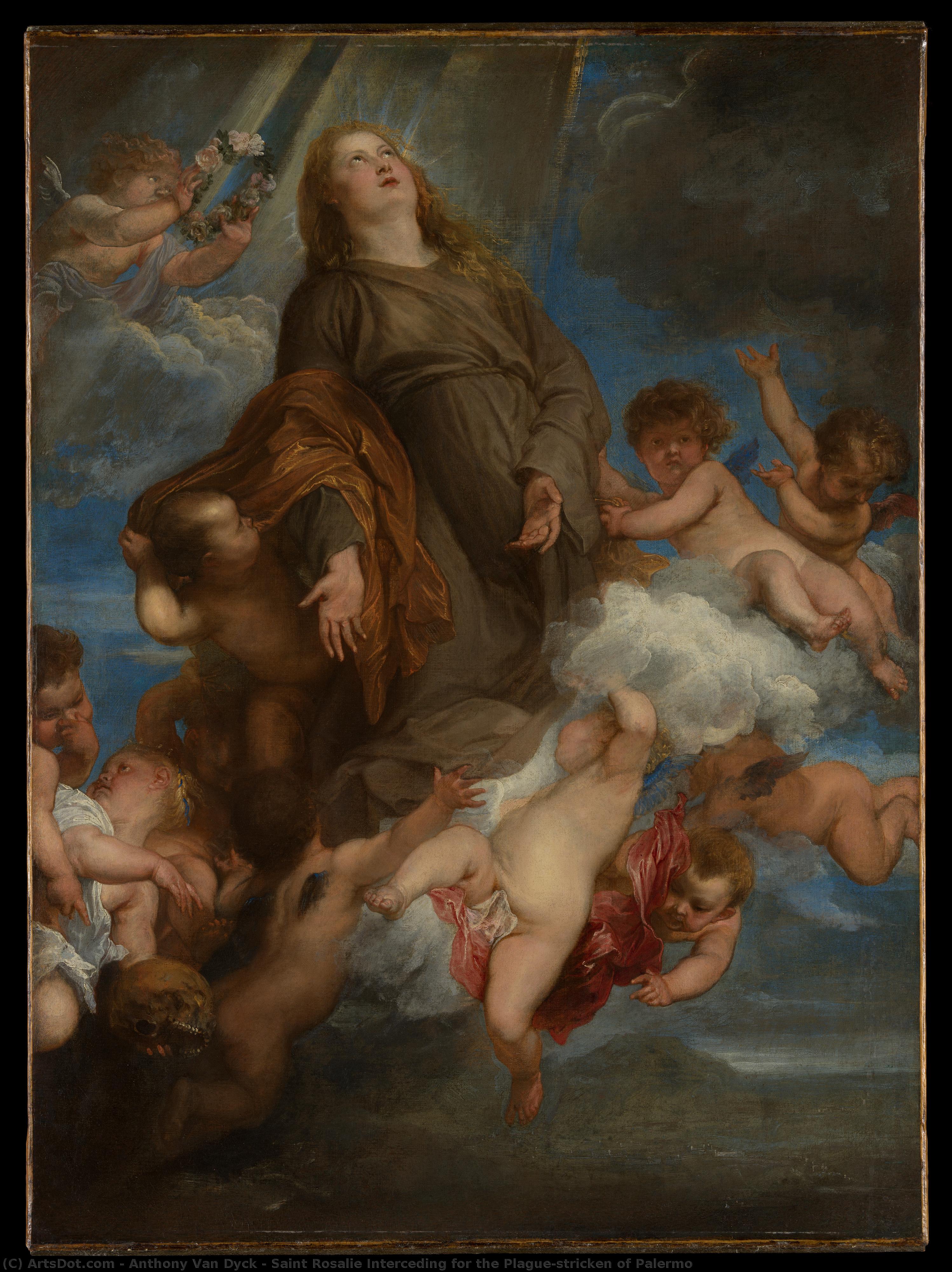
The painting 'Saint Rosalie Interceding for the Plague-Stricken of Palermo' is a masterpiece by the renowned Flemish artist, Anthony van Dyck. The artwork is currently housed in the prestigious Metropolitan Museum of Art in New York City. This article aims to provide an academic analysis of the painting and its significance in the context of art history.
Background
Anthony van Dyck (1599-1641) was a prominent painter of the Baroque period, known for his portraits and religious works. He was born in Antwerp and trained under Peter Paul Rubens, one of the most influential artists of the time. Van Dyck later traveled to Italy, where he absorbed the classical ideals of the Renaissance masters.
The Painting
'Saint Rosalie Interceding for the Plague-Stricken of Palermo' is a powerful depiction of the patron saint of Palermo, Rosalie, interceding on behalf of the city during a plague outbreak. The painting features a dramatic composition, with the saint positioned at the top of a hill, surrounded by angels and cherubs. She is shown holding a cross and gazing down upon the city below, where the citizens are depicted as suffering from the plague.
Interpretation
The painting reflects van Dyck's mastery of the Baroque style, with its dramatic use of light and shadow, dynamic composition, and emotional intensity. The saint's serene expression contrasts sharply with the suffering of the citizens below, creating a poignant commentary on the human condition. The artwork also highlights the role of religion in providing comfort and hope during times of crisis.
Significance
The painting is significant in the context of art history as it showcases van Dyck's unique blend of Flemish realism and Italian classical ideals. It also reflects the artist's deep understanding of religious themes and his ability to convey complex emotions through visual means. The artwork remains a powerful testament to the enduring power of faith in times of adversity.
Conclusion
In conclusion, 'Saint Rosalie Interceding for the Plague-Stricken of Palermo' is a masterpiece by Anthony van Dyck that showcases his skill as an artist and his deep understanding of religious themes. The painting remains a powerful testament to the enduring power of faith in times of adversity and continues to inspire viewers with its emotional intensity and dramatic composition.
Related Paintings
If you enjoyed this article, you may also be interested in our other academic articles on related paintings: -
Painting by 'Peter Paul Rubens' | Peter Paul Rubens:Portrait of a Man, Possibly an Architect or Geographer -
Painting by 'Benedetto Luti' | Benedetto Luti:Christ and the Woman of Samaria -
Painting by 'Lorenzo Monaco' | Lorenzo Monaco:The Intercession of Christ and the Virgin -
Painting by 'Peter Paul Rubens' | Peter Paul Rubens:Saint Teresa of Avila Interceding for Souls in Purgatory About Wahoo Art
At
Wahoo Art, we offer high-quality handmade oil painting reproductions that capture the beauty and essence of the original masterpieces. Our team of skilled artists meticulously recreate each painting, using traditional techniques to ensure every detail is accurately represented. Whether you're an art lover or a collector, our reproductions are the perfect addition to any home or office.
Saint Rosalie Interceding for the Plague-Stricken of Palermo by Anthony van Dyck is a powerful and moving artwork that continues to inspire viewers with its emotional intensity and dramatic composition. The painting is a testament to the enduring power of faith in times of adversity and showcases van Dyck's unique blend of Flemish realism and Italian classical ideals. At
Wahoo Art, we are proud to offer high-quality handmade oil painting reproductions of this masterpiece, allowing art lovers and collectors to enjoy the beauty and significance of this artwork in their own homes or offices.