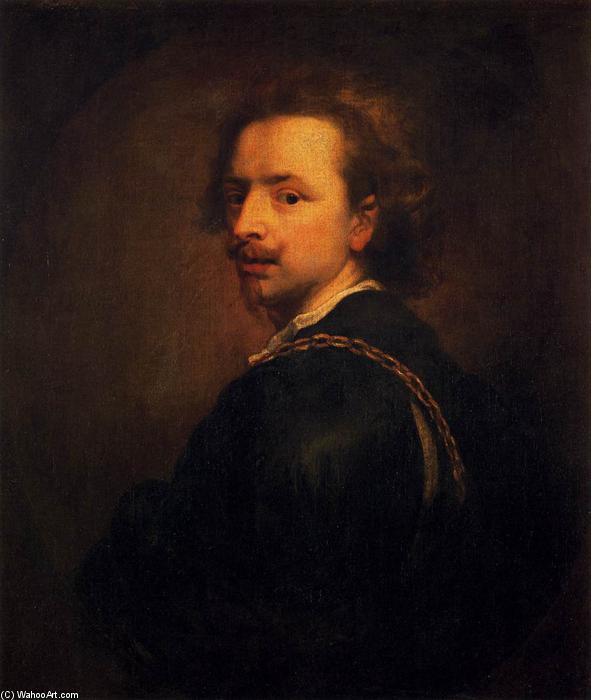
A Portrait of Power and Grace: Sir Anthony van Dyck’s Self-Portrait
Sir Anthony van Dyck's 1632 self-portrait offers an intimate glimpse into the mind of one of the most celebrated portraitists of the Baroque era. More than a simple likeness, this painting is a carefully constructed statement about artistic identity, ambition, and the burgeoning confidence of a rising star. Measuring a modest 79 x 62 cm, it’s deceptively rich in detail – a testament to van Dyck's meticulous technique and his profound understanding of human form and expression. The blurred background immediately draws the eye to the central figure, emphasizing his presence and inviting us into a private moment.
Van Dyck, born in Antwerp in 1599, rapidly ascended through the ranks of Flemish art, initially apprenticed under Hendrick van Balen before finding his true voice under the tutelage of Peter Paul Rubens. This formative period instilled within him a deep appreciation for dynamic composition, vibrant color palettes, and masterful use of light – elements that would become hallmarks of his distinctive style. However, unlike Rubens’ often theatrical grandeur, Van Dyck cultivated an elegance and refinement, a subtle sophistication that quickly established him as the premier court painter in England.
The Anatomy of Confidence: Style and Technique
Painted during a pivotal period of his career – just before he secured his position at Charles I's court – this self-portrait reveals much about Van Dyck’s artistic approach. Note the remarkably realistic depiction of his features, achieved through careful observation and an understanding of anatomy gleaned from extensive study. The slightly turned head, with its direct gaze towards the viewer, conveys a sense of quiet authority and engagement. His meticulously rendered beard, a fashionable trend at the time, adds to the image’s dignified composure.
Van Dyck's mastery lies not just in his ability to capture likeness but also in his skillful manipulation of light and shadow. The soft, diffused lighting creates a sense of depth and volume, highlighting the contours of his face and clothing. The subtle gradations of tone – from the dark shadows beneath his chin to the highlights on his forehead – contribute significantly to the painting’s overall atmosphere of serenity and self-assuredness. He employed a technique known as *sfumato*, borrowed from Leonardo da Vinci, creating hazy outlines that soften edges and add an ethereal quality.
Symbolism and Context: A Royal Portraitist
The black shirt worn by Van Dyck is significant; it was the color of choice for court painters at the time, signifying their status and connection to royalty. The rope around his neck, a seemingly simple detail, could be interpreted as a subtle reference to mortality – a poignant reminder of the artist’s own fleeting existence. It's also possible that it represents the burdens and responsibilities associated with his prestigious position.
This self-portrait was created during a period of immense artistic and political change in England. Charles I, who commissioned many of Van Dyck’s portraits, sought to project an image of strength and stability – qualities reflected in the artist's carefully crafted depiction of himself. Van Dyck’s success at court solidified his reputation as a leading figure in English art, influencing generations of portrait painters to come. The painting stands as a powerful symbol of artistic ambition, personal identity, and the enduring legacy of one of the Baroque era’s greatest talents.
Bringing Van Dyck's Vision Home: A Hand-Painted Reproduction
ArtsDot offers exquisite, hand-painted reproductions of Sir Anthony van Dyck’s “Self-Portrait.” Each reproduction is meticulously crafted by skilled artists who have painstakingly studied the original, ensuring an unparalleled level of accuracy and detail. Unlike digital prints, our hand-painted reproductions capture the nuances of Van Dyck's technique – the subtle gradations of light, the delicate brushstrokes, and the overall atmosphere of elegance and grace. Whether you’re a seasoned art collector or simply seeking to add a touch of Baroque sophistication to your interior design, a ArtsDot reproduction of this iconic portrait is an investment in timeless beauty and artistic excellence.
Explore the full artwork details and order your hand-painted reproduction today: Click Here