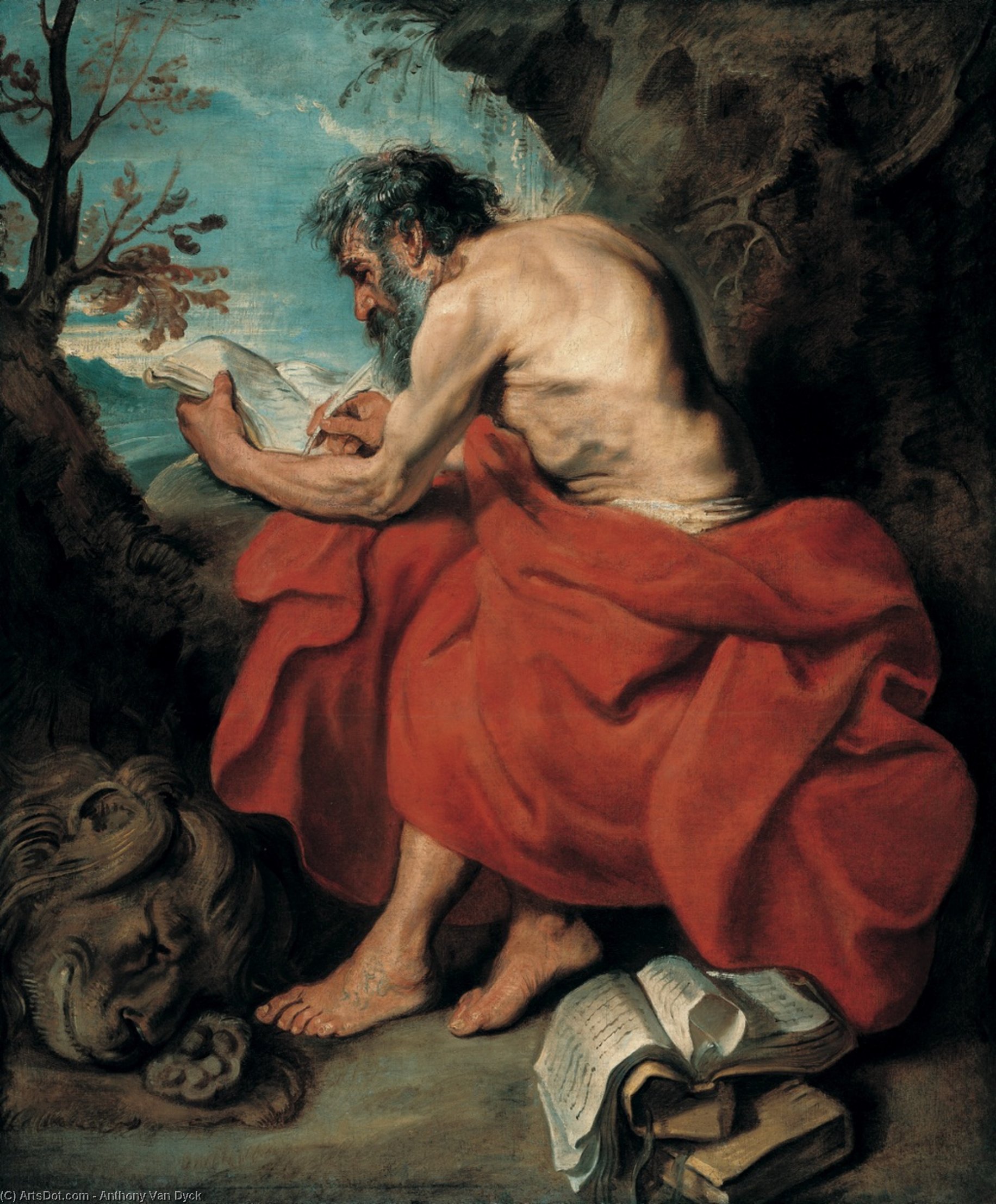
Sir Anthony van Dyck’s 1615 "St Jerome" captures the contemplative soul of the saint with masterful realism and a rich Baroque style. This intimate portrait, influenced by Rubens, offers a profound glimpse into faith and reflection – discover this iconic artwork.
Sir Anthony van Dyck (1599-1641): Master Flemish Baroque painter renowned for elegant portraits of European aristocracy & Charles I's court. Influential in English art, known for religious scenes & innovative style.
Delve into Baroque splendor at Liechtenstein Museum, Vienna! Admire Rubens paintings & explore Austria’s royal art heritage through exclusive events and captivating exhibitions.
A Portrait of Faith and Reflection: Exploring Sir Anthony van Dyck’s St Jerome
Sir Anthony van Dyck's "St Jerome," completed in 1615, stands as a testament to the Baroque artistic spirit—a masterful blend of realism, psychological insight, and symbolic richness that continues to captivate audiences centuries later. Painted during Van Dyck’s prolific period at the court of James I in England, this portrait transcends mere likeness; it delves into the contemplative soul of Saint Jerome, embodying themes of piety, solitude, and intellectual devotion.
The Style and Technique: Rubensian Influence Meets Flemish Refinement
Van Dyck's artistic journey began under the tutelage of Peter Paul Rubens, whose dynamic compositions and vibrant color palettes profoundly impacted his own style. However, unlike Rubens’ expansive canvases brimming with movement and grandeur, Van Dyck favored a more intimate scale—a portrait designed to convey profound emotion within a carefully controlled space. The painting utilizes oil paint on canvas, employing meticulous layering techniques that achieve remarkable tonal gradation – capturing the subtle nuances of light and shadow with breathtaking precision. This masterful handling of texture contributes significantly to the artwork’s palpable sense of presence, inviting viewers into Jerome's inner world.
Historical Context: Elizabethan England and the Renaissance Ideal
“St Jerome” emerged during a pivotal moment in European history—the Elizabethan era, marked by burgeoning humanist ideals and a renewed interest in classical art and philosophy. The portrait reflects this cultural climate, aligning with the prevailing Renaissance fascination for portraying human dignity and intellectual contemplation. Saint Jerome, revered as the patron saint of scholars and translators, represented an embodiment of virtue and piety – qualities highly valued within the aristocratic circles of James I’s court. Commissioned by royalty, the painting served not only as a visual celebration of religious devotion but also as a symbol of power and prestige.
Symbolism: Rocks, Books, and Bird Imagery
The composition itself is laden with symbolic significance. Jerome sits upon rocks—representing humility and steadfastness—a deliberate allusion to his monastic life and unwavering faith. In his hands rests a book—the Bible—symbolizing intellectual pursuit and divine revelation. Furthermore, the inclusion of a bird perched on a branch near the top left corner adds another layer of interpretation. Birds are traditionally associated with aspiration and spiritual enlightenment, suggesting Jerome’s yearning for communion with God. The artist's careful placement of these elements reinforces the portrait’s overarching message: an unwavering commitment to faith and contemplation amidst earthly challenges.
Emotional Impact: A Window into Inner Sanctity
Ultimately, “St Jerome” succeeds in conveying a profound emotional resonance. Van Dyck captures Jerome’s melancholic gaze—a look imbued with both sorrow and serenity—revealing the inner turmoil of a man wrestling with spiritual doubts yet maintaining an unwavering devotion to his faith. The painting's subdued palette – dominated by earthy tones – enhances this contemplative mood, fostering a sense of intimacy and inviting viewers to contemplate the complexities of human experience. It remains a timeless masterpiece, demonstrating Van Dyck’s unparalleled ability to translate psychological depth into visual splendor—a portrait that continues to inspire admiration for its beauty and intellectual sophistication.