A Glimpse into the Soul: The Melancholy Grace of Van Dyck
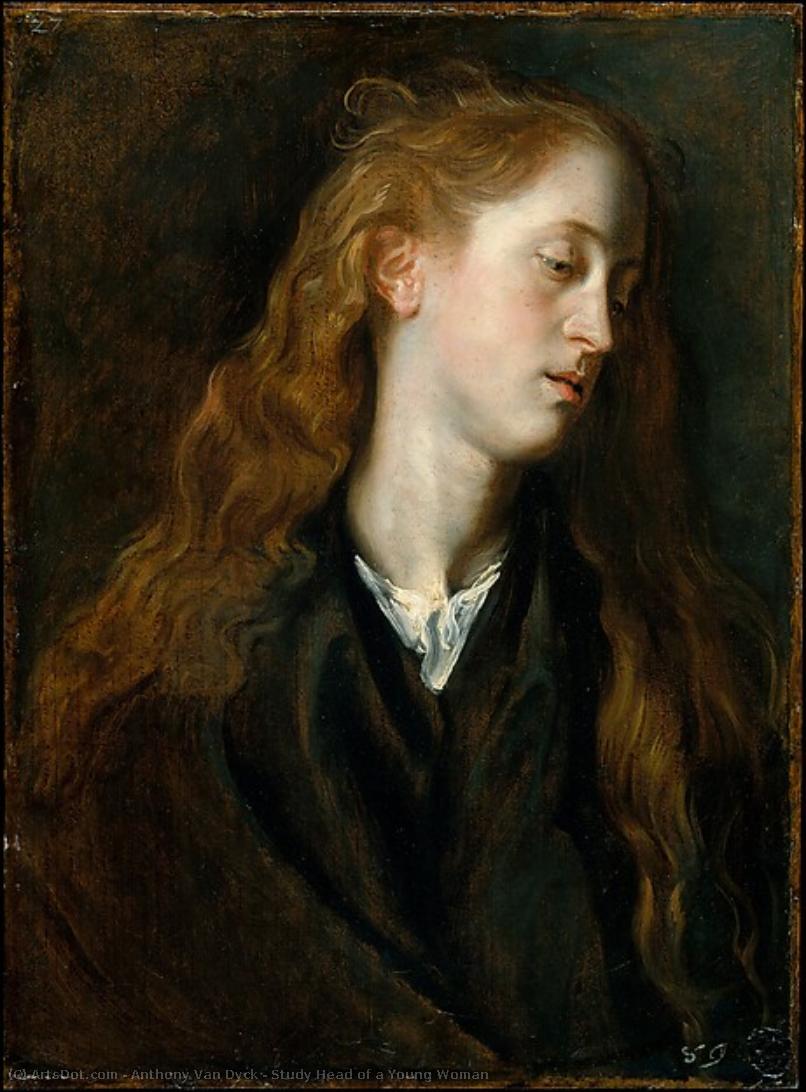
In the quiet intimacy of Sir Anthony van Dyck’s Study Head of a Young Woman, we encounter more than just a mere preparatory sketch; we witness a profound moment of psychological depth captured in oil. Executed in 1618, this evocative work serves as a window into the artist's early mastery, long before he became the definitive portraitist of the English court. The subject, a young woman cast in soft, downward-looking contemplation, possesses an ethereal quality that transcends the boundaries of a simple study. There is a palpable sense of melancholy beauty here, an emotional resonance that draws the viewer into her private world of introspection and silent thought.
The painting’s composition is deceptively simple, yet it vibrates with the sophisticated techniques Van Dyck inherited from his legendary mentor, Peter Paul Rubens. While Rubens often favored grand, muscular narratives and explosive energy, Van Dyck utilized his training to refine these elements into something much more delicate and nuanced. In this piece, we see a masterful handling of light and shadow—the chiaroscuro effect—which sculpts the soft features of the face and lends a three-dimensional weight to her presence. The subtle transitions of tone across her skin and the dark, enveloping drapery of her attire create a sense of quiet drama, making the work an exquisite example of the Baroque spirit captured in a miniature format.
Symbolism and the Weight of Devotion
Beyond its technical brilliance, the artwork is steeped in the rich symbolic language of the seventeenth century. The downward gaze and the somber, reflective expression are not merely aesthetic choices; they evoke the powerful archetype of Mary Magdalene. In the religious iconography of the era, such a posture often signaled repentance, spiritual purity, and deep contemplation. By imbuing this young woman with such a heavy, soulful expression, Van Dyck connects the individual subject to broader themes of human vulnerability and divine devotion. This layer of meaning transforms the painting from a technical exercise into a profound meditation on the human condition.
For the discerning collector or interior designer, this piece offers a unique opportunity to introduce a sense of historical gravity and emotional sophistication into a space. The muted palette and the intimate scale make it an ideal focal point for a curated gallery wall or a quiet corner of a study, where its subtle textures can be appreciated up close. As a reproduction, it brings the prestige of the Metropolitan Museum of Art into the home, offering a timeless connection to the Flemish Baroque tradition. It is a work that does not demand attention through loudness, but rather commands it through a quiet, irresistible elegance that continues to captivate the modern eye.