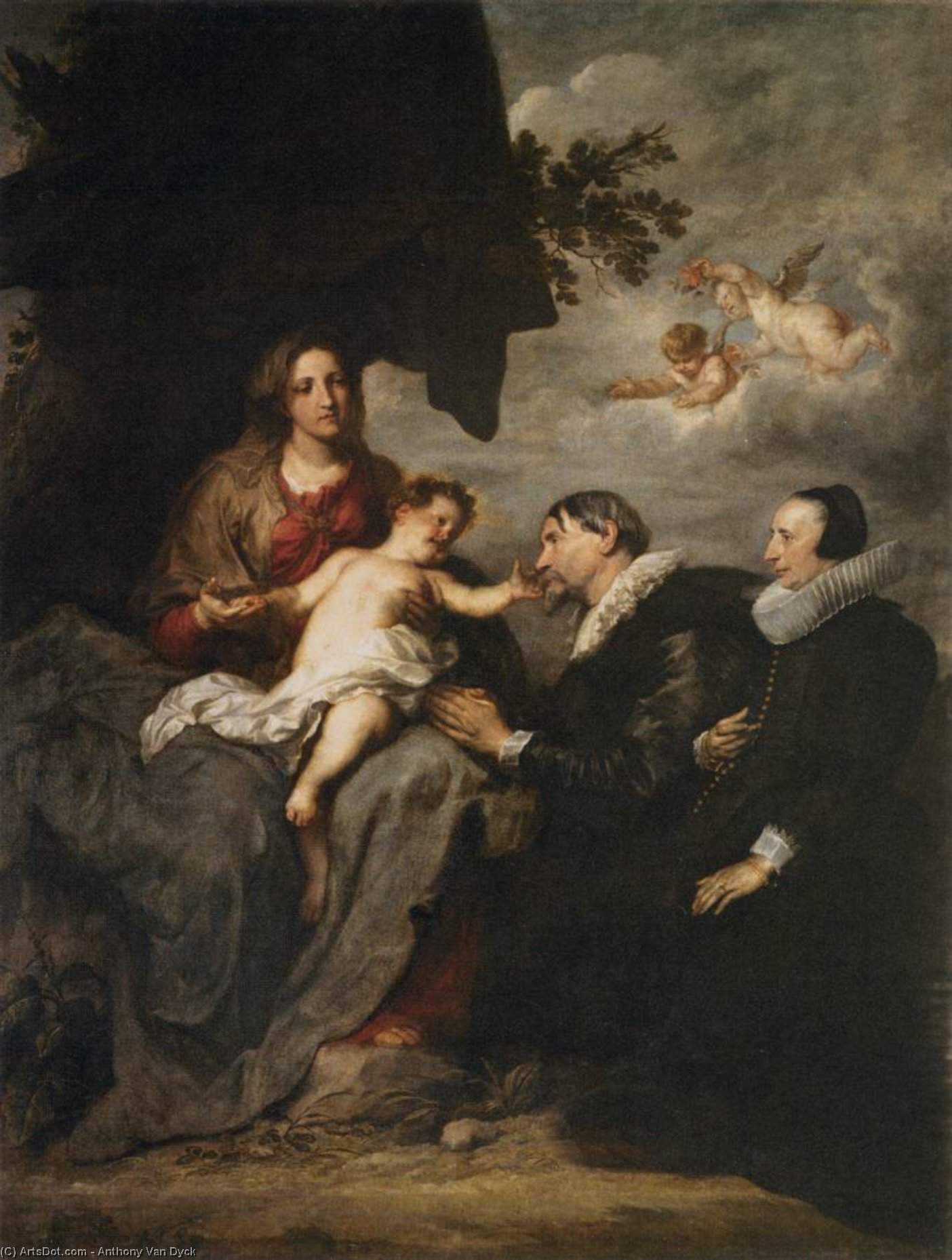
A Portrait of Grace and Patronage: Sir Anthony van Dyck’s “Virgin with Donors”
Sir Anthony van Dyck's "Virgin with Donors," painted in 1630, is more than simply a depiction of the Virgin Mary cradling the infant Christ; it’s a meticulously crafted tableau of power, piety, and burgeoning artistic influence. This remarkable work, measuring 250 x 191 cm, offers a rare glimpse into the opulent world of European courts during the early Baroque period, specifically reflecting the growing importance of portraiture as both a personal statement and a symbol of status.
Van Dyck, born in Antwerp in 1599, rapidly ascended through the ranks of Flemish art, initially apprenticed to Hendrick van Balen before becoming a pivotal collaborator with the immensely influential Peter Paul Rubens. It was within this dynamic environment that he honed his skills – absorbing Rubens’ dramatic compositions and masterful use of light – yet swiftly establishing a distinct style characterized by an unparalleled elegance and refined grace. “Virgin with Donors” exemplifies this evolution; it retains elements of Rubensian dynamism while firmly anchoring itself in Van Dyck's signature aesthetic: a luminous palette, soft modeling, and a captivating sense of naturalism.
The Composition: A Dance of Light and Gesture
The painting immediately draws the eye to the central figure – the Virgin Mary, presented with an almost ethereal serenity. Her pose is remarkably fluid, her hand gently cradling the Christ Child, whose expression is one of innocent contemplation. The use of light is particularly noteworthy; it washes over her form, highlighting her delicate features and creating a sense of divine presence. Around her, two male figures – identified as donors, likely patrons of the painting – kneel in reverence. Their gestures are carefully rendered: one extends his hand in a gesture of offering, while the other gazes upwards with an expression of profound respect. The positioning of these figures is deliberate, establishing a clear hierarchy and emphasizing the importance of their role within the scene.
Van Dyck’s technical mastery is evident in the subtle details – the folds of the drapery, the delicate rendering of the baby's face, and the intricate patterns adorning the background. He employs a technique known as *sfumato*, blurring the edges and creating a soft, atmospheric effect that contributes to the painting’s overall sense of tranquility and beauty. The use of oil paint allows for incredible depth and luminosity, capturing the textures of fabric and skin with remarkable precision.
Symbolism and Context: Courtly Piety
“Virgin with Donors” is deeply rooted in the religious iconography of the time, yet it’s also a sophisticated work of art that speaks to the political and social realities of 17th-century Europe. The depiction of the Virgin Mary as a benevolent and nurturing figure reinforced her role as a symbol of piety and maternal grace – qualities highly valued by European rulers and elites. The presence of the donors underscores the importance of patronage in supporting the arts, a crucial element within the courtly culture of Antwerp and later, London where Van Dyck spent much of his career.
Furthermore, the painting reflects the growing trend towards naturalism in portraiture. While earlier depictions of religious figures often relied on stylized representations, Van Dyck’s work strives for a greater sense of realism, capturing the individual personalities and expressions of his subjects. This shift reflected a broader cultural interest in humanism and a desire to represent individuals with dignity and grace.
A Timeless Masterpiece: Reproduction and Inspiration
Today, “Virgin with Donors” stands as a testament to Sir Anthony van Dyck’s artistic genius – a painting that continues to captivate viewers centuries after its creation. ArtsDot offers meticulously crafted hand-painted reproductions of this iconic work, allowing you to bring the beauty and serenity of Van Dyck's masterpiece into your home or office. These reproductions faithfully capture the original’s luminous palette, delicate brushwork, and profound emotional impact, providing a stunning addition to any art collection or interior design scheme. Consider how the painting’s composition – the central figure bathed in light, surrounded by figures of reverence – can inspire a sense of peace and contemplation within your space.