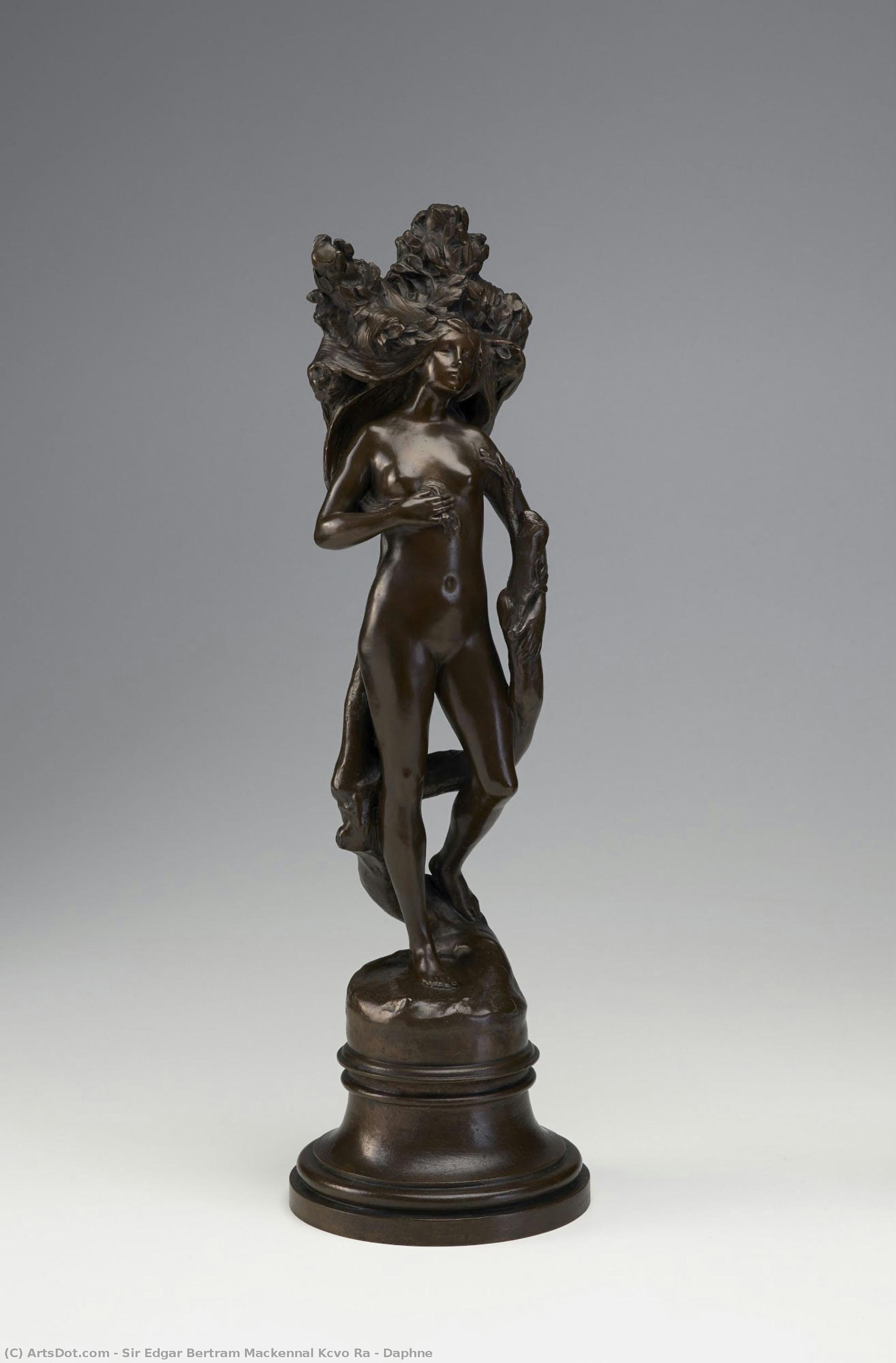
A Moment of Transformation: Exploring Bertram Mackennal’s “Daphne”
Bertram Mackennal's 1897 bronze sculpture, "Daphne," is more than a depiction of a classical myth; it’s a profound meditation on metamorphosis, desire, and the delicate balance between earthly beauty and ethereal grace. Born in Melbourne, Australia, during a period of intense artistic exchange between Europe and its colonies, Mackennal skillfully blended the influences of Symbolism, Neo-Classicism, and the burgeoning New Sculpture movement to create a work that continues to resonate with viewers today. The sculpture’s enduring appeal lies not just in its technical mastery but also in its ability to evoke a powerful emotional response – a sense of both vulnerability and defiant beauty.
The subject matter itself—the myth of Daphne fleeing Apollo's pursuit—is rich with symbolism. Daphne, transformed into a laurel tree to escape the god’s ardent affections, represents a rejection of forced intimacy and an assertion of self-preservation. Apollo, in turn, embodies relentless desire, forever chasing an unattainable ideal. Mackennal doesn’t simply illustrate this narrative; he captures the *feeling* of Daphne's flight – the urgency, the terror, yet also a strange sense of liberation. The artist masterfully translates the abstract concept of transformation into a tangible form, inviting us to contemplate the nature of change and the choices we make in response to overwhelming forces.
Crafting Bronze: Technique and Materiality
Mackennal’s technical skill is immediately apparent in the sculpture's exquisite detail. Executed using the traditional lost-wax casting technique, a process demanding immense patience and precision, “Daphne” showcases a remarkable understanding of bronze as a material. The artist skillfully manipulated the surface to create a dynamic interplay of light and shadow, emphasizing the figure’s sinuous curves and the flowing drapery. Note the subtle variations in texture – the polished smoothness of her skin contrasting with the rougher, more textured areas of the tree-like branches that emerge from her form. This textural richness not only adds realism but also contributes to the sculpture's overall sense of movement and vitality.
The choice of bronze itself is significant. Bronze possesses a timeless quality, lending the sculpture an air of permanence and gravitas. It’s a material that has been used for centuries to depict figures of power and beauty, and Mackennal clearly understands its expressive potential. The warm, earthy tones of the bronze further enhance the sculpture's emotional impact, evoking feelings of both strength and vulnerability.
A Fusion of Styles: Symbolism and Artistic Influences
“Daphne” exemplifies Mackennal’s engagement with multiple artistic currents. Drawing inspiration from the Neo-Classical tradition—evident in the sculpture's balanced composition, idealized forms, and classical references—he simultaneously incorporates elements of Art Nouveau, characterized by its flowing lines, organic motifs, and emphasis on decorative detail. The arabesque curves that define Daphne’s body and drapery are a clear homage to this influential style. Furthermore, Mackennal was influenced by the New Sculpture movement, which sought to break away from the rigid conventions of academic sculpture and embrace more expressive forms.
The sculpture's emotional depth is further enhanced by its connection to Symbolist philosophy, which explored themes of psychology, spirituality, and the subconscious. Mackennal’s depiction of Daphne’s transformation isn’t simply a literal representation of myth; it’s an exploration of inner states – fear, desire, liberation. The sculpture invites us to contemplate the complexities of human emotion and the transformative power of the imagination.
A Legacy of Beauty: “Daphne” in Context
Created during a period of rapid artistic innovation, “Daphne” stands as a testament to Bertram Mackennal’s exceptional talent and his ability to synthesize diverse influences. The sculpture's success reflected the growing appreciation for figurative sculpture within Australia and its increasing recognition on the international stage. Today, "Daphne" remains a captivating work of art, offering viewers a glimpse into a world of myth, emotion, and artistic brilliance. Its enduring appeal lies in its ability to transcend time and connect us with the timeless themes that have captivated artists and audiences for centuries.