A Portrait Steeped in Victorian Refinement: Emily Charlotte Meynell Ingram by Sir Francis Grant
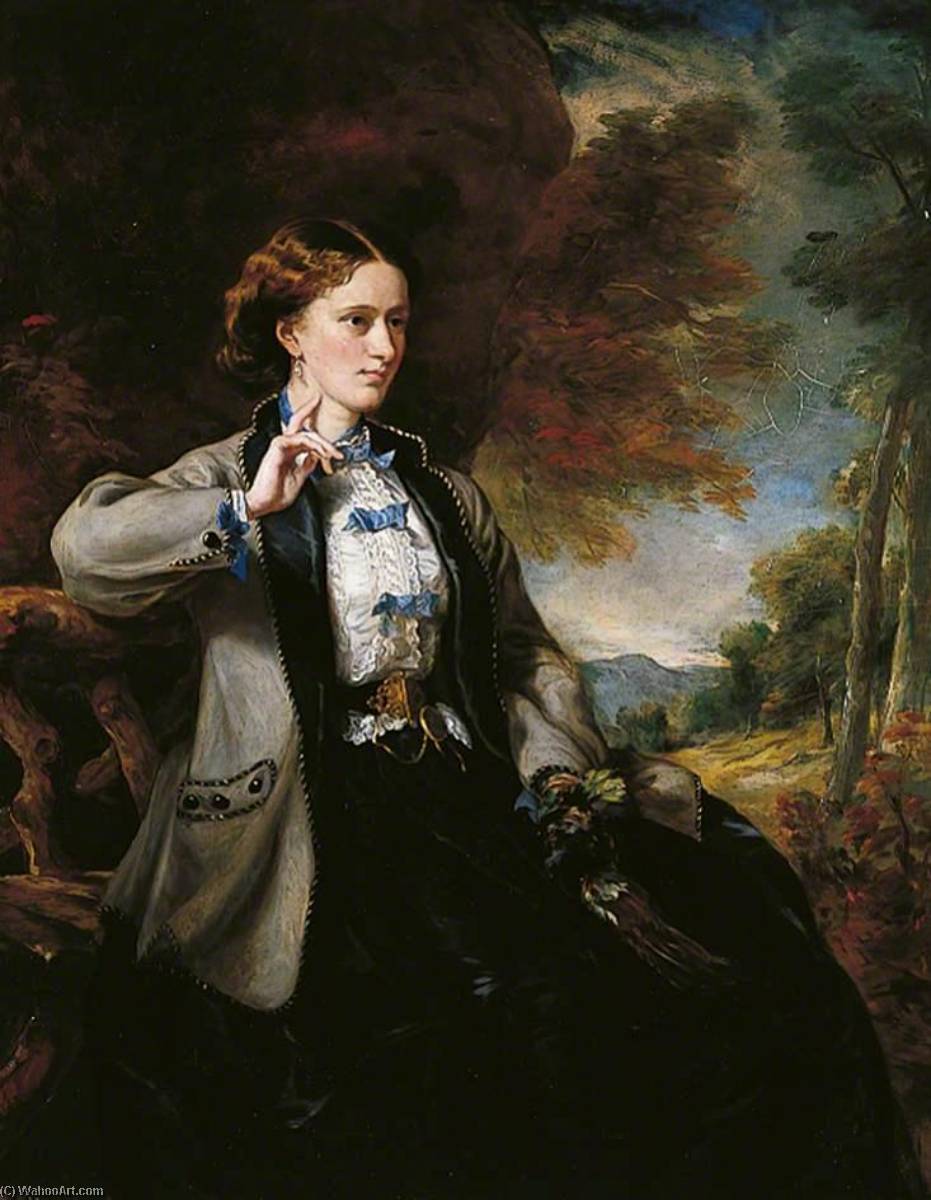
Emily Charlotte Meynell Ingram’s portrait by Sir Francis Grant stands as a testament to the artistic sensibilities of Victorian England, capturing not merely likeness but also an essence of grace and contemplative beauty. Painted in 1867, this artwork exemplifies the Romantic movement's fascination with emotion and idealized representation – qualities skillfully rendered by Grant’s masterful technique.
- Subject Matter: The portrait depicts Emily Charlotte Meynell Ingram, a woman of considerable social standing, seated against a backdrop of lush foliage suggestive of an outdoor setting. This deliberate choice reflects the Victorian preoccupation with nature as a symbol of serenity and moral virtue.
- Style & Technique: Grant employed loose brushstrokes characteristic of Impressionism, prioritizing capturing light and atmosphere over precise detail. The artist’s handling of color is particularly noteworthy; muted tones dominate, creating a harmonious palette that enhances the portrait's overall mood.
The composition itself contributes to the artwork’s impact. Ingram’s posture exudes composure, her gaze directed inward—a subtle gesture hinting at inner thoughts and emotions. Her attire – a dark dress adorned with delicate lace – speaks to Victorian formality and elegance, reinforcing the portrait's status as a celebration of aristocratic refinement. The inclusion of a shawl draped over her shoulders adds warmth and softness to the scene, furthering the impression of tranquility.
- Historical Context: Painted during Queen Victoria’s reign, ‘Emily Charlotte Meynell Ingram’ reflects the Victorian era's emphasis on domesticity, moral responsibility, and idealized femininity. Portraits like this served as markers of social status and familial lineage.
- Symbolism: The foliage background symbolizes fertility and renewal, aligning with Victorian ideals of motherhood and family life. Similarly, Ingram’s gaze embodies introspection—a desire for contemplation and understanding – a theme prevalent in Romantic art.
Ultimately, Grant's portrait transcends mere visual representation; it evokes a feeling of quiet dignity and contemplative grace. It is a piece that invites viewers to consider not just what they see but also what lies beneath the surface—a timeless exploration of beauty, emotion, and the human spirit. Hand-painted reproductions offer an opportunity to experience this exquisite artwork firsthand, preserving its original splendor for generations to come.