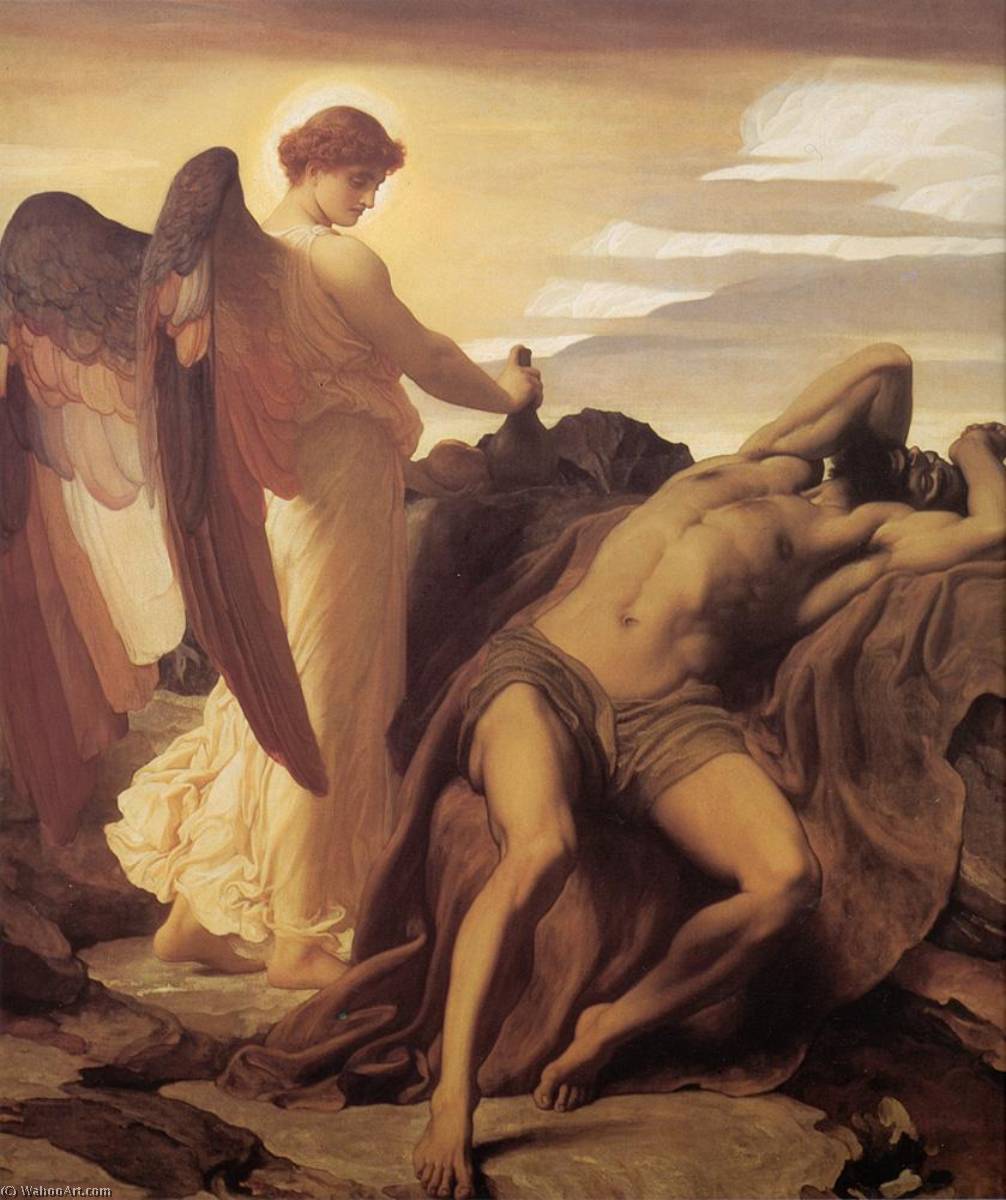
This monumental painting by Sir Frederic Leighton portrays Elijah kneeling in desolate wilderness, surrounded by angels and illuminated by divine grace. Explore its rich symbolism and masterful execution at Leighton House Museum.
Discover Sir Frederic Leighton (1830-1896), a Pre-Raphaelite & Academic painter famed for 'Clytie' and revitalizing British sculpture. Explore his classical, biblical, and historical masterpieces at Leighton House Museum!
Home to one of the world's finest Pre-Raphaelite collections, Liverpool's Walker Art Gallery offers an unmissable journey through Renaissance masters and British modernism that invites you to explore its timeless beauty.
A Vision of Faith Amidst Desolation: Frederic Leighton’s Elijah in the Wilderness
Frederic Leighton's "Elijah in the Wilderness," completed in 1878, stands as a cornerstone of Victorian Pre-Raphaelite art and embodies a profound exploration of biblical narrative interwoven with humanist ideals. More than just a depiction of scripture, it’s a masterful composition that speaks to themes of spiritual resilience, divine grace, and the enduring power of faith—concepts deeply resonant within the cultural landscape of its time. Leighton's ambition was not merely to recreate a scene from Judges VI:1-7 but to elevate it into an emblem of moral fortitude and contemplative beauty.
The Composition and Technique
Leighton meticulously crafted this monumental canvas (210 x 235 cm) utilizing oil paints on linen, employing a technique characterized by painstaking detail and luminous color palettes typical of the Pre-Raphaelite movement. The artist’s mastery is evident in his meticulous rendering of textures—the rough stone of Elijah's desolate surroundings contrasts sharply with the smooth drapery of his robe and the ethereal glow surrounding the angels. Leighton skillfully employed sfumato, a technique perfected by Leonardo da Vinci, to soften edges and create atmospheric depth, immersing the viewer within the biblical wilderness. The subtle gradations of color contribute significantly to conveying the solemn mood of the scene and highlighting the spiritual significance of the figures involved.
Biblical Narrative and Symbolism
The painting portrays Elijah kneeling upon a rocky outcrop, seemingly exhausted after forty days of fasting and prayer—a symbolic representation of his arduous journey toward reaffirming God’s covenant with Israel following Ahab's idolatrous reign. Two angels descend from heaven, offering him sustenance and reassurance, embodying divine compassion and intervention in human affairs. The angel on Elijah’s right hand holds a loaf of bread and grapes – symbols of provision and nourishment for the soul—while the angel on his left presents him with a vial of oil, representing healing and spiritual renewal. The presence of the dove, perched above Elijah and the angels, harkens back to Genesis 19:27-30, where doves brought forth Noah’s son Shem after the Flood, symbolizing hope and divine blessing.
Historical Context and Artistic Influence
Leighton's "Elijah in the Wilderness" emerged during a period of fervent religious revival within Victorian Britain—a time marked by anxieties about moral decline and a yearning for spiritual solace. The Pre-Raphaelite Brotherhood, founded in 1848, championed artistic idealism and sought to recapture the spirit of early Renaissance art, rejecting academic conventions and prioritizing emotional sincerity. Leighton’s work directly responded to this movement's aesthetic principles, drawing inspiration from classical sculpture and biblical iconography. He deliberately avoided overtly dramatic gestures or theatrical poses, favoring instead a contemplative stillness that invites viewers to contemplate the profound spiritual message conveyed by the artwork.
Emotional Resonance and Legacy
“Elijah in the Wilderness” transcends its biblical subject matter to communicate universal themes of faith, perseverance, and divine grace. The painting’s serene beauty—coupled with its meticulous detail—captures a moment of transcendent contemplation, reminding us of humanity's capacity for spiritual resilience amidst adversity. Leighton’s masterpiece continues to inspire artists and collectors alike, securing its place as one of the most celebrated works of Victorian art and demonstrating the enduring power of visual storytelling to convey complex philosophical ideas. Its influence can be seen in subsequent artistic endeavors that strive for similar levels of emotional depth and aesthetic refinement.