A Vision of Pre-Raphaelite Grace
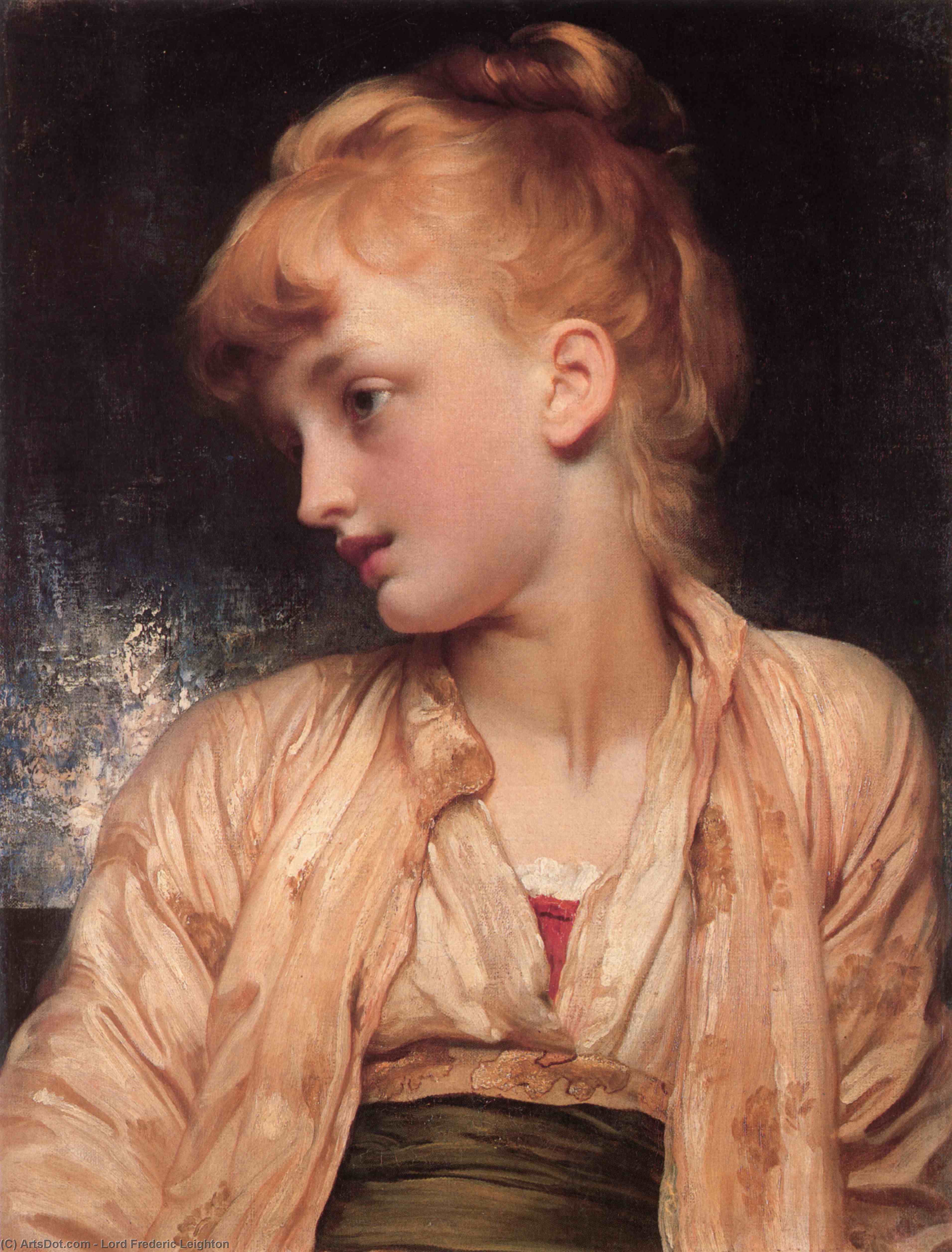
In the quiet, evocative depths of Sir Frederic Lord Leighton’s Gulnihal, viewers are invited into a moment of profound intimacy and timeless beauty. This stunning portrait captures a young woman, her fiery red hair cascading like liquid embers, as she gazng softly away from the observer. The painting is a masterclass in the Pre-Raphaelite spirit, blending a meticulous attention to natural detail with a romanticized, dreamlike atmosphere. Leighton, a titan of the Victorian era, utilizes a shallow depth of field to pull the subject forward, stripping away the distractions of the outside world to focus entirely on the delicate contours of her face and the rich textures of her attire. The result is an image that feels less like a static portrait and more like a captured breath, a fleeting instance of introspection caught in the amber of oil paint.
The technical brilliance of Gulnihal lies in Leighton’s sophisticated use of light and medium. Employing the academic tradition of layering thin, translucent glazes of oil paint, the artist achieves a luminous quality that seems to radiate from within the canvas itself. This technique allows for subtle gradations in skin tone, capturing the soft warmth of her complexion against the darker, indistinct background. The lighting is diffused and gentle, casting soft shadows that define the organic curves of her neck and the flowing drapery of her garments. Every brushstroke serves a purpose, building up a sense of tactile richness—from the silken sheen of her clothing to the intricate, individual strands of her vibrant hair—creating a surface that invites the eye to linger on its polished perfection.
Symbolism and Emotional Resonance
Beyond its aesthetic splendor, Gulnihal carries a weight of quiet melancholy and poetic longing. The subject’s gaze, directed slightly off-canvas, suggests a mind lost in thought, perhaps contemplating a distant memory or an unseen future. This sense of introspection is central to the painting's emotional impact, evoking themes of youth, beauty, and the bittersweet nature of passing time. In the context of Victorian art, such portraits often served as windows into the soul, using physical beauty as a vessel for deeper psychological truths. The contrast between her vibrant, life-affirming hair and the somber, shadowy background intensifies this presence, making her appear as a singular, radiant light amidst an encroaching darkness.
For the discerning collector or interior designer, Gulnihal offers more than mere decoration; it provides a focal point of profound character. The painting’s warm color palette and classical composition make it an exquisite addition to spaces that value elegance, history, and emotional depth. Whether placed in a sunlit gallery or a moody, sophisticated study, a high-quality reproduction of this masterpiece brings with it the prestige of the Academic movement and the romantic allure of the 19th century. It is a piece that does not merely occupy a wall but transforms an environment, inviting conversation and providing a sanctuary of beauty in the modern world.