A Portrait of Quiet Sorrow: Sir George Clausen’s “Kitty”
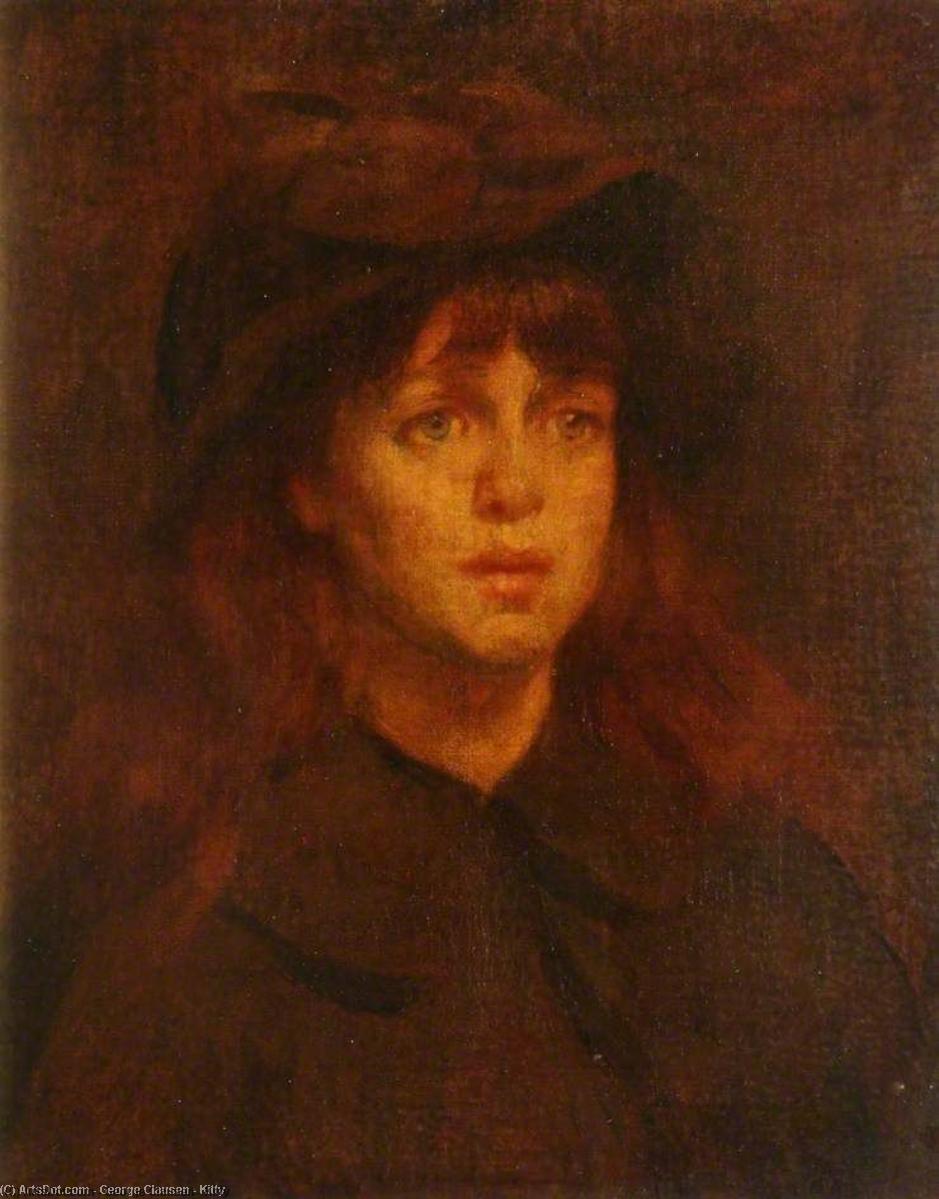
Sir George Clausen's "Kitty," painted in 1902, is more than just a portrait; it’s a poignant meditation on vulnerability and unspoken emotion. This oil-on-canvas masterpiece, currently residing within the hallowed halls of the Walker Art Gallery in Liverpool, immediately draws the viewer into a scene of quiet contemplation. The subject, a woman with striking red hair and a richly textured scarf, gazes directly at us, her expression a delicate blend of sadness and introspection – a subtle yet profoundly moving display of human feeling.
Clausen, a key figure in late 19th and early 20th-century British art, skillfully employed the tenets of Impressionism while imbuing his work with a distinctly empathetic sensibility. He wasn’t merely capturing a likeness; he was striving to convey an atmosphere, a mood. Notice how the muted palette – dominated by browns, greys, and subtle greens – creates a sense of intimacy and subdued light. The artist masterfully utilizes broken brushstrokes, characteristic of Impressionism, to render the textures of the fabric and the woman’s face with remarkable sensitivity. The lighting itself is crucial; it's diffused and soft, casting gentle shadows that accentuate her features and contribute to the overall feeling of melancholy.
The Language of Emotion: Symbolism in “Kitty”
Beyond its technical brilliance, "Kitty" is rich in symbolic resonance. The woman’s red hair, a bold splash of color against the muted background, could represent passion or perhaps even a hint of defiance amidst her sorrow. Her scarf, draped loosely around her neck, adds to this sense of vulnerability and concealment. The direct gaze she offers the viewer is particularly significant; it's not confrontational but rather an invitation—a plea for understanding or simply a shared acknowledgment of human experience. Some art historians suggest that the painting reflects the anxieties prevalent during a period marked by social change and uncertainty, mirroring the emotional landscape of the era.
The title itself, “Kitty,” is deliberately ambiguous. It’s not merely a descriptive name; it evokes a sense of familiarity and intimacy—a beloved pet or perhaps even a cherished memory. This deliberate vagueness encourages viewers to project their own emotions and experiences onto the subject, making the painting deeply personal.
A Window into an Era: Contextualizing “Kitty”
To fully appreciate "Kitty," it’s essential to understand its historical context. Clausen was a prominent member of the New English Art Club, a group that championed a more accessible and emotionally resonant style of painting compared to the rigid academic traditions of the Royal Academy. The late 19th and early 20th centuries were a time of rapid social and technological change in Britain – industrialization, urbanization, and the rise of new ideologies all contributed to a sense of unease and uncertainty. Clausen’s art often reflected these anxieties, exploring themes of rural life, labor, and the human condition.
Painted during this period of transition, “Kitty” can be seen as a poignant commentary on the emotional toll of modernity. It's a reminder that even amidst progress and innovation, individuals still grapple with feelings of loneliness, sadness, and longing – emotions that Clausen masterfully captures in this enduring portrait.
A Timeless Masterpiece: Reproduction and Appreciation
Reproductions of “Kitty” offer an accessible way to experience the power and beauty of this remarkable painting. When selecting a reproduction, consider the quality of materials and printing techniques—a high-quality print will faithfully capture the nuances of Clausen’s brushwork and color palette. Whether displayed in a private residence or a public space, “Kitty” continues to resonate with viewers today, serving as a timeless testament to the enduring power of art to evoke emotion and provoke reflection.