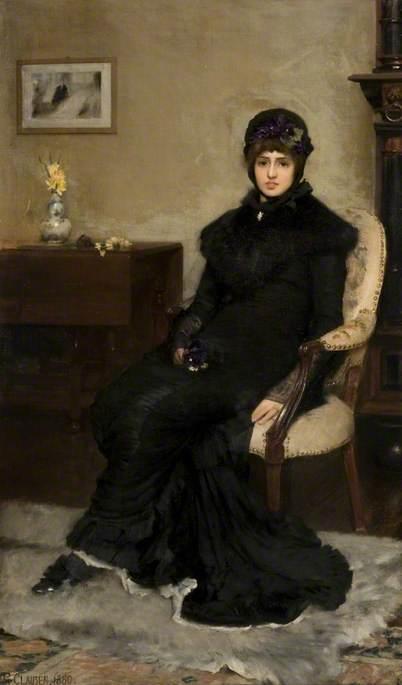
A Portrait of Contemplation: Sir George Clausen's "La Pensée"
Sir George Clausen’s “La Pensée,” painted in 1880, is more than just a portrait; it’s a carefully constructed meditation on the human condition. The canvas immediately draws the viewer into a scene of quiet introspection, dominated by a woman seated in a chair – a pose that has resonated across centuries as a symbol of thoughtful reflection. Her posture, legs crossed and gaze directed downwards, speaks volumes about a moment suspended between observation and internal thought. Clausen’s masterful use of light, characteristic of his Impressionistic leanings, softens the edges of the scene, creating an atmosphere of gentle melancholy and serene contemplation.
Impressionist Techniques and English Landscape
- Light and Atmosphere: Clausen’s technique is rooted in the principles of Impressionism, prioritizing the fleeting effects of light and color. Notice how he captures the subtle gradations of illumination on the woman's dress and the surrounding objects – a hallmark of his approach to depicting the English countryside.
- Brushwork: The loose, broken brushstrokes contribute significantly to the painting’s atmospheric quality, avoiding sharp outlines in favor of suggesting form through color and light. This technique creates a sense of movement and immediacy, as if the scene is constantly shifting with the changing light.
- English Subject Matter: While influenced by European artistic trends, Clausen firmly established himself as a uniquely British artist. His subject matter – a portrait within a domestic setting – reflects the burgeoning interest in portraying everyday life and the beauty of the English landscape during this period.
Symbolism Within the Scene
The details within “La Pensée” are laden with symbolic weight, inviting interpretation beyond a simple portrait. The scattered books suggest intellectual pursuits and perhaps a yearning for knowledge. The vase in the upper left corner could represent beauty or fragility, while the clock on the wall subtly reminds us of the passage of time – a common theme in artistic representations of contemplation. The woman’s attire, a dark dress, adds to the overall mood of seriousness and introspection. The carefully arranged objects contribute to a sense of order within the scene, mirroring the subject's internal state.
Historical Context and Artistic Legacy
Painted in 1880, “La Pensée” sits firmly within the late 19th-century artistic landscape. Clausen’s work reflects the broader trends of Impressionism, which was challenging traditional academic painting styles and exploring new ways of representing light and color. Born in London in 1852, Sir George Clausen's career spanned a pivotal era in British art, witnessing the rise of modernism while maintaining a deep connection to his roots. His ability to blend Impressionistic techniques with a profound understanding of rural life cemented his place as one of Britain’s most significant artists of the late 19th and early 20th centuries. His work continues to resonate today, offering a poignant reminder of the enduring power of quiet contemplation.