The Farmer’s Boy: A Portrait of Rural Dignity by Sir George Clausen
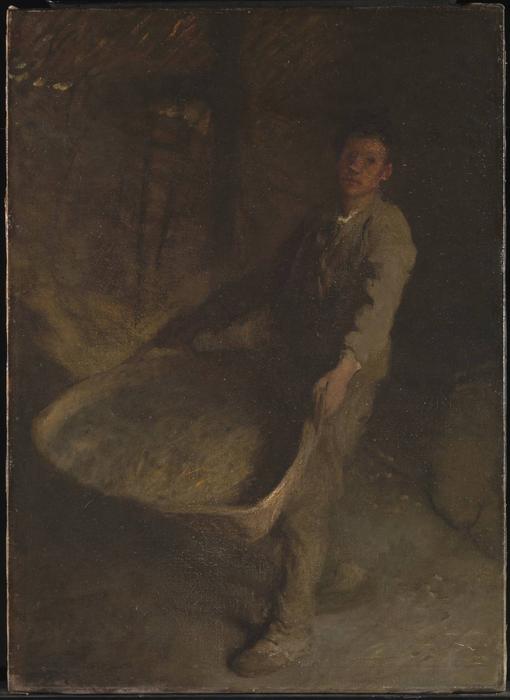
Sir George Clausen's "The Farmer’s Boy," painted in 1895, is more than just a depiction of a young man; it’s a poignant meditation on labor, identity, and the enduring spirit of the English countryside. The painting immediately draws the viewer into a dimly lit interior, suggesting a humble farmhouse or perhaps a solitary room within a larger estate. Clausen masterfully employs a muted palette dominated by browns, grays, and ochres – colors that evoke the earthy tones of rural life and imbue the scene with a sense of quiet melancholy. The composition is subtly off-center, directing our gaze to the central figure, a young man whose face bears an expression of profound seriousness. He’s not idealized or heroic; rather, he possesses a quiet dignity, his eyes holding a depth that hints at both resilience and perhaps a touch of loneliness.
Clausen's artistic approach is rooted in the Impressionist movement, yet he transcends mere replication of fleeting light. While capturing the atmospheric quality of the interior – the diffused shadows, the subtle play of light on fabric – he does so with a deliberate sense of realism and emotional weight. The thick impasto technique, particularly evident in the folds of the man’s clothing, adds texture and physicality to the canvas, grounding the scene in tangible reality. Notice how Clausen doesn't shy away from depicting the roughspun material of his subject’s garments; this detail speaks volumes about the life he portrays – a life connected directly to the land and its demands.
A Window into Victorian England
“The Farmer’s Boy” is firmly situated within the context of late 19th-century Britain, a period marked by rapid industrialization and profound social change. The rise of factories and urban centers was disrupting traditional rural life, leading to displacement and economic hardship for many. Clausen's painting serves as a quiet counterpoint to this trend, offering a dignified portrait of the working class – not as victims of progress, but as individuals with inherent worth and dignity. The subject’s attire—a simple work shirt and trousers—immediately anchors him within this specific social stratum, reminding us of the realities faced by countless families in rural England at the time.
Interestingly, the painting's creation coincided with a growing interest in depicting the lives of ordinary people. The New English Art Club, of which Clausen was a founding member, championed a style that moved away from academic formality and embraced a more accessible and emotionally resonant approach to art. This shift reflected a broader cultural desire to celebrate British identity and values – particularly those associated with rural life and traditional labor.
Symbolism and Emotional Resonance
Beyond its straightforward depiction of a young man, “The Farmer’s Boy” is rich in symbolic meaning. The solitary figure evokes themes of isolation, contemplation, and perhaps even melancholy. The held cloth—a simple piece of fabric—could represent the burdens of labor or the connection to the land. It's not overtly dramatic; instead, it contributes to a subtle sense of introspection. The muted lighting and somber color palette further amplify this emotional resonance, creating an atmosphere that invites viewers to engage with the subject’s inner world.
Furthermore, the painting’s historical context—the era of social upheaval and industrialization—adds another layer of interpretation. The young man's serious expression can be seen as a reflection of the anxieties and uncertainties faced by many during this period. He embodies a quiet strength and resilience in the face of change, suggesting a hope for continuity amidst disruption.
A Timeless Masterpiece
“The Farmer’s Boy” remains a powerful and evocative work of art, offering a glimpse into the lives of ordinary people and the enduring beauty of the English countryside. Sir George Clausen's masterful technique—his skillful use of light, color, and texture—combined with his profound understanding of human emotion, creates an image that continues to resonate with viewers today. It’s a painting that speaks volumes about the dignity of labor, the importance of connection to the land, and the enduring spirit of humanity.