Explore the art of Sir John Everett Millais (1829-1896), a Pre-Raphaelite founder. Discover his detailed realism, iconic paintings like Ophelia & Christ in the House of His Parents, and lasting Victorian impact.
Tate Britain
(London, United Kingdom)
Discover modern & contemporary art at Tate Britain! Explore British masterpieces from medieval times to today, amidst stunning architecture and engaging exhibitions. Free admission!
A Vision of Verdant Serenity: Millais's *Dew-Drenched Furze*
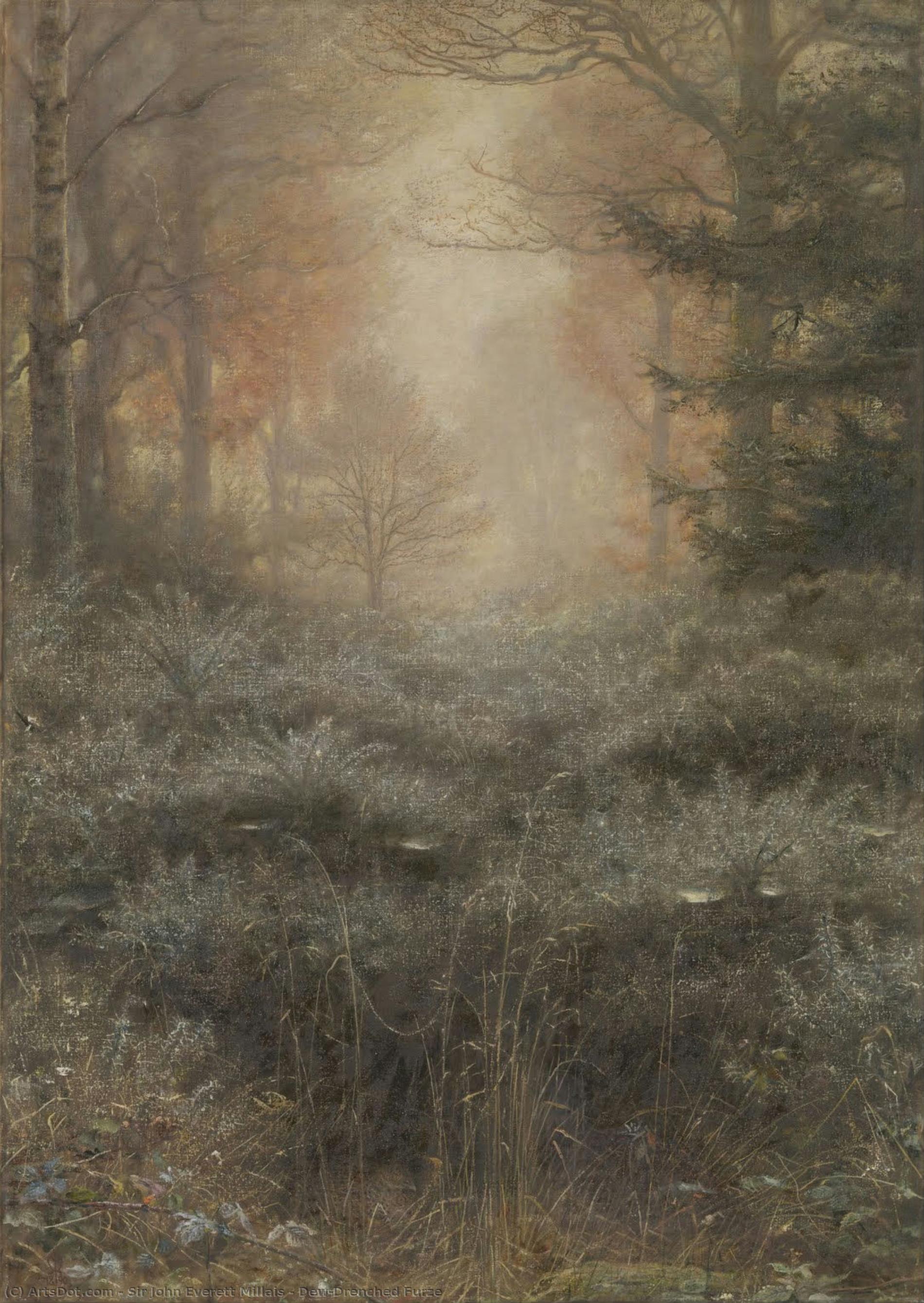
Sir John Everett Millais’s 1889 painting, *Dew-Drenched Furze*, is a masterful embodiment of the Pre-Raphaelite movement’s core tenets – an unwavering commitment to meticulous observation, a profound connection with nature, and a desire to evoke intense emotion through exquisitely rendered detail. This late landscape, executed in a symmetrical composition and vertical format, presents a breathtaking evocation of a forest scene, bathed in the ethereal quality of filtered light. The painting's serene atmosphere and palpable sense of tranquility immediately draw the viewer into its immersive world.
The Pre-Raphaelite Ideal: Truth to Nature
Millais’s artistic journey was profoundly shaped by the Pre-Raphaelite Brotherhood, a group dedicated to rejecting the artificiality and idealized forms of Renaissance art. Influenced by the works of Giotto and other early masters, the Pre-Raphaelites sought to return to a more direct and truthful representation of nature – a philosophy vividly reflected in *Dew-Drenched Furze*. The artist’s meticulous attention to detail is immediately apparent; the yellowish-brown leaves of the trees, the delicate textures of the bushes, and the shimmering effect of dew on foliage are all rendered with an almost photographic precision. This dedication to realism was revolutionary for its time, challenging the established conventions of British art which often favored grand historical narratives or mythological subjects.
- Technique: Millais employed a characteristic layering technique, building up color and detail in thin glazes – a hallmark of Pre-Raphaelite painting. This allowed for luminous effects and subtle gradations of tone, enhancing the sense of depth and atmosphere.
- Composition: The symmetrical arrangement and vertical format contribute to the painting’s harmonious and balanced feel, reflecting the Victorian fascination with order and beauty.
Symbolism and Emotional Resonance
*Dew-Drenched Furze* is more than just a depiction of a forest scene; it's imbued with symbolic meaning rooted in the Romantic tradition. The title itself – “Furze” referring to a thorny shrub – suggests resilience, endurance, and perhaps even a hint of melancholy. The dappled light filtering through the trees evokes a sense of mystery and spirituality, while the overall mood is one of quiet contemplation and reverence for nature’s beauty. Millais's ability to capture such profound emotion within a seemingly simple landscape speaks to his exceptional artistic skill and sensitivity.
Historical Context: A Master at Work
Painted in 1889, this work represents the culmination of Sir John Everett Millais’s long and distinguished career. Having begun his artistic training at an astonishingly young age – admitted to the Royal Academy Schools at eleven years old – he became one of the most celebrated artists of his era. *Dew-Drenched Furze* demonstrates his continued mastery of technique and his unwavering commitment to the Pre-Raphaelite ideals, solidifying his legacy as a pivotal figure in British art history. The painting’s creation coincided with a period of significant artistic innovation, reflecting the evolving tastes and sensibilities of Victorian society.
This hand-painted reproduction offers an unparalleled opportunity to experience the beauty and emotional power of Millais's masterpiece firsthand. Its dimensions – 12 x 173 cm – make it ideally suited for a variety of interior spaces, adding a touch of timeless elegance and artistic sophistication to any room.