Explore the art of Sir John Everett Millais (1829-1896), a Pre-Raphaelite founder. Discover his detailed realism, iconic paintings like Ophelia & Christ in the House of His Parents, and lasting Victorian impact.
National Trust
(Wolverhampton, United Kingdom)
Discover the extraordinary William Morris collection at Wightwick Manor in Wolverhampton, where stunning Pre-Raphaelite art and Arts and Crafts textiles create an immersive Victorian escape waiting for you to explore.
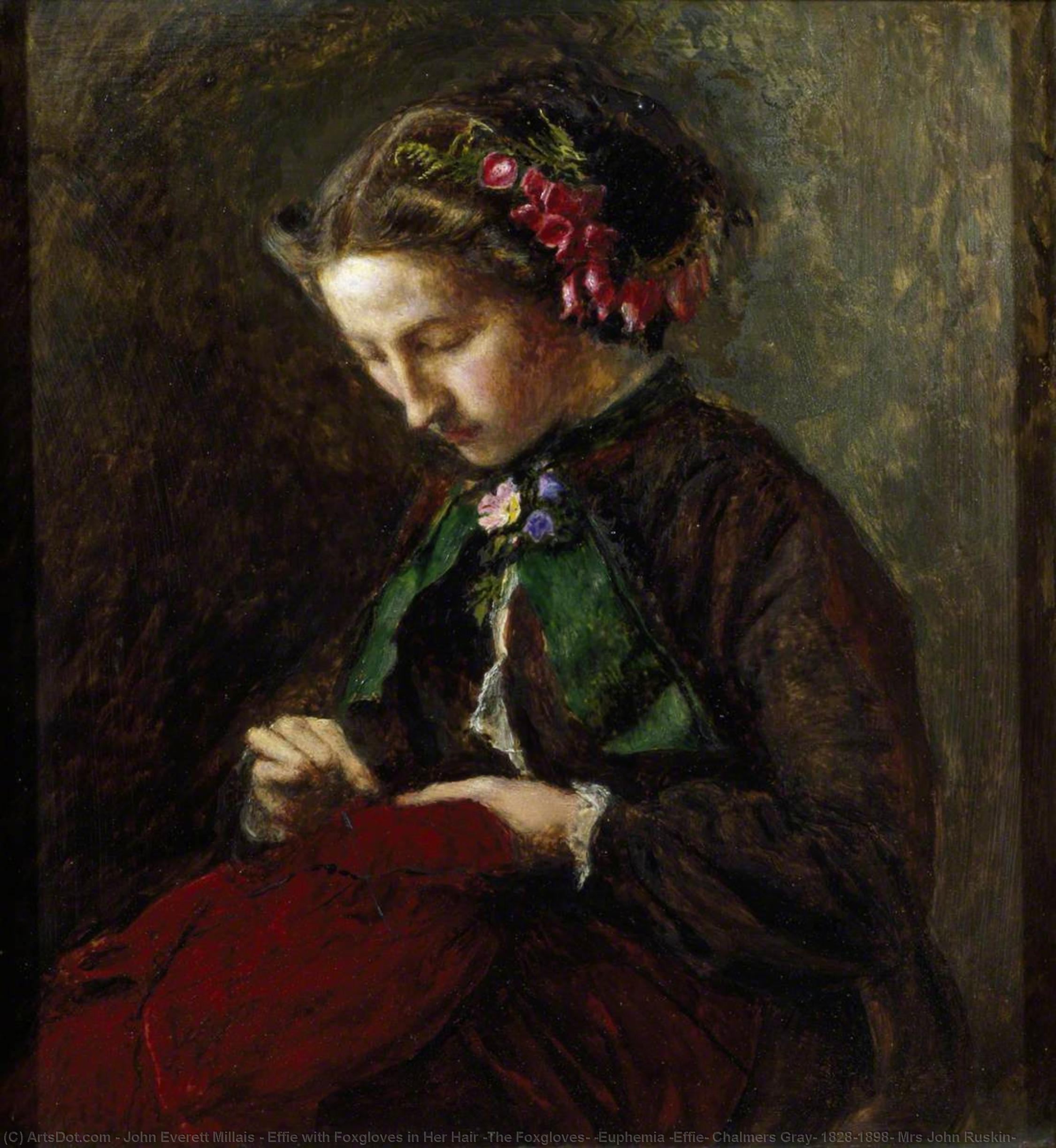
Effie with Foxgloves in Her Hair (The Foxgloves): A Victorian Reverie
Sir John Everett Millais’s “Effie with Foxgloves in Her Hair,” painted in 1853, is more than a portrait; it's a meticulously crafted window into the heart of Victorian England and the burgeoning aesthetic ideals of the Pre-Raphaelite Brotherhood. This intimate scene captures Euphemia ‘Effie’ Chalmers Gray, the wife of noted art critic John Ruskin, in a moment of quiet contemplation, surrounded by the vibrant beauty of her garden. The painting's enduring appeal lies not just in its technical brilliance but also in its ability to evoke a profound sense of nostalgia and the delicate balance between nature and human emotion.
A Pre-Raphaelite Masterpiece: Technique and Detail
- Obsessive Realism: Millais, a key figure in the Pre-Raphaelite movement, was renowned for his unwavering commitment to realism. “Effie” exemplifies this with astonishing detail – from the intricate weave of Effie’s green dress to the delicate texture of the foxgloves themselves. He employed a technique known as ‘white method,’ meticulously building up layers of translucent paint to achieve an unparalleled luminosity and depth, characteristic of the movement's rejection of academic conventions.
- Color Palette: The color palette is dominated by rich greens, reds, and browns, reflecting the natural world that surrounds Effie. Millais’s masterful use of complementary colors – particularly the juxtaposition of red and green – creates a visually arresting effect, drawing the viewer's eye to key elements within the composition.
- Brushwork: The artist’s brushstrokes are remarkably fine and controlled, contributing significantly to the painting’s overall sense of realism and immediacy. This meticulous attention to detail is a hallmark of Millais’s style and a defining feature of Pre-Raphaelite art.
Symbolism and Context: Ruskin's Muse
“Effie with Foxgloves in Her Hair” was painted during a pivotal period in Ruskin’s career, as he was developing his influential theories on beauty and morality through his art criticism. Effie herself became a central figure in his life and work, representing the idealized Victorian woman – serene, contemplative, and deeply connected to nature. The foxgloves, with their striking purple blooms, carry symbolic weight, often associated with remembrance and mourning, subtly hinting at themes of mortality and the passage of time—a common preoccupation within Ruskin’s writings.
Emotional Impact and Legacy
The painting's power resides in its ability to capture a fleeting moment of quiet beauty. Effie’s downward gaze, combined with the delicate arrangement of the flowers, creates an atmosphere of introspection and vulnerability. “Effie with Foxgloves in Her Hair” remains a testament to Millais’s artistic genius and the Pre-Raphaelite Brotherhood's revolutionary approach to art – one that prioritized truth, beauty, and emotional resonance above all else. It continues to captivate viewers with its exquisite detail, evocative symbolism, and enduring sense of Victorian romance.