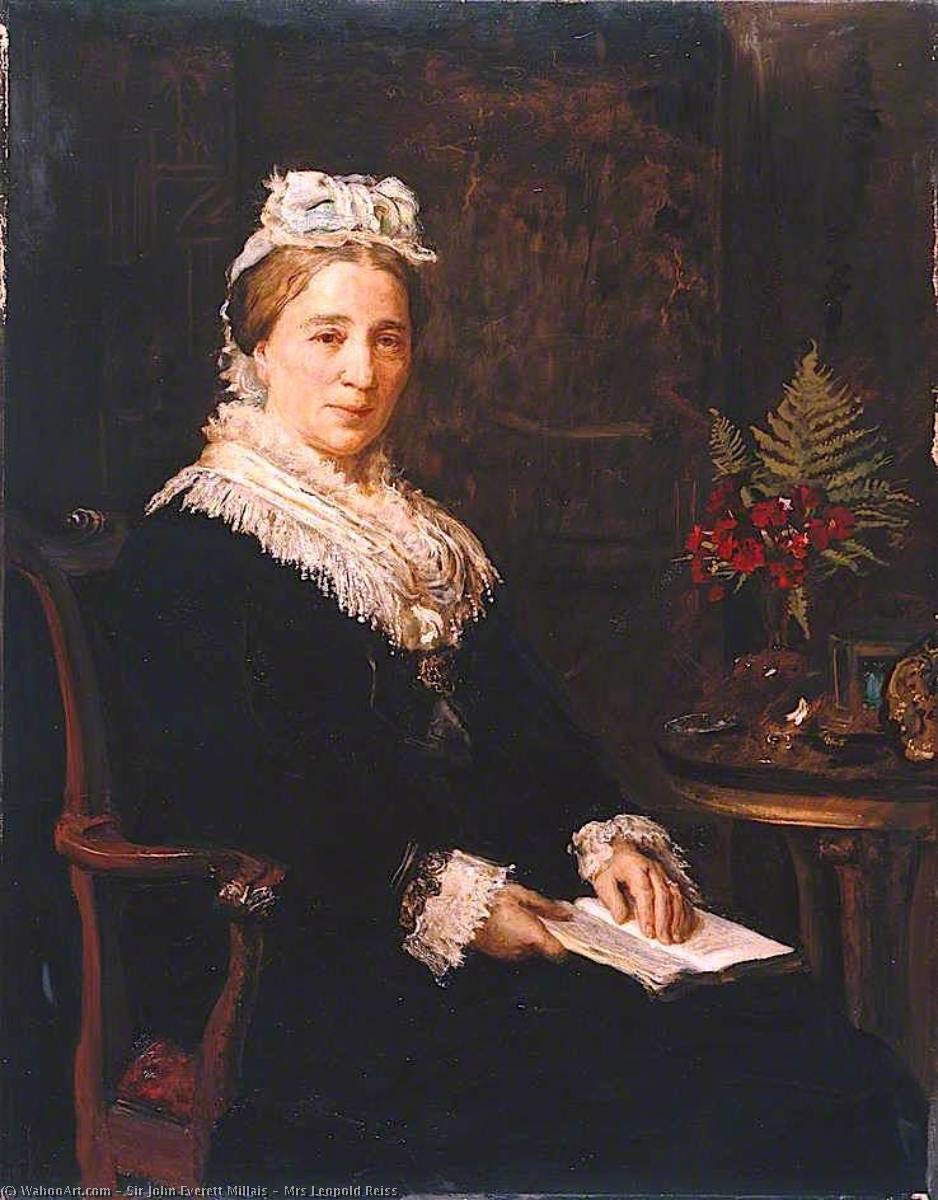
A Window Into Victorian Sentimentality: Exploring Millais’s ‘Mrs Leopold Reiss’
The painting “Mrs Leopold Reiss,” completed in 1876 by Sir John Everett Millais, stands as a quintessential emblem of the Pre-Raphaelite Brotherhood's artistic vision—a movement that vehemently rejected academic conventions and championed an idealized depiction of nature alongside profound psychological insight. More than just a portrait, it’s a carefully constructed tableau designed to evoke a specific emotional response, capturing the essence of Victorian domestic tranquility infused with subtle hints of melancholy.
The Subject Matter: Innocence Amidst Decay
At its core lies the portrayal of Mrs. Leopold Reiss, a woman seated in her conservatory amidst an exquisitely rendered garden scene. The subject matter itself speaks volumes about the anxieties and aspirations of the era. Victorian society placed immense value on motherhood and domesticity, yet beneath the veneer of respectability lurked concerns about mortality and the passage of time—themes powerfully conveyed through Millais’s masterful composition. The woman's gaze is directed towards a book she holds open, symbolizing knowledge and contemplation, but her posture suggests a quiet sadness, hinting at unspoken burdens carried within the confines of her privileged existence.
A Celebration of Pre-Raphaelite Technique: Detail and Luminosity
Millais’s technique exemplifies the Pre-Raphaelites' commitment to meticulous observation and luminous color palettes. Employing oil paints on canvas, he painstakingly recreated the conservatory environment with astonishing realism—every leaf, petal, and dewdrop rendered with painstaking detail. The artist utilized a glazing technique, layering thin washes of pigment over thicker undercoats to achieve an ethereal glow that captures the diffused light filtering through the glass roof. This masterful manipulation of light is particularly evident in the depiction of the flowers—specifically lilies and roses—which are positioned strategically to draw the viewer’s eye and contribute to the overall sense of beauty and serenity. However, Millais wasn't merely striving for visual accuracy; he sought to elevate his subject matter beyond mere representation, aiming instead to convey a deeper emotional truth.
Symbolism Rooted in Medieval Tradition
The choice of lilies and roses carries significant symbolic weight within medieval Christian iconography. Lilies represent purity and innocence—qualities associated with motherhood and virginity—while roses symbolize love and devotion. Their placement around Mrs. Leopold Reiss underscores the idealized vision of domestic life championed by the Pre-Raphaelites, suggesting a harmonious blend of beauty and spiritual contemplation. The garden itself serves as a metaphor for Edenic paradise, representing a longing for unspoiled innocence and eternal bliss – sentiments prevalent in Victorian literature and art.
Emotional Resonance: Capturing Victorian Melancholy
Ultimately, “Mrs Leopold Reiss” succeeds in capturing the pervasive melancholy that characterized Victorian sensibilities. Despite its idyllic setting, the painting subtly conveys a sense of wistful contemplation—a recognition of mortality and the fleeting nature of beauty. Millais’s masterful use of color and light contributes to this emotional impact, creating an atmosphere of quiet introspection and conveying a profound understanding of human psychology. It's a piece that invites viewers to pause and consider not only what is seen but also what lies beneath—a testament to Millais’s enduring legacy as one of the Pre-Raphaelite Brotherhood’s foremost artists and a poignant reflection of Victorian culture.
- Artist: Sir John Everett Millais
- Year Created: 1876
- Medium: Oil Paint on Canvas
- Dimensions: 122 x 95 cm
Hand-Painted Reproduction Available: Bring the timeless beauty of Millais’s masterpiece into your home with a stunning, high-quality reproduction. Explore our collection today!