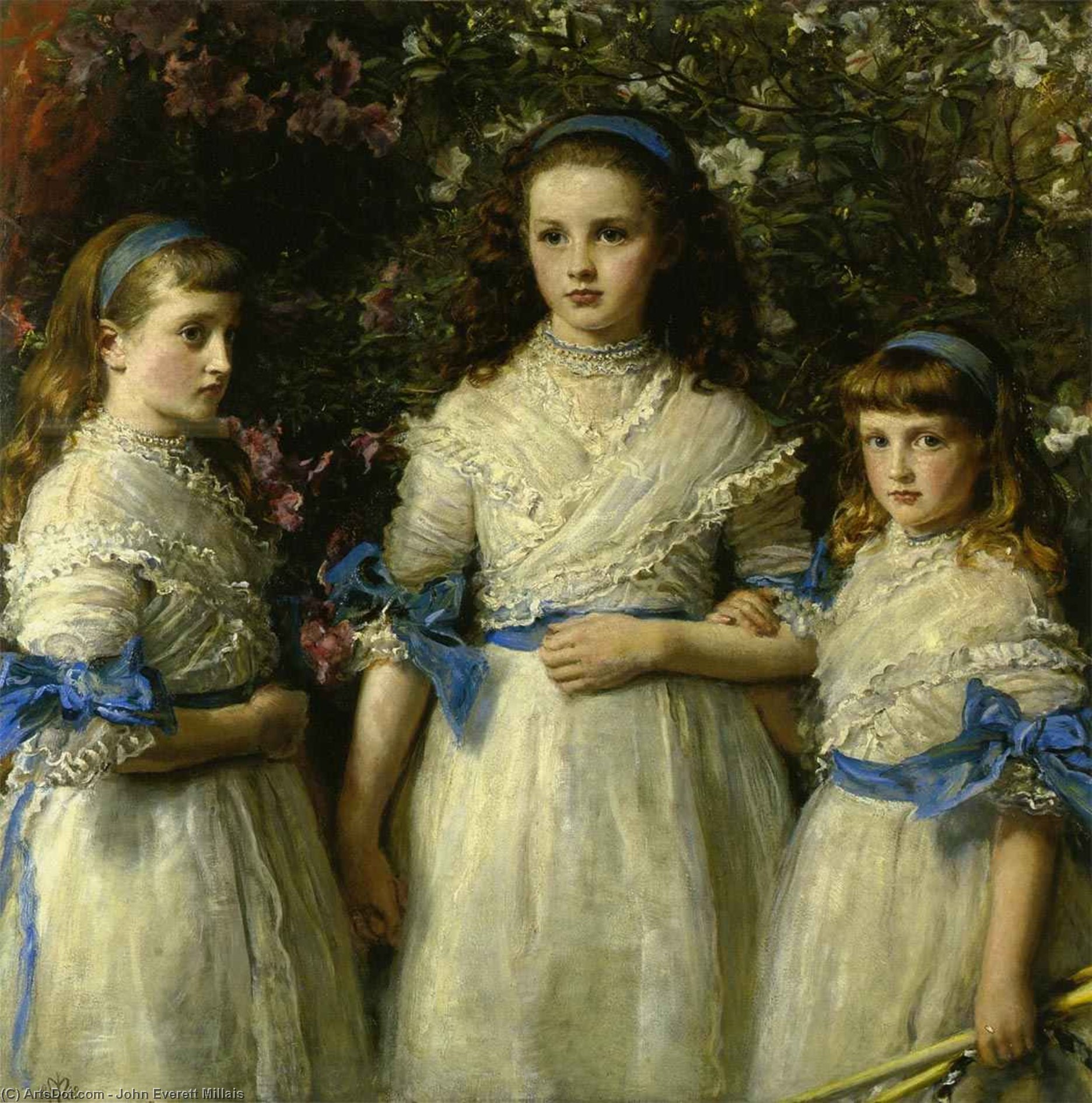
Admire Sir John Everett Millais’s ‘Sisters,’ a Pre-Raphaelite jewel capturing Victorian innocence and beauty with meticulous detail—a stunning reproduction available at ArtsDot.
Explore Isabella by Sir John Everett Millais, a Pre-Raphaelite masterpiece depicting Mariana from Shakespeare's Measure for Measure. Witness Victorian artistry and symbolism in this iconic painting.
Isabella
a
Explore the art of Sir John Everett Millais (1829-1896), a Pre-Raphaelite founder. Discover his detailed realism, iconic paintings like Ophelia & Christ in the House of His Parents, and lasting Victorian impact.
A Window into Victorian Innocence: Exploring Sir John Everett Millais’s “Sisters”
“Sisters,” painted in 1868 by Sir John Everett Millais, stands as a cornerstone of the Pre-Raphaelite Brotherhood's artistic vision—a movement that vehemently rejected academic conventions and championed an idealized depiction of nature alongside profound psychological insight. More than just a portrait, it’s a meticulously crafted meditation on childhood purity and beauty, capturing a moment frozen in time with breathtaking realism.
The Genesis of Artistic Rebellion
Millais’s refusal to adhere to the prevailing artistic trends of his era stemmed from a deep conviction that art should strive for truthfulness—a principle fiercely defended by the Brotherhood. Dissatisfied with the polished surfaces and theatrical poses favored by the Royal Academy, Millais sought inspiration in the unspoiled landscapes of Worcestershire Moor, specifically choosing the idyllic setting of Bourton Mead to depict three young girls – Eliza Mary Birch Hill Taylor and her sisters Kate and Grace Hoare—playing amongst wildflowers. This deliberate departure from established artistic norms signaled a bold assertion of creative autonomy and fueled the Brotherhood’s rebellious spirit.
A Symphony of Color and Detail: Technique and Style
Millais's masterful technique exemplifies the Pre-Raphaelite commitment to meticulous observation and painstaking execution. Employing oil paints on canvas, he achieved an astonishing level of detail—a feat considered revolutionary at the time—capturing every nuance of light and shadow within the floral backdrop and subtly conveying the girls’ emotions through expressive poses. The artist painstakingly recreated the scene from life, utilizing a method known as “plein air” painting, ensuring that the colors and textures faithfully mirrored those found in nature. This dedication to realism wasn't merely stylistic; it served as a vehicle for exploring themes of innocence, beauty, and the transformative power of childhood experience.
Symbolism Woven into Impression
Beyond its visual splendor, “Sisters” is laden with symbolic significance. The flowers surrounding the girls—specifically poppies, daisies, primroses, and cornflowers—represent remembrance, purity, and joy respectively. These floral emblems underscore the painting’s central message: a celebration of unspoiled youth and an idealized portrayal of familial harmony. Furthermore, Millais's careful composition directs the viewer’s gaze towards the girls’ faces, emphasizing their expressions of serenity and contemplation – conveying a profound sense of inner peace amidst the vibrant beauty of the natural world.
Emotional Resonance and Lasting Legacy
“Sisters” continues to resonate with audiences today due to its ability to evoke feelings of nostalgia and admiration for simpler times. The painting's luminous palette, combined with Millais’s masterful rendering of texture and light, transports viewers back to Victorian England—a period characterized by both social conservatism and a fervent appreciation for artistic innovation. Its enduring popularity speaks volumes about the power of art to capture universal themes of beauty, innocence, and familial love – cementing Sir John Everett Millais's place as one of the Pre-Raphaelite Brotherhood’s most celebrated artists and ensuring that “Sisters” remains an unforgettable emblem of Victorian artistry.