A Window into Victorian Sentiment: Sir John Everett Millais’s ‘Sweet Emma Morland’
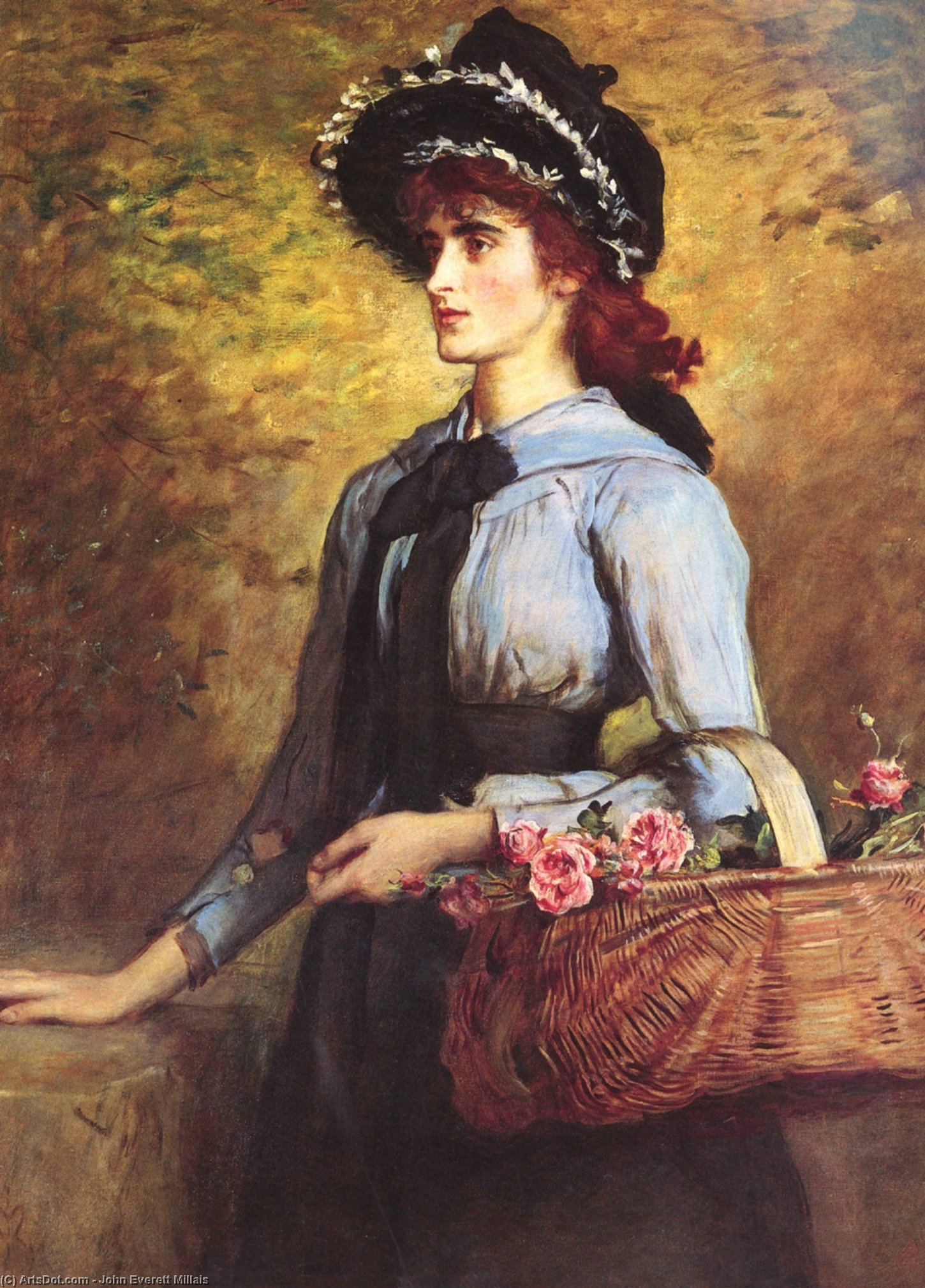
Sir John Everett Millais's “Sweet Emma Morland” is more than just a portrait; it’s a meticulously rendered window into the heart of Victorian England, a testament to the Pre-Raphaelite Brotherhood’s revolutionary approach to art. Completed in 1892, this oil on canvas – measuring 90 x 121 cm – immediately captivates with its astonishing detail and evocative mood. The scene depicts Emma Morland, a young woman embodying the idealized beauty of her era, presented before a simple wall adorned with an abundance of blossoms. Millais’s genius lies not merely in his technical skill but in his ability to capture a fleeting moment of domestic tranquility, a characteristic that cemented his legacy as a pivotal figure within this influential movement.
Masterclass in Realism and Technique
Millais's artistic approach was profoundly innovative for its time. Rejecting the often-stilted and idealized forms favored by many of his contemporaries, he championed an unwavering commitment to truthfulness. Every element within the painting – from the delicate folds of Emma’s dress to the subtle variations in color within the flowers – is recreated with almost photographic accuracy. The execution is remarkable; observe how light dances across the fabric, the nuanced shades within the blooms, and the textured surface of the wall, all achieved through Millais's masterful use of oil paint. His technique involved layering thin glazes of color, building up depth and luminosity with painstaking care – a process that demanded immense patience and precision.
Historical Context: The Pre-Raphaelite Ideal
"Sweet Emma Morland" was created during the Victorian era, reflecting the social values and aesthetic sensibilities of the time. The Pre-Raphaelites, a group of artists who rebelled against the artistic conventions of the Royal Academy, sought to emulate the art of the early Renaissance masters – particularly those predating Raphael (hence ‘Pre-Raphaelite’). This revival of medieval and early Renaissance styles was driven by a desire for greater sincerity and emotional depth in art, moving away from the academic formality that had dominated British painting. The painting’s subject matter, depicting a young woman engaged in a simple domestic activity, aligns perfectly with this movement's focus on everyday life and its celebration of beauty in the ordinary.
Symbolism and Emotional Impact
The overflowing basket of flowers is not merely decorative; it’s laden with symbolic meaning. Flowers have long been associated with love, beauty, and innocence – qualities that Emma Morland embodies. The painting's overall mood is one of serene contentment, a reflection of the Victorian ideal of domestic harmony. Millais’s ability to capture this feeling, combined with his meticulous attention to detail, creates an image that resonates deeply with viewers, evoking a sense of nostalgia for a bygone era and a profound appreciation for the beauty of nature.
Provenance and Dimensions
- Title: Sweet Emma Morland
- Artist: Sir John Everett Millais
- Date: 1892
- Medium: Oil on Canvas
- Size: 90 x 121 cm