A Gentle Journey Through Light and Connection
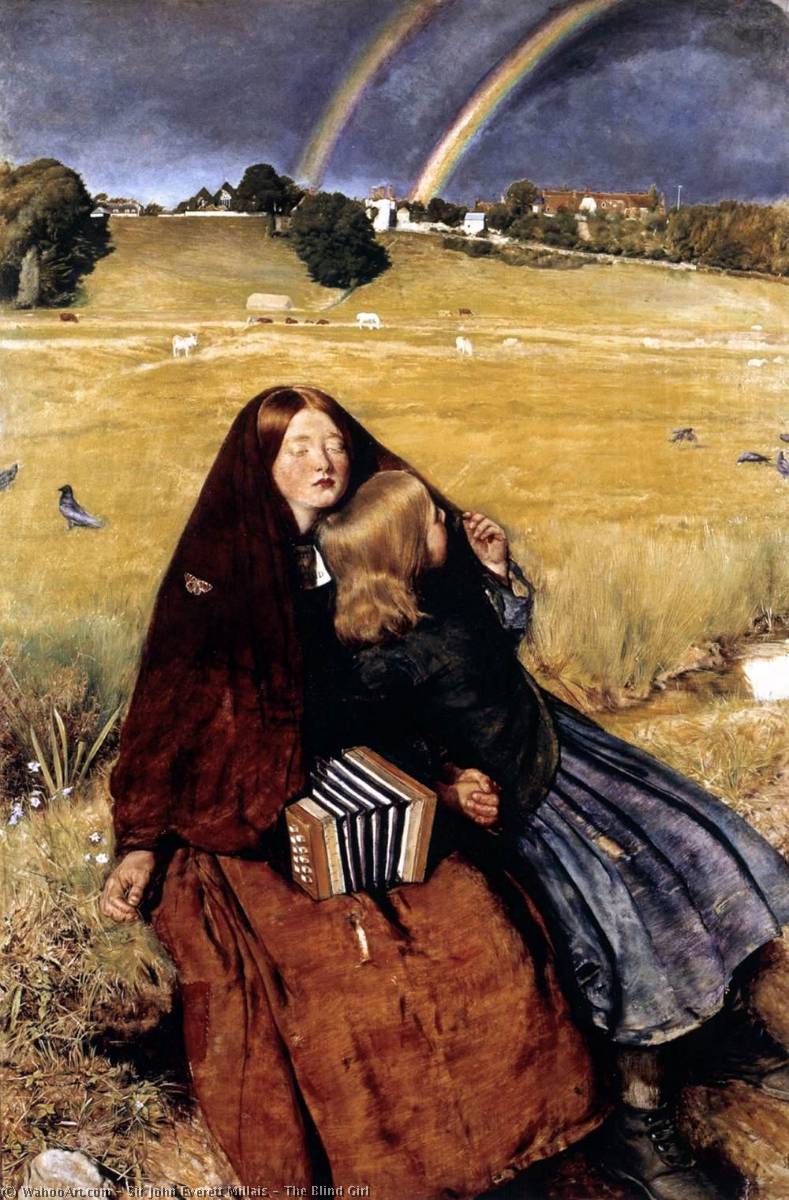
To gaze upon this depiction of The Blind Girl is to step into a moment suspended in perfect, sun-drenched grace. The scene unfolds as a tender tableau set within a vibrant field, capturing not just an afternoon outing, but the profound intimacy shared between two souls. One woman, whose sight has been taken from her, finds guidance and comfort through the gentle touch of her companion. This connection—the reliance, the support, the unspoken understanding—forms the very heart of the painting's emotional resonance. The artist has masterfully composed this gathering, drawing the viewer into their warm embrace amidst the lush greenery.
The Luminous Touch of Pre-Raphaelite Realism
Painted in 1856 by Sir John Everett Millais, this work stands as a beautiful testament to the burgeoning power of the Pre-Raphaelite Brotherhood. Millais was renowned for his almost startling commitment to detail and naturalistic truth; he did not merely paint what he saw, but seemed to recreate the very texture of sunlight on grass and the softness of human skin. The technique employed here speaks to a meticulous observation that elevates the mundane into the sublime. Notice how the light seems to emanate from the sky itself, illuminating the figures while simultaneously casting delicate shadows that give the scene incredible depth. It is a masterclass in rendering atmosphere.
Symbolism Woven Into the Landscape
The elements surrounding the two women are rich with symbolic meaning, inviting deeper contemplation. Above them arches a visible rainbow, an ancient symbol of promise, hope, and covenant—a perfect visual metaphor for resilience following difficulty. Scattered birds flit through the air, adding a sense of vital movement against the stillness of the central bond. Furthermore, the presence of the suitcase suggests a journey, implying that this moment of peace is perhaps a pause on a longer passage of life. These details transform the painting from a simple portrait into a meditation on faith and companionship.
An Echo of Victorian Sentiment for Modern Spaces
For the contemporary collector or designer, The Blind Girl offers more than just decorative beauty; it offers narrative depth. Its warm palette—dominated by sun-drenched greens, soft earth tones, and bright sky blues—makes it an immediate focal point in any room seeking a touch of romantic nostalgia. Reproducing this piece allows one to bring the gentle optimism of Victorian sentiment into modern life. It speaks quietly of empathy, friendship, and finding beauty even when one sense is diminished.
A Legacy of Emotional Resonance
Millais’s genius lay in his ability to imbue realism with profound feeling. This painting captures that elusive quality—the moment where technical brilliance serves pure emotion. Whether displayed above a mantelpiece or gracing a gallery wall, this reproduction invites viewers to pause, breathe deeply, and reflect on the enduring power of human connection. It is an artwork that comforts the eye while stirring the heart.