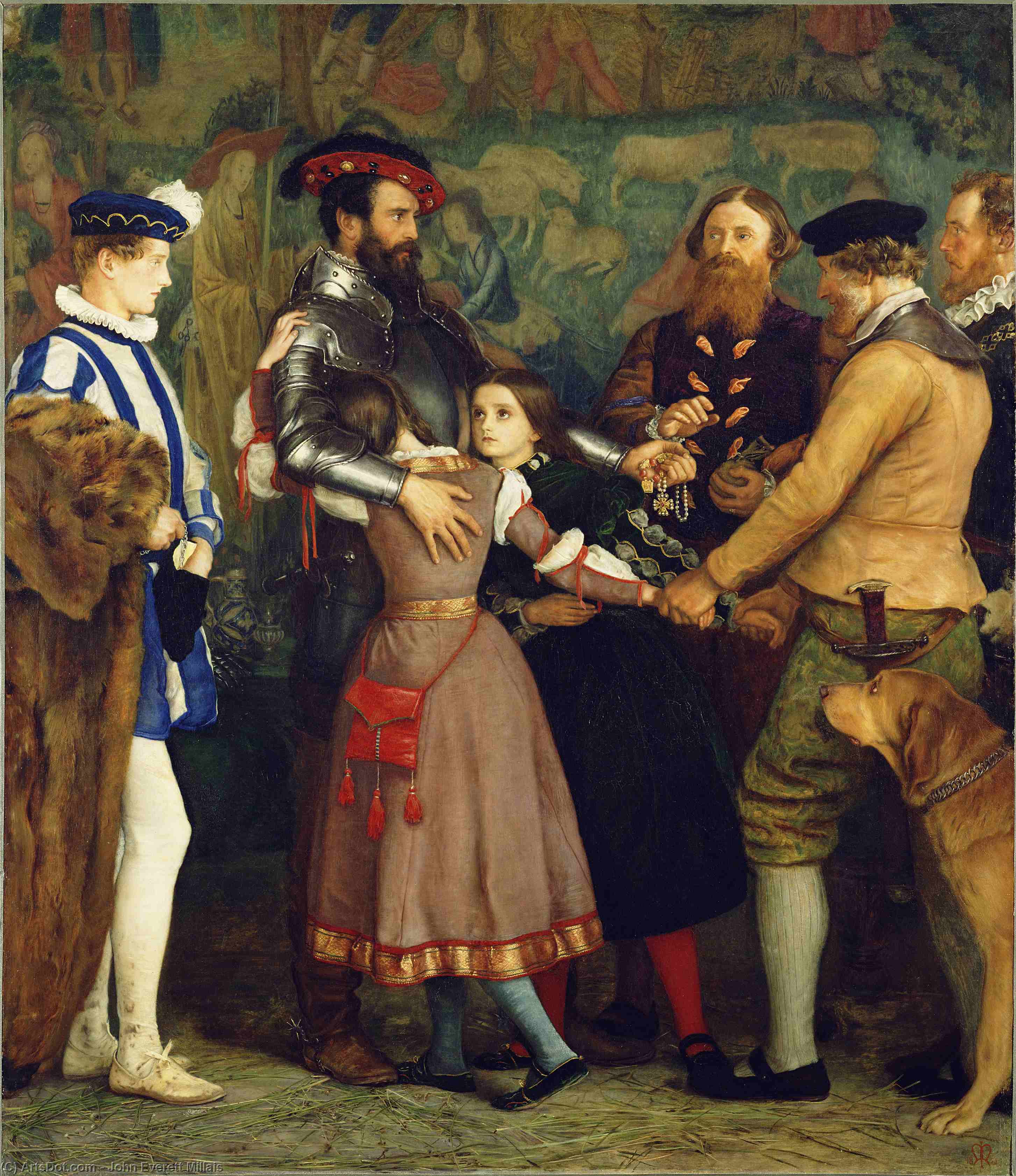
The Ransom by Sir John Everett Millais: A Romantic Vision of History
Sir John Everett Millais’s “The Ransom” is more than just a depiction of a historical scene; it's a meticulously crafted immersion into the heart of Romanticism, a testament to the Pre-Raphaelite Brotherhood’s revolutionary approach to art. Completed in 1856, this oil on canvas measuring 114 x 129 cm immediately captivates with its dramatic composition and astonishing level of detail – qualities that cemented Millais's reputation as one of the era’s foremost artists.
A Scene Frozen in Time: Historical Context and Narrative
The painting portrays a pivotal moment, likely inspired by accounts of ransom negotiations during the medieval period. The figures – men clad in gleaming armor, women adorned in opulent gowns – evoke a sense of grandeur and courtly intrigue. Swords are prominently displayed, symbols of power and conflict, while the young girl held gently in one figure’s arms represents innocence and vulnerability. A loyal dog adds an element of realism and reinforces the scene's historical atmosphere, drawing the viewer into a world both fantastical and deeply rooted in the past. The meticulous attention to clothing styles and weaponry reflects the Pre-Raphaelite commitment to accurate representation, moving away from idealized depictions favored by earlier artistic movements.
The Pre-Raphaelite Technique: Detail and Emotional Resonance
Millais’s mastery lies in his painstaking technique. He employed a method of layering paint – often applied with a fine brush – to achieve an almost photographic realism, a hallmark of the Pre-Raphaelite style. Notice the incredible detail in the textures of the fabrics, the sheen of the armor, and the individual strands of hair. This dedication to meticulous observation wasn't merely about replicating reality; it was about imbuing the scene with emotional depth. The faces of the figures, though rendered with precise accuracy, convey a range of emotions – apprehension, determination, and perhaps even sorrow – adding layers of narrative complexity to the image.
Symbolism and Romantic Ideals
"The Ransom" is rich in symbolic meaning. The act of ransom itself represents negotiation, power dynamics, and the value placed on human life. The presence of the dog can be interpreted as loyalty and protection, while the women’s attire speaks to their status and influence within this world. Millais's work aligns perfectly with Romantic ideals – a fascination with nature, emotion, and the exploration of profound themes. It reflects a yearning for a simpler, more authentic past, a sentiment that resonated deeply with Victorian society.
A Legacy of Artistic Innovation
Sir John Everett Millais’s “The Ransom” stands as a cornerstone of Pre-Raphaelite art and a powerful example of Romanticism's enduring appeal. Its technical brilliance, historical context, and evocative symbolism continue to captivate viewers today. Reproductions of this iconic artwork offer an unparalleled opportunity to experience the beauty and emotional depth of Millais’s vision – a timeless masterpiece that speaks across centuries.