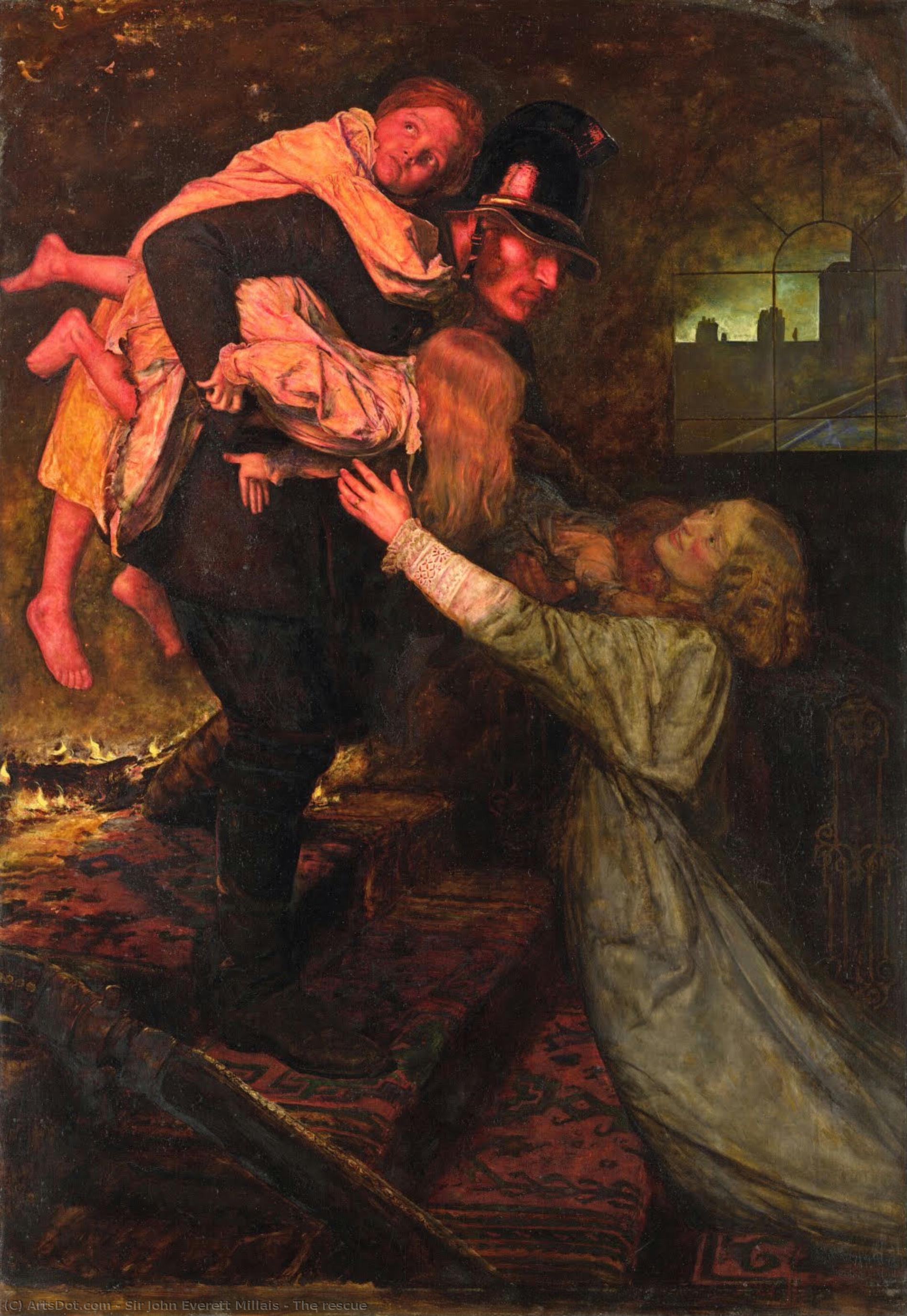
The Rescue: A Dramatic Depiction of Victorian Bravery
John Everett Millais's "The Rescue," also known as “The Fireman,” stands as a striking example of Pre-Raphaelite realism and a poignant commentary on urban life in 19th-century London. Completed in 1855, this painting transcends mere representation; it’s a powerful narrative capturing a moment of intense drama and selfless heroism.
Subject and Composition
The scene portrays a dramatic rescue from a burning building. A muscular fireman, the central figure, emerges from the smoke-filled interior carrying two young children in his arms. Another woman clings to him, suggesting a desperate attempt at escape. The composition is carefully structured to draw the viewer's eye to the fireman’s face, conveying both determination and exhaustion. The dimly lit room, filled with swirling smoke and debris, creates an atmosphere of chaos and urgency. A chair sits near the center, and a clock on the wall above it adds a sense of time running out.
Style and Technique: Pre-Raphaelite Realism
“The Rescue” exemplifies the core tenets of the Pre-Raphaelite Brotherhood, founded by Millais himself. The style is characterized by meticulous detail, vibrant colors, and an emphasis on realism. Millais’s technique involved painstaking observation and a commitment to accurately depicting textures and light. He reportedly visited several fires in London to study the effects of smoke and flame firsthand, ensuring the painting's authenticity. This dedication to naturalism was revolutionary for its time, challenging the conventions of academic art.
Historical Context and Symbolism
The painting’s creation coincided with a period of rapid urbanization and industrial growth in London. Fires were a common hazard, and the newly formed London Fire Engine Establishment played a vital role in protecting the city. Millais intended to honor these "men quietly doing a noble work," as he told his friend Arthur Hughes. The fireman represents courage and selflessness amidst danger. The children symbolize innocence and vulnerability, highlighting the stakes of the rescue. The clock on the wall serves as a reminder of the urgency of the situation and the fleeting nature of life.
Emotional Impact and Legacy
“The Rescue” evokes a powerful sense of drama and suspense. The viewer is drawn into the scene, experiencing the tension and fear of those trapped in the burning building. Millais’s masterful use of light and shadow creates an emotional intensity that resonates even today. The painting's depiction of everyday heroism elevated ordinary individuals to iconic status, solidifying its place as a significant work within Victorian art and a testament to human bravery.