A Moment of Refined Leisure: Sir John Lavery’s "A Visitor"
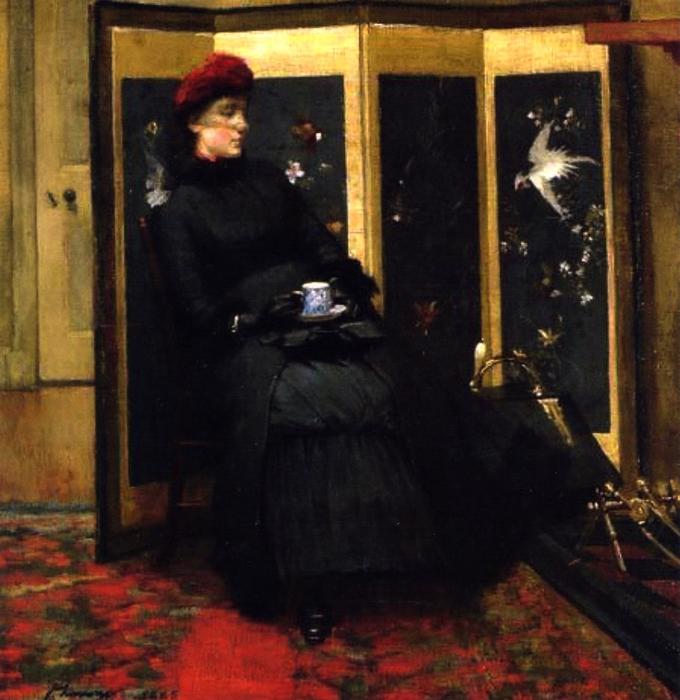
Sir John Lavery's “A Visitor,” painted in 1885, is more than just a portrait; it’s a carefully constructed tableau of Victorian elegance and quiet contemplation. Measuring a modest 46 x 46 cm, this oil on canvas transports the viewer to an intimate moment within a richly appointed room, offering a glimpse into the refined sensibilities of the late 19th century. The painting's enduring appeal lies not only in its subject – a woman lost in the simple pleasure of tea – but also in Lavery’s masterful execution and his ability to evoke a palpable sense of atmosphere.
- Subject & Composition: The central figure, a woman seated with crossed legs and a cup before her, immediately draws the eye. Her posture exudes composure and grace, while the surrounding details – the plush red carpet, the upholstered couch, and the strategically placed birds – contribute to a feeling of luxurious comfort.
- Color & Light: Lavery’s use of color is particularly noteworthy. The deep reds of the carpet and hat contrast beautifully with the woman's black dress, creating a focal point that commands attention. He skillfully employs light to sculpt the forms, highlighting the folds of fabric and casting subtle shadows that add depth and realism to the scene.
- Technical Detail: Noticeable brushstrokes create texture in the fabrics and contribute to the overall sense of volume. The intricate patterns on the woman’s dress are rendered with meticulous care, demonstrating Lavery's mastery of oil painting techniques.
The Artist & His Context
Born in Belfast in 1856, Sir John Lavery was a pivotal figure in British art during his time. His early training at the Haldane Academy in Glasgow and subsequent studies in Paris – particularly within the Académie Julian – exposed him to the latest artistic trends, including Impressionism and Post-Impressionism, which he skillfully integrated into his own distinctive style. This blend of influences is evident in “A Visitor,” where Lavery’s technical proficiency is tempered by a sensitivity to light and color that anticipates later developments in modern art.
Lavery's career spanned several decades, encompassing both portraiture and landscape painting. He became particularly renowned for his ability to capture the personalities of his subjects – often members of the British aristocracy and upper classes – with remarkable accuracy and charm. His work reflects not only his artistic talent but also his keen understanding of social dynamics and his ability to portray the nuances of Victorian society.
Symbolism & Emotional Resonance
Beyond its technical merits, “A Visitor” is rich in symbolic meaning. The birds, often associated with peace and tranquility, add a layer of elegance and sophistication to the scene. The woman’s relaxed posture and contemplative gaze suggest a moment of respite from the demands of daily life – a quiet indulgence in simple pleasures. The red hat, a bold statement against the dark dress, further emphasizes her presence and confidence.
The overall atmosphere of the painting is one of warmth, intimacy, and understated luxury. It invites the viewer to step into the scene and share in the woman’s moment of leisure, fostering a sense of connection and empathy. Lavery's ability to evoke such strong emotions through his art is a testament to his skill as a portraitist and his understanding of human psychology.
Owning a Piece of History
Handmade oil painting reproductions of “A Visitor” are now available at ArtsDot.com, allowing art enthusiasts to own a piece of history and appreciate Lavery’s remarkable talent. This meticulously crafted reproduction captures the essence of the original painting, offering a beautiful addition to any home or office. Bring this captivating scene into your space and experience the timeless beauty of Sir John Lavery's masterpiece.