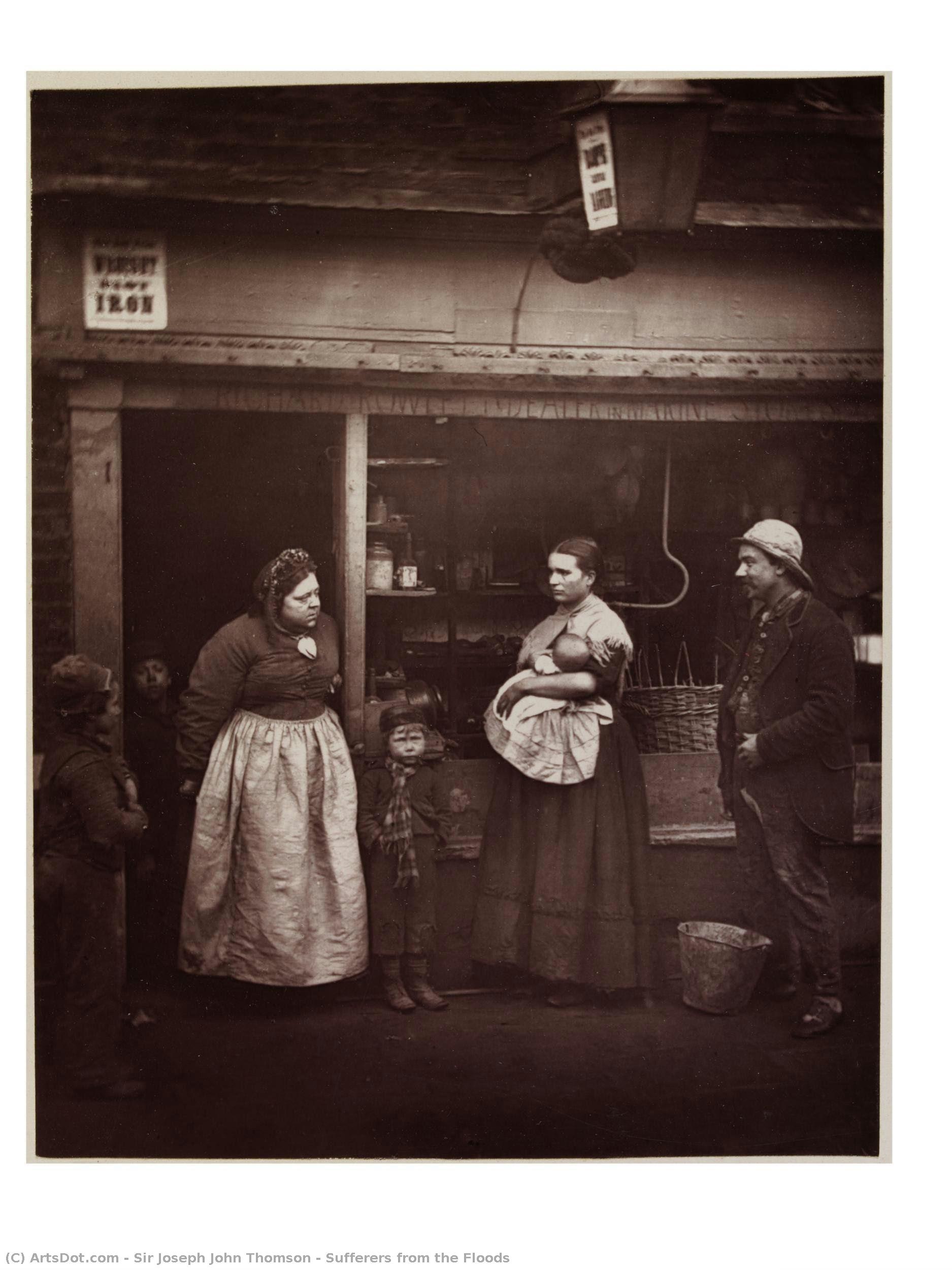
Sufferers from the Floods: A Window Into Victorian London
The photograph “Sufferers from the Floods,” created by Sir Joseph John Thomson in 1877, stands as a poignant testament to both scientific observation and humanist empathy—a rare duality achieved through the masterful application of the Woodburytype photographic process. Captured during Thomson’s ambitious expedition documenting urban life in London following the devastating Great Flood of 1878-79, this image transcends mere documentation; it's an immersive glimpse into the daily realities faced by ordinary Victorians grappling with poverty and hardship.
- Subject Matter: The composition depicts a group of individuals huddled outside a building—primarily a rag shop—reflecting the socioeconomic struggles prevalent in London’s poorer districts during that era. Notably, Thomson deliberately positioned his subjects to convey a narrative of resilience amidst adversity.
- Style & Technique: Thomson employed the Woodburytype process, patented in 1864, which utilized pigmented gelatin to produce images with exceptional tonal richness and permanence—a technique favored for its ability to reproduce subtle nuances of color and texture. This meticulous approach ensured that the photograph faithfully captured the atmospheric conditions of the flood-stricken streets.
- Historical Context: The Great Flood of 1878-79 profoundly impacted London’s infrastructure and economy, exacerbating existing social inequalities. Thomson's decision to portray this event wasn't simply a matter of recording history; it was driven by a desire to illuminate the human cost of disaster—the anxieties, vulnerabilities, and everyday struggles experienced by vulnerable populations.
Symbolism & Emotional Impact: The inclusion of a woman holding a baby underscores themes of maternal care and familial vulnerability within the broader context of societal hardship. Furthermore, the presence of two bottles adds an element of visual intrigue—perhaps symbolizing sustenance or hope amidst bleak circumstances. Thomson’s deliberate framing invites contemplation on compassion and responsibility toward those less fortunate, cementing “Sufferers from the Floods” as a powerful emblem of Victorian social conscience.
Further Exploration: This artwork is housed at the Cleveland Museum of Art (PH.319-1982). You can access detailed information about its provenance and artistic significance on their website:
https://www.clevelandart.org/print/art/2019.52
- Related Resources: Explore Thomson’s broader oeuvre and delve deeper into the Woodburytype process through scholarly articles available online.
Additional Research: Examining contemporary accounts of the Great Flood provides invaluable context for understanding Thomson's artistic motivations and the socio-cultural milieu in which “Sufferers from the Floods” was conceived. Sources include:
http://collections.vam.ac.uk#object-details and
https://artsandculture.google.com/asset/sufferers-from-the-floods-thomson-john/IwGvUUFPb02qdw?hl=en