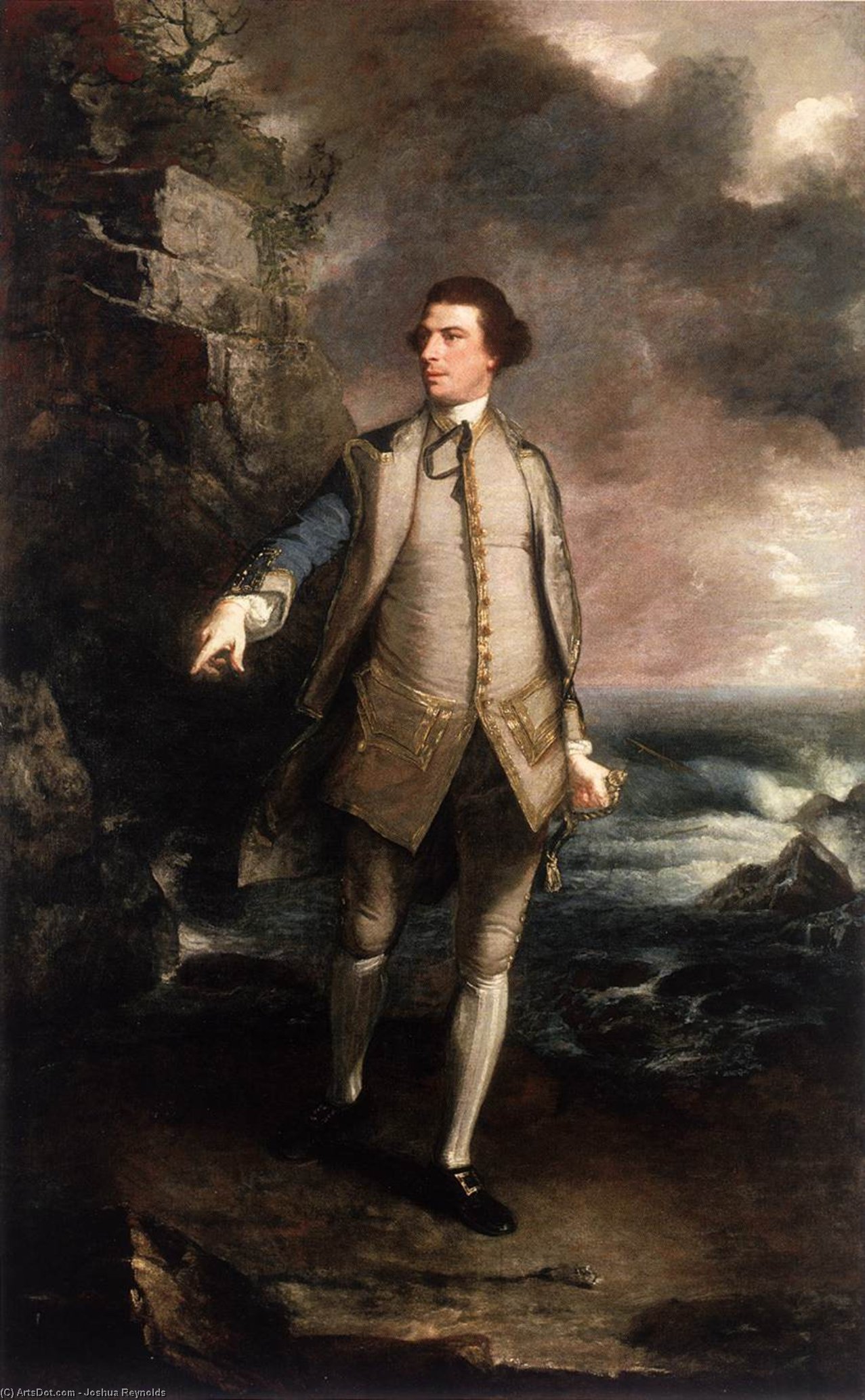
A Portrait of Command: Augustus Keppel by Sir Joshua Reynolds
Sir Joshua Reynolds’s “Portrait of Augustus Keppel” – painted in 1752 – is more than just a likeness; it's a carefully constructed tableau of power, ambition, and the burgeoning confidence of Britain’s naval establishment. This arresting work, currently residing within the esteemed collection of the National Maritime Museum in Greenwich, offers a captivating glimpse into the life of Admiral Augustus Keppel, a pivotal figure during the mid-18th century – a time of expansion, conflict, and profound social change.
Reynolds, a master of the “Grand Style,” eschews the stark realism favored by earlier portraitists. Instead, he employs a classical idealization, drawing inspiration from ancient sculptures like the Apollo Belvedere, to elevate Keppel into an almost heroic figure. The composition is meticulously balanced; Keppel stands confidently on a rocky outcrop overlooking the sea, his posture radiating authority and command. His gaze, direct and unwavering, suggests both strategic awareness and a quiet self-assurance – qualities highly valued in a naval commander navigating treacherous political waters.
The Anatomy of Power: Technique and Detail
The painting’s technical brilliance lies in Reynolds' masterful use of light and shadow, creating a dramatic interplay that emphasizes Keppel’s form and presence. Notice how the light catches the folds of his uniform, highlighting the rich textures of the fabric and the gleam of his sword – symbols of rank and military prowess. The artist’s attention to detail is remarkable; from the meticulously rendered buttons on his coat to the subtle shading around his eyes, every element contributes to a sense of realism and immediacy. Reynolds' use of color is equally sophisticated, employing a palette of deep blues, reds, and golds to evoke both wealth and authority.
Furthermore, the background landscape—a rugged coastline punctuated by distant ships—is not merely decorative; it serves as a powerful metaphor for Keppel’s domain. The sea represents the vastness of his responsibilities, while the ships symbolize the strength and reach of the British Navy. The inclusion of these elements subtly reinforces Keppel's role as a protector of the realm and a champion of its maritime interests.
A Man of His Time: Context and Symbolism
To fully appreciate “Portrait of Augustus Keppel,” it’s essential to understand the historical context in which it was created. The mid-18th century witnessed Britain's ascendance as a global power, fueled by colonial expansion and naval dominance. Keppel himself embodies this era – a rising star within the Royal Navy, involved in crucial campaigns against France and Spain. His service on the North American Station, his command of ships during the Seven Years’ War, and his later role in suppressing piracy off the coast of Africa all cemented his reputation as a formidable leader.
The portrait also reflects broader societal values – the emphasis on masculinity, honor, and military virtue. Keppel's pose, reminiscent of classical heroes, aligns with these ideals, portraying him as a figure worthy of admiration and emulation. The inclusion of the naval uniform, a symbol of status and duty, further reinforces this message.
An Enduring Legacy: Emotional Impact and Reproduction
“Portrait of Augustus Keppel” transcends its historical subject matter to offer a powerful meditation on leadership, ambition, and the human condition. The painting’s dramatic composition, masterful technique, and evocative symbolism combine to create an image that is both visually stunning and emotionally resonant. It speaks to the enduring allure of power, the complexities of naval service, and the timeless appeal of portraiture as a means of capturing identity and legacy.
Reproductions of this iconic work offer a remarkable opportunity to bring its grandeur into your home or office. A high-quality print allows you to appreciate Reynolds’s artistry in detail, while a hand-painted reproduction captures the essence of the original with unparalleled fidelity. Consider framing it within a classic style to complement its historical context and elevate its visual impact – a testament to both the enduring legacy of Sir Joshua Reynolds and the captivating story of Admiral Augustus Keppel.