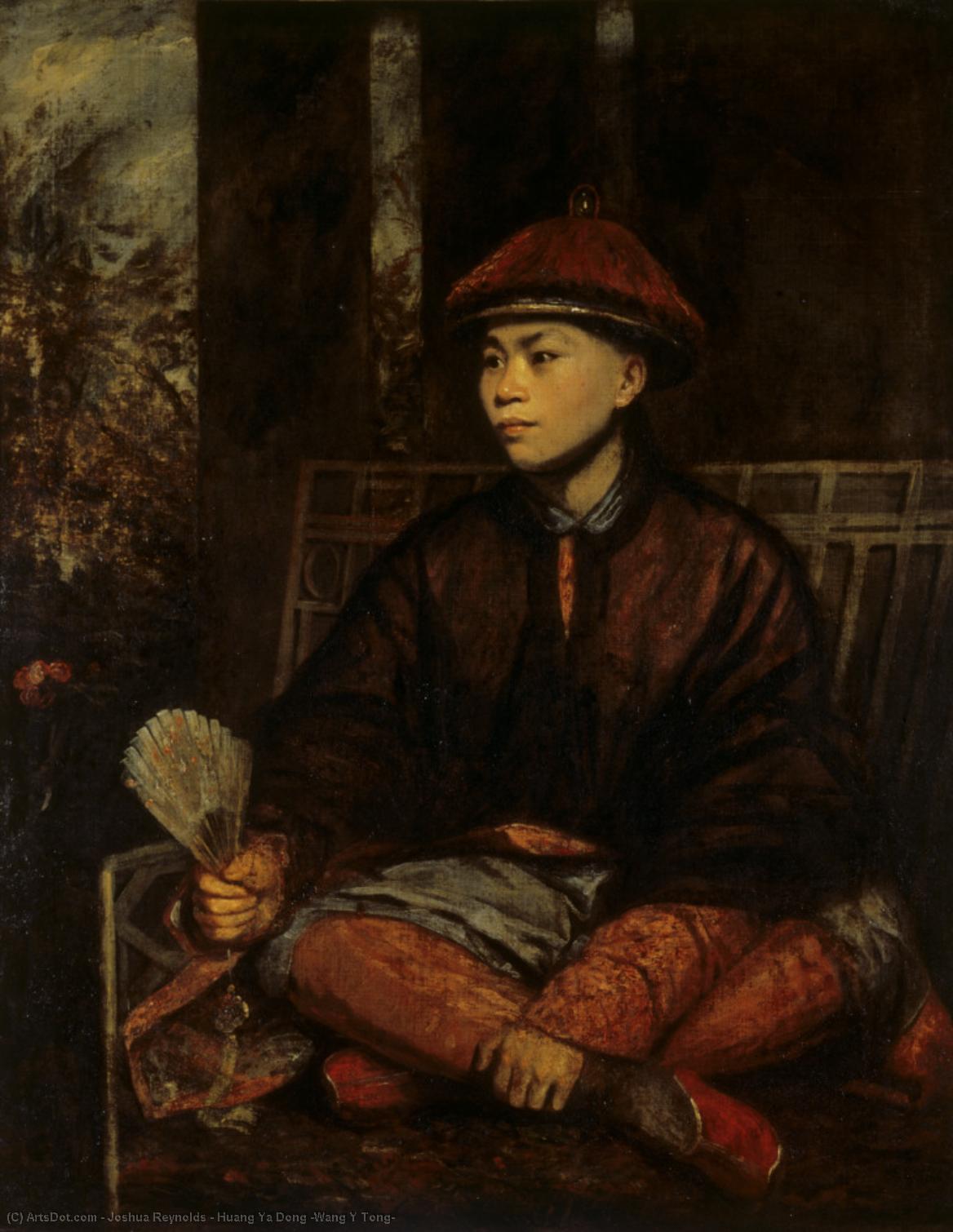
Huang Ya Dong 'Wang Y Tong': A Window Into Enlightenment Portraiture
Sir Joshua Reynolds’s “Huang Ya Dong ‘Wang Y Tong’” stands as an emblem of the British Enlightenment, capturing not merely likeness but also a profound understanding of human psychology and societal ideals. Painted in 1776 for the Duke of Dorset, this monumental Baroque portrait transcends mere representation—it embodies Reynolds's revolutionary approach to art history.
- Subject Matter: The painting depicts Huang Ya Dong, a young Chinese scholar who traveled to England during Blake’s expedition. He was brought back by John Bradby Blake for the knowledge he had of the propagation and uses of the Chinese plants for medicine and food.
- Style & Technique: Reynolds championed the “Grand Style,” prioritizing idealized beauty over literal accuracy. Employing meticulous detail—particularly in capturing Huang’s facial expression—he achieved a remarkable level of psychological realism, reflecting Richardson's influence.
- Historical Context: Produced during a period of intellectual ferment, "Huang Ya Dong" reflects the Enlightenment fascination with classical ideals and scientific observation. It aligns perfectly with Blake’s expedition to China which was intended to collect specimens for botanical study.
Symbolism & Composition
The composition itself is carefully constructed, mirroring Reynolds's belief in the importance of visual harmony. Huang sits on a Chinese style bench and wears traditional clothing—a deliberate choice that underscores his cultural identity and aligns with prevailing aesthetic sensibilities. The subtle use of light and shadow enhances the portrait’s dramatic effect, emphasizing Huang’s gaze and conveying an aura of contemplative serenity.
- Color Palette: Reynolds utilized a rich color palette—dominated by reds, blues, and golds—to convey prestige and sophistication. These hues were chosen to evoke associations with royalty and virtue, reflecting the Duke's aspirations for his son.
- Gesture & Expression: Huang’s posture exudes confidence and intelligence, mirroring Reynolds’s conviction that art should capture the essence of human character. The subtle curve of his spine and the relaxed position of his hands communicate a sense of inner peace.
Legacy & Influence
"Huang Ya Dong" cemented Reynolds's reputation as Britain’s foremost portrait artist and established him as a pioneer of Baroque painting. Its impact extended far beyond its immediate patrons, shaping the artistic landscape for decades to come. As Simon Schama eloquently stated, “Reynolds is not remote or staid at all. He’s the portraitist of the Enlightenment, a daring artist who captured a daring age.”
- Influence on Later Artists: Reynolds's Grand Style profoundly influenced subsequent generations of painters—including Thomas Lawrence and Joshua Wedgwood—who adopted his techniques for conveying psychological depth and visual splendor.
- Enduring Appeal: Today, “Huang Ya Dong” continues to captivate audiences with its masterful execution and timeless beauty. Its depiction of youthful intellect and serene contemplation resonates powerfully across cultures and eras.
This exceptional Baroque masterpiece exemplifies Reynolds’s genius—a testament to his ability to transform observation into art history. Reproductions offer a chance to experience the grandeur and sophistication of this iconic portrait, transporting viewers back to the intellectual fervor of the Enlightenment.