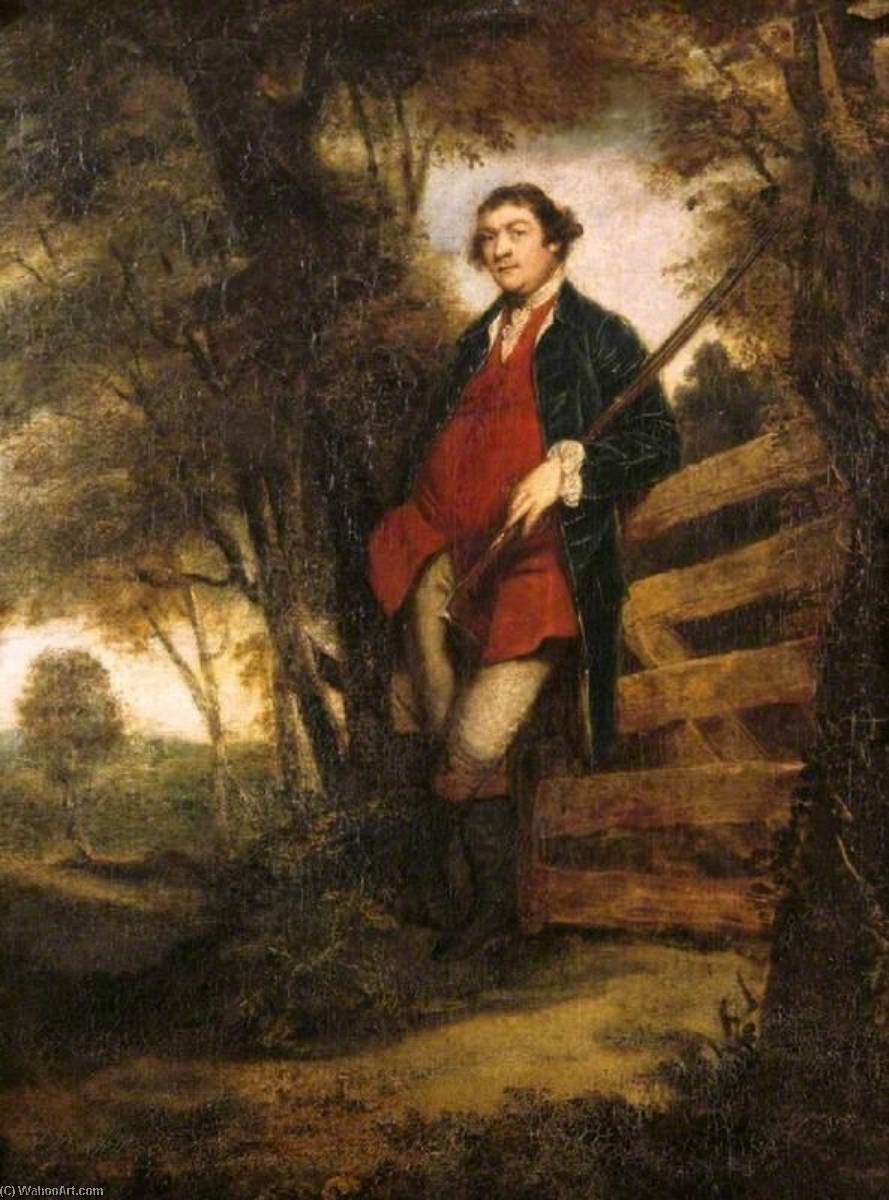
Sir Joshua Reynolds' captivating portrait of John Parker II, a prominent figure of the 18th century. Admire his regal attire and commanding presence in this masterful work.
Sir Joshua Reynolds (1723-1792): Leading British portrait painter of the 18th century & first Royal Academy President. Master of the 'Grand Style', he elegantly captured nobility and shaped British art.
Saltram House
(Plymouth, United Kingdom)
Відкрийте для себе Saltram House! Георгіанський маєток з архітектурою Роберта Адамса, портретами сэра Джошуа Рейнольдса та чарівним садом. Подорож у 1700-ті роки!
The Enigmatic Presence of John Parker II
Sir Joshua Reynolds’s “John Parker II,” painted in 1770 or 1771, isn't merely a portrait; it’s a carefully constructed tableau of status, power, and the subtle anxieties of Georgian society. The subject, John Parker II, a prominent figure in Cornish politics and land ownership, is presented not as a static representation but as an active participant within his own world. He stands poised on a weathered fence – a deliberate choice that immediately anchors him to the land, yet simultaneously elevates him above it. This seemingly simple element speaks volumes about Parker’s position: he commands authority, surveying his domain with a quiet confidence, yet remains inextricably linked to the practical realities of rural life. The composition itself is meticulously balanced, drawing the eye from the assertive stance of the figure towards the distant trees, creating an illusion of depth and suggesting both ambition and restraint.
A Masterclass in Grand Style
Reynolds’s signature “Grand Style” is exquisitely evident in this work. He eschews the stark realism favored by some contemporaries, instead employing a masterful manipulation of light and shadow to create a sense of idealized beauty and aristocratic grace. The rich crimson coat, meticulously rendered with layers of paint, immediately signals Parker's wealth and social standing. Note the subtle variations in tone – the deep shadows that define his form, contrasted with the luminous highlights that catch the light on his face and hands. This technique isn’t simply decorative; it serves to sculpt the figure, lending him a palpable presence. The background landscape, painted with atmospheric perspective, further enhances this effect, receding into a hazy distance that emphasizes Parker's dominance within the scene. Reynolds’s skill lies not just in depicting likeness but in conveying an entire atmosphere of refinement and control.
Symbolism Woven into the Fabric
Beyond the obvious markers of wealth and status, “John Parker II” is laden with symbolic meaning. The fence itself represents a threshold – a boundary between the public sphere of politics and the private realm of his estate. It’s a visual metaphor for the responsibilities he carries as a landowner and a member of the gentry. The gun in his hand isn't overtly aggressive, but rather a symbol of protection, vigilance, and the inherent dangers associated with power. The trees in the background, rendered with careful attention to detail, are not merely decorative; they evoke notions of longevity, stability, and the enduring legacy of Parker’s family. The inclusion of another figure, smaller and less defined in the distance, hints at a complex social network – perhaps a wife or daughter, subtly acknowledging the domestic sphere within this portrait of masculine authority.
A Window into Georgian Society
Painted during a period of significant social and political change, “John Parker II” offers a fascinating glimpse into the values and anxieties of Georgian England. The emphasis on decorum, propriety, and aristocratic lineage reflects the rigid social hierarchy that governed much of British life. Yet, beneath this veneer of formality lies a subtle tension – a recognition of the precariousness of power and the ever-present threat of economic instability. Reynolds’s portrait captures this duality perfectly, presenting Parker as both a confident leader and a man acutely aware of his place within a complex social order. The painting's enduring appeal lies in its ability to resonate with viewers across centuries, prompting reflection on themes of wealth, power, legacy, and the human condition. It is a testament to Reynolds’s genius – a masterful blend of technical skill, symbolic depth, and emotional resonance.